
Circling a Giant: Notes from Eight Days on the Tour du Mont Blanc (TMB)
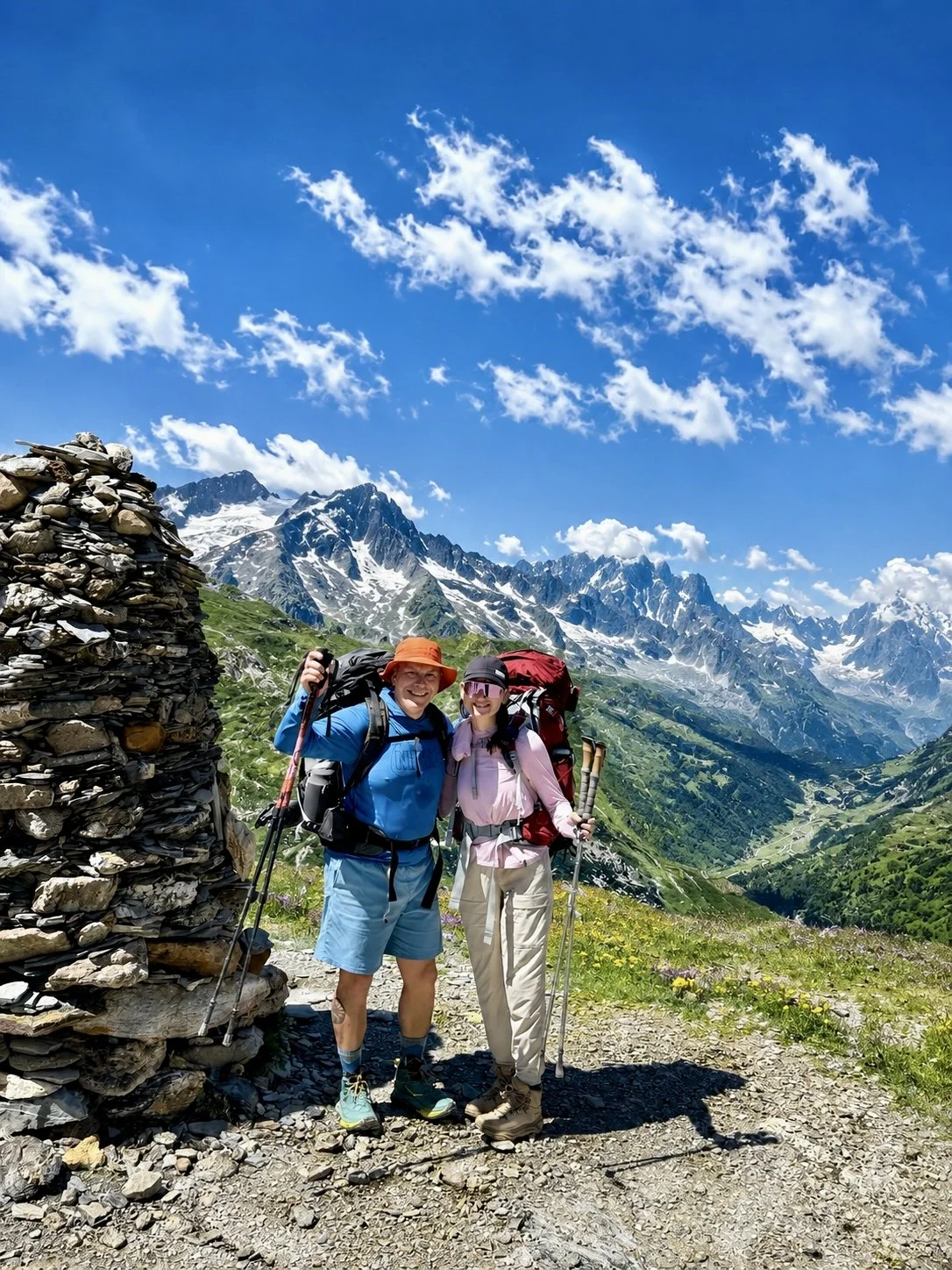
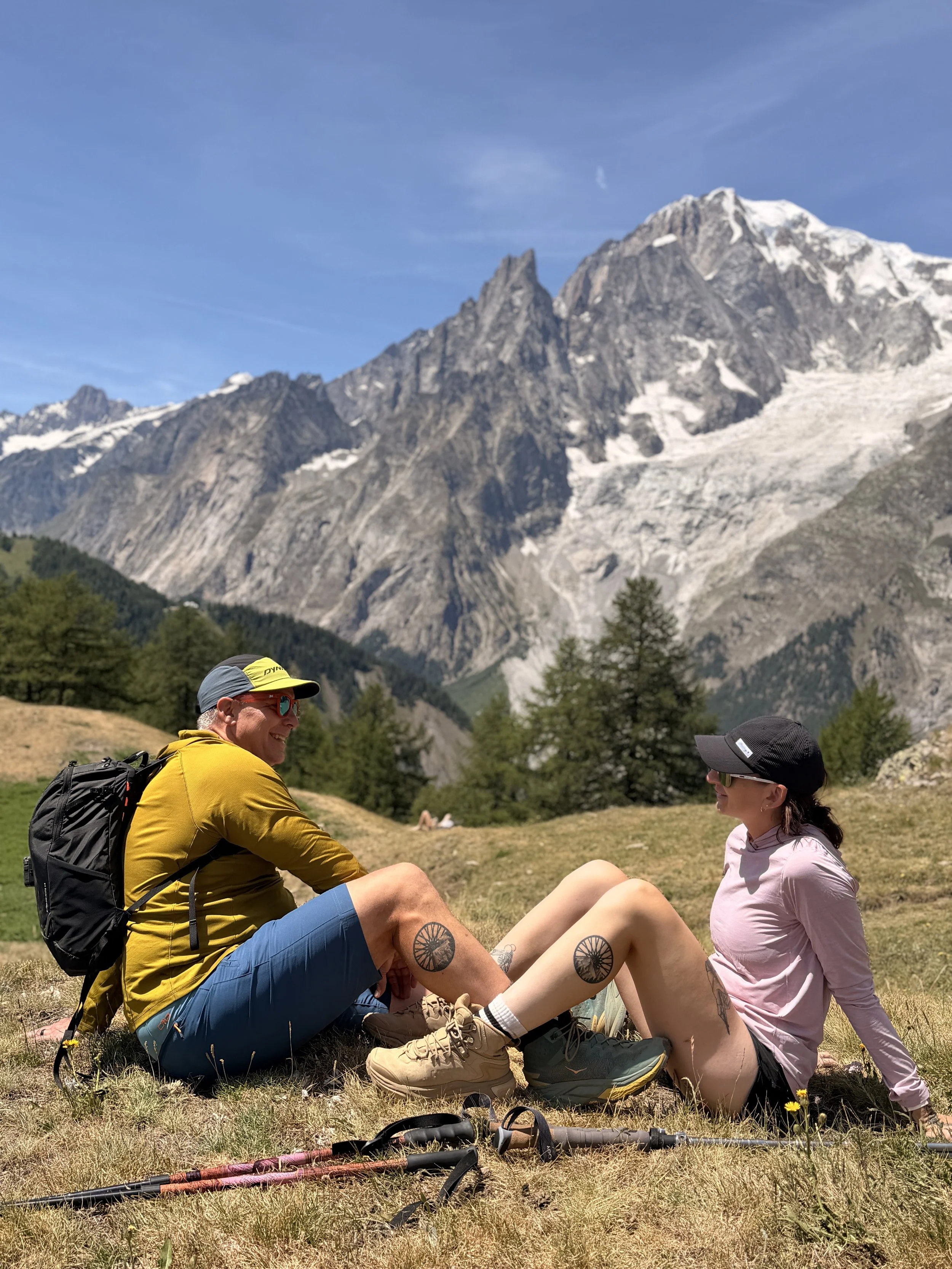
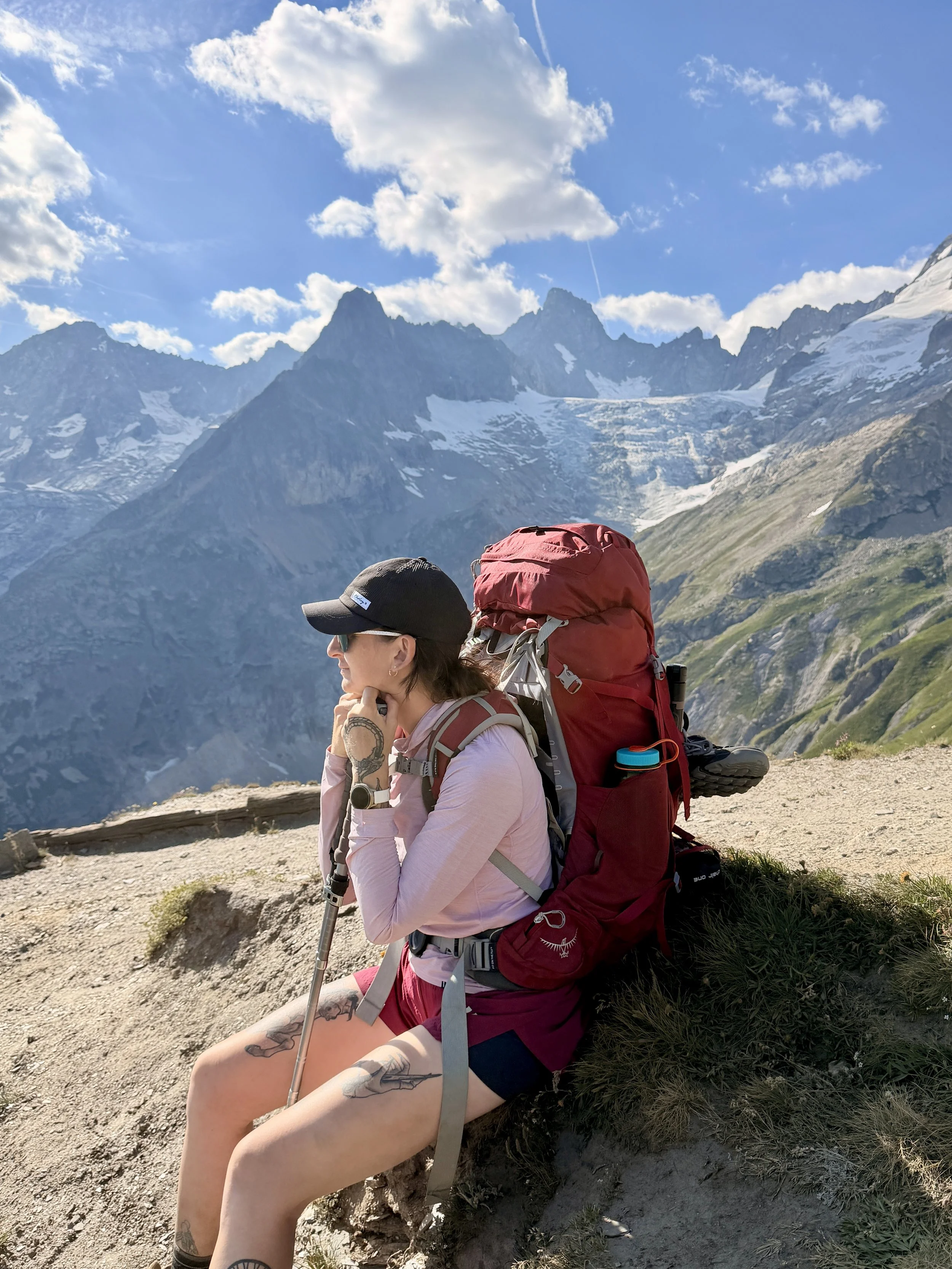
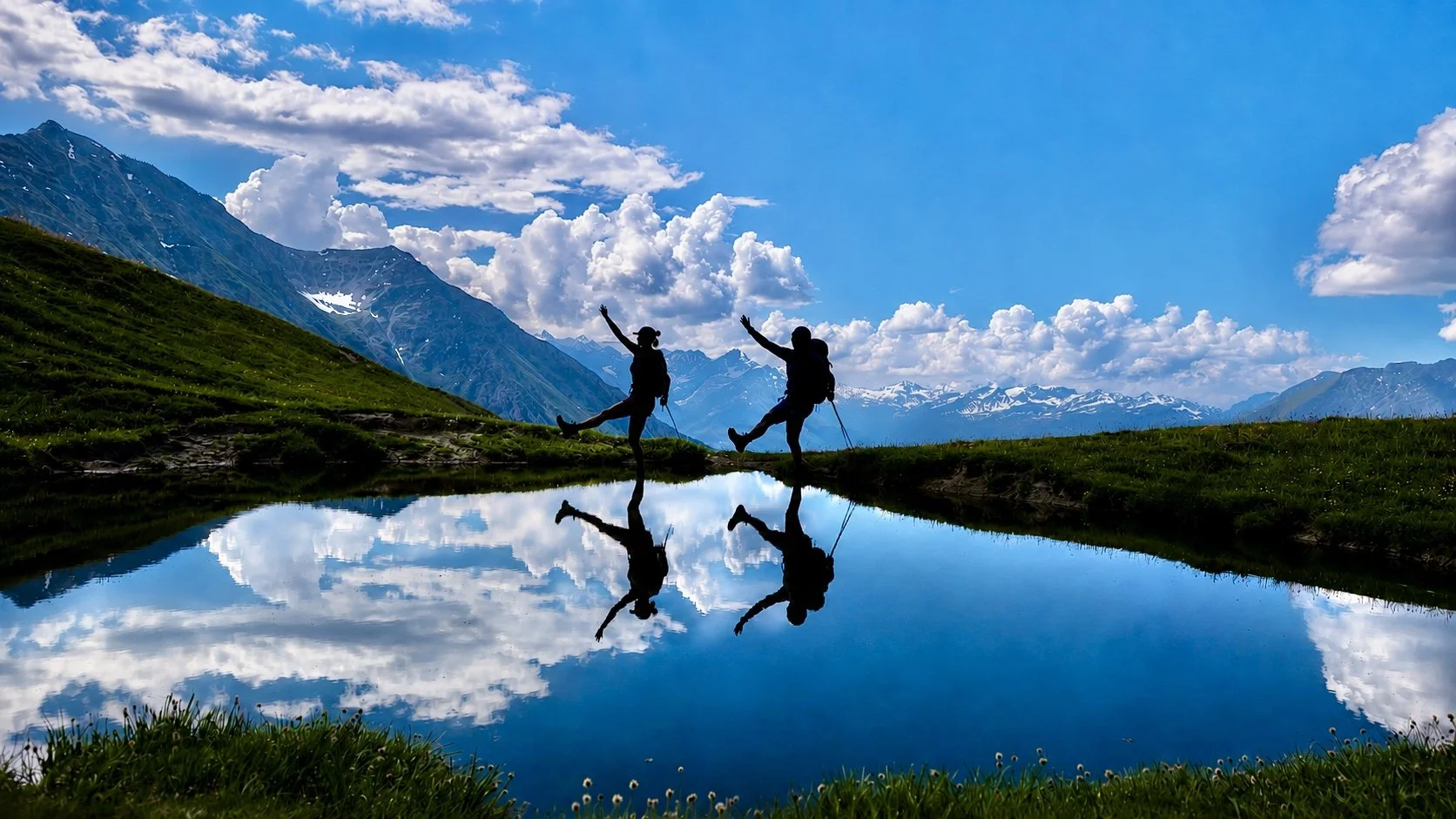
There's a particular kind of quiet that happens when you're standing at a stone cairn with the entire Mont Blanc massif laid out in front of you, poles still in hand, pack straps still biting into your shoulders, and you realize you've been staring for five full minutes without saying anything. That's the Tour du Mont Blanc in one moment: three countries wrapped around a single mountain, and somehow still managing to surprise you every single day.
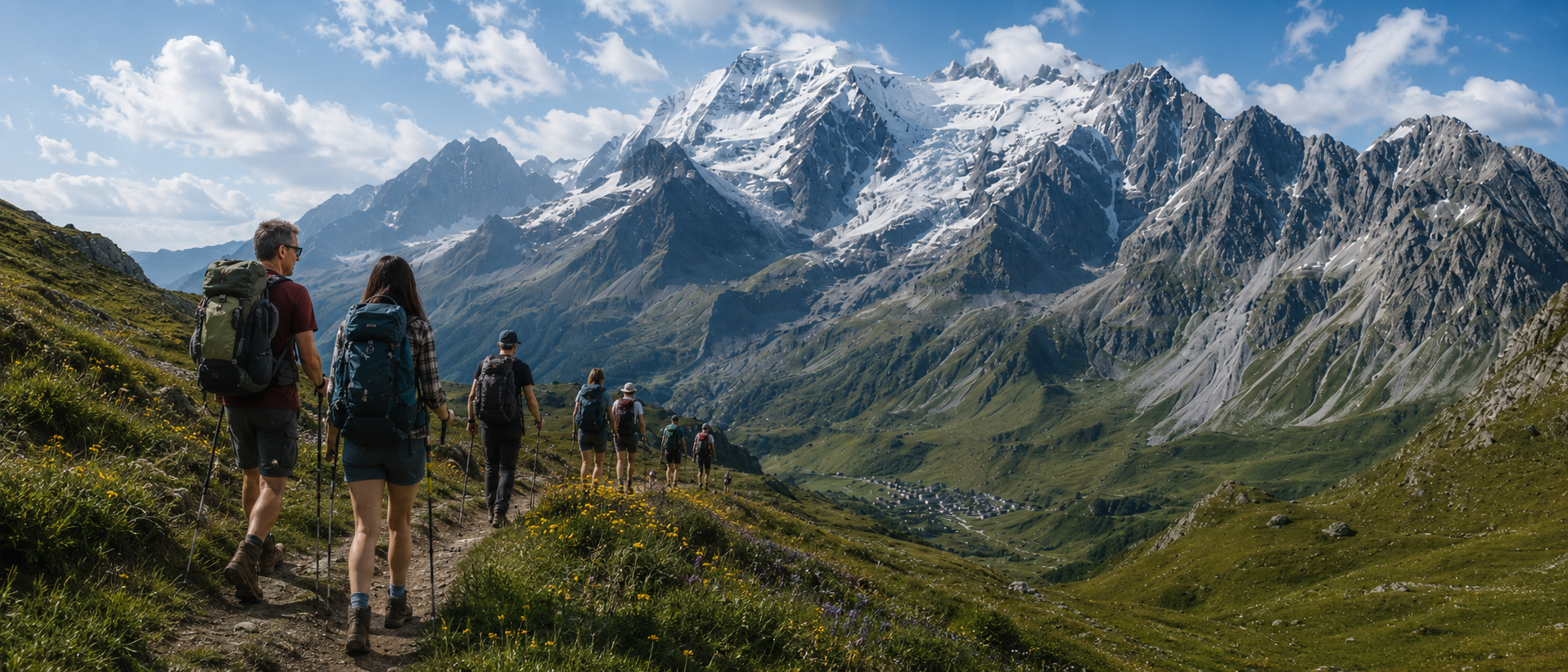
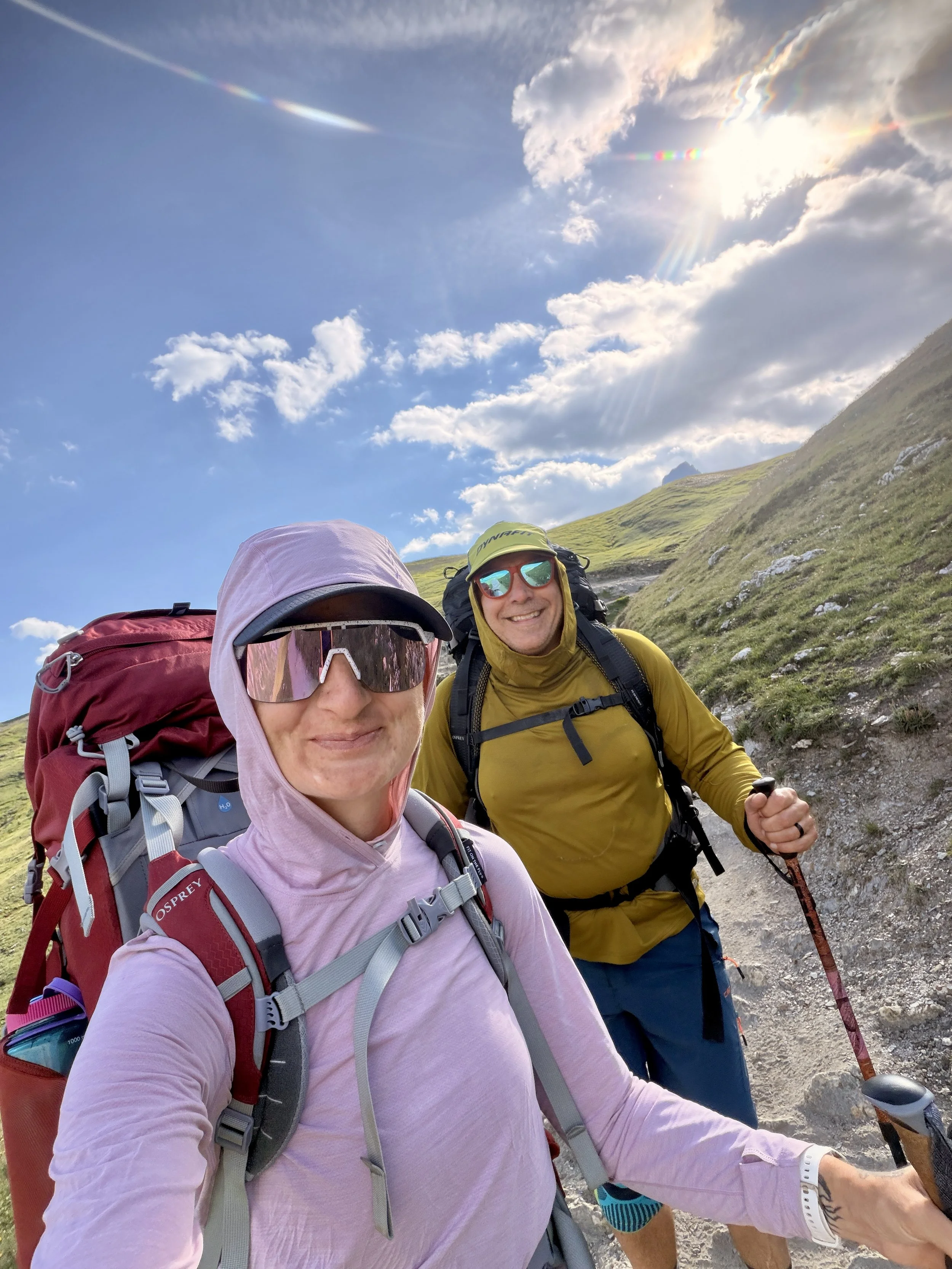
Shawn and I set out to hike our own version of the Tour du Mont Blanc (TMB) — an 8-day itinerary through France, Italy, and Switzerland and back to France again, mixing on-trail camping with a couple of hotel nights and a well-timed bus or two so the trip fit the time we had. What follows is less a stage-by-stage itinerary than a collection of the moments that stuck. The kind of trip where the photos end up doing more explaining than I can. LINK TO MY GUDIE IF YOU DONT HAVE TIME FOR THE FULL 14 DAY ROUTE
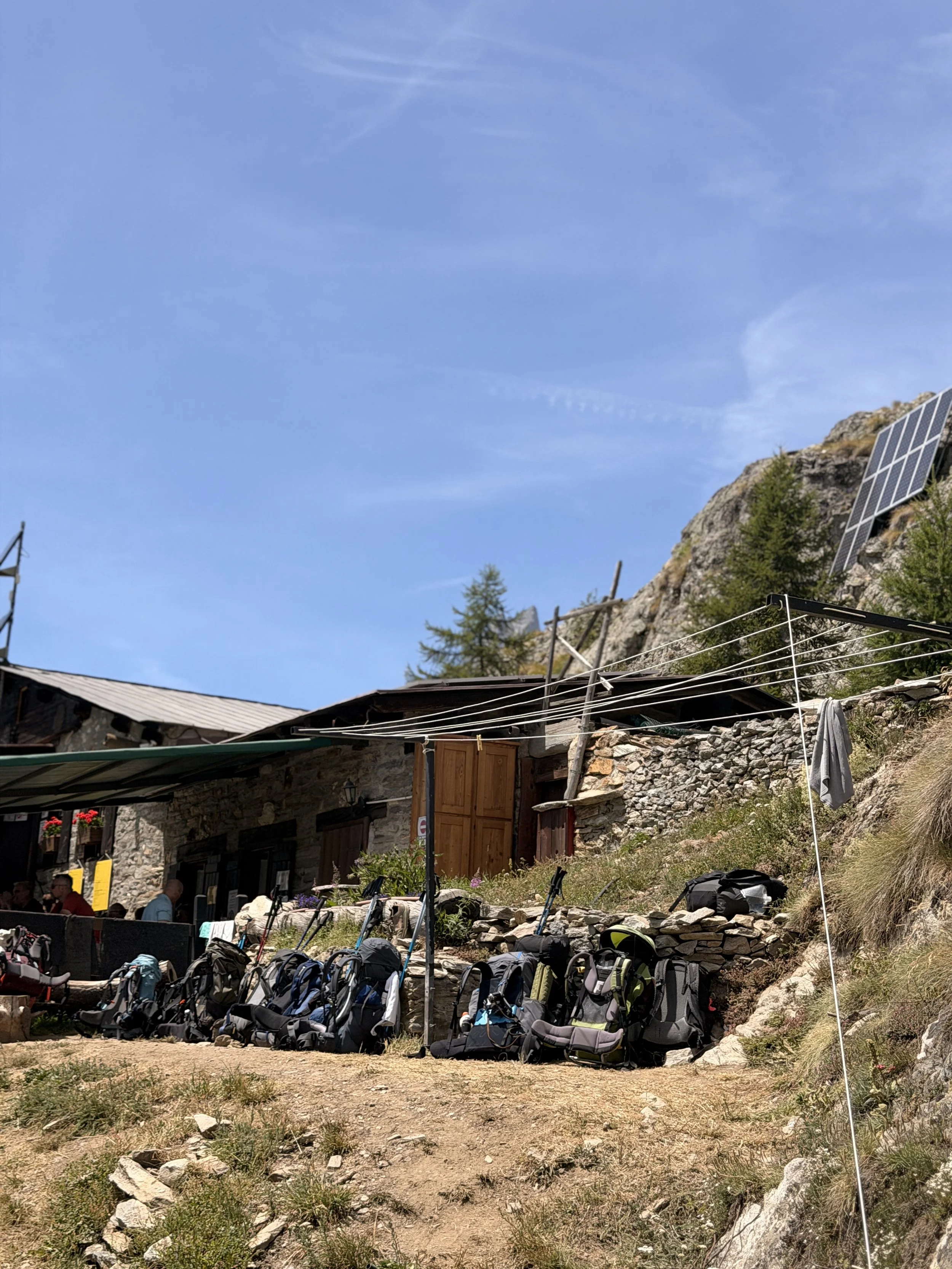
A few practical notes up front, for anyone actually planning this: you almost always have the option to hike down or catch a shuttle or bus into a nearby town instead of staying at a refuge or camping, and honestly, I'd take that option again. The refuges were pretty dirty for my taste — beds packed in right next to strangers, showers that were flat-out disgusting, and bathrooms that get gross fast once a few dozen sweaty hikers have cycled through. It's not everyone's dealbreaker, but it was mine more than once.
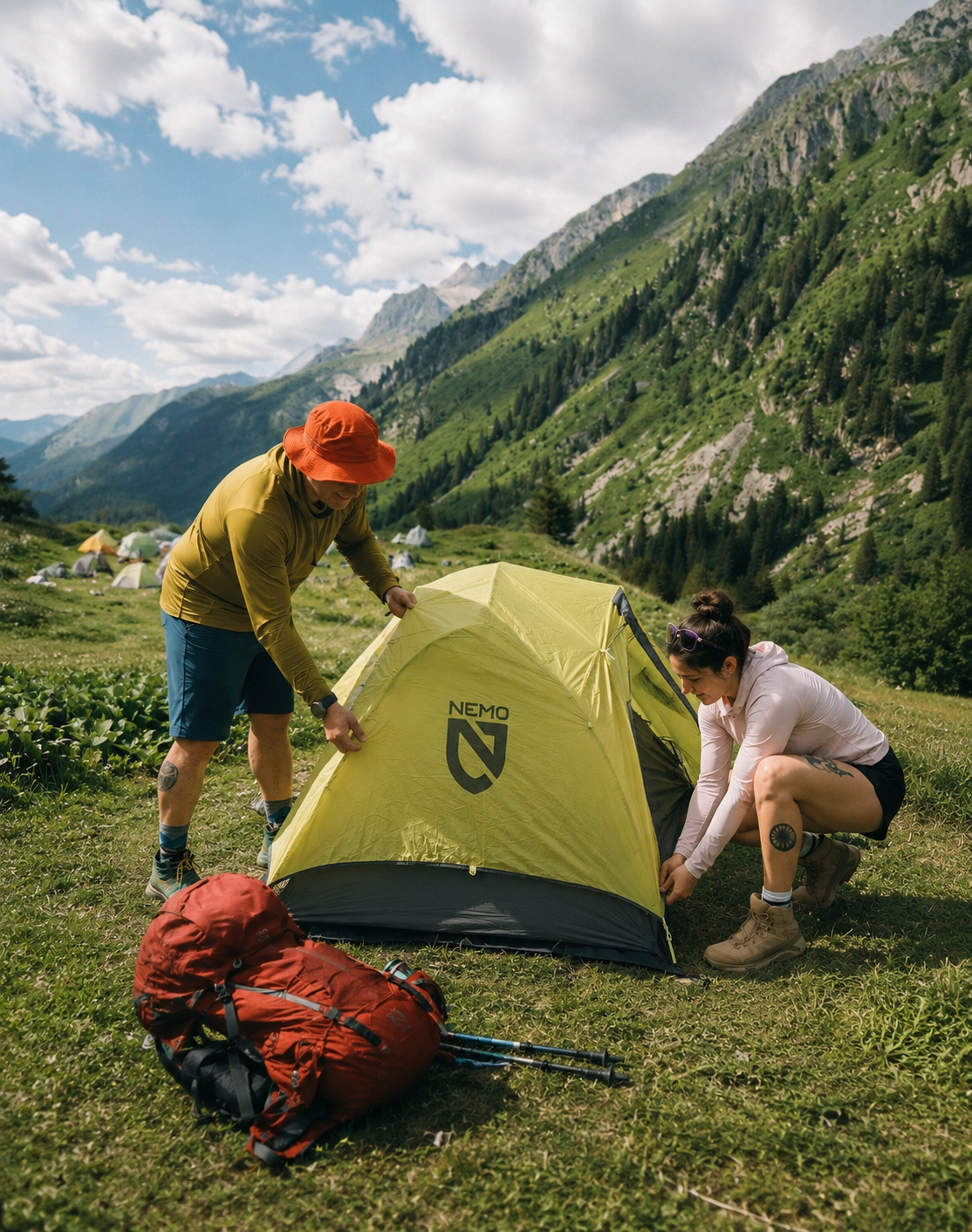
We chose to backpack and camp for most of this trip with a few exception days where we REALLY wanted a shower, carrying everything ourselves and pitching a tent most nights. I wrote up the full packing list separately — what we brought, what we didn't need, and what we wished we'd packed instead — over on this post. If I'm honest, though, knowing what I know now, I'd do the whole route staying in hotels instead. The gear, the weight, and the refuge/camping logistics added a layer of difficulty that wasn't really necessary given how good the hotel options are along the route.
Chamonix, Twice: Where to Stay and Eat Before and After the TMB
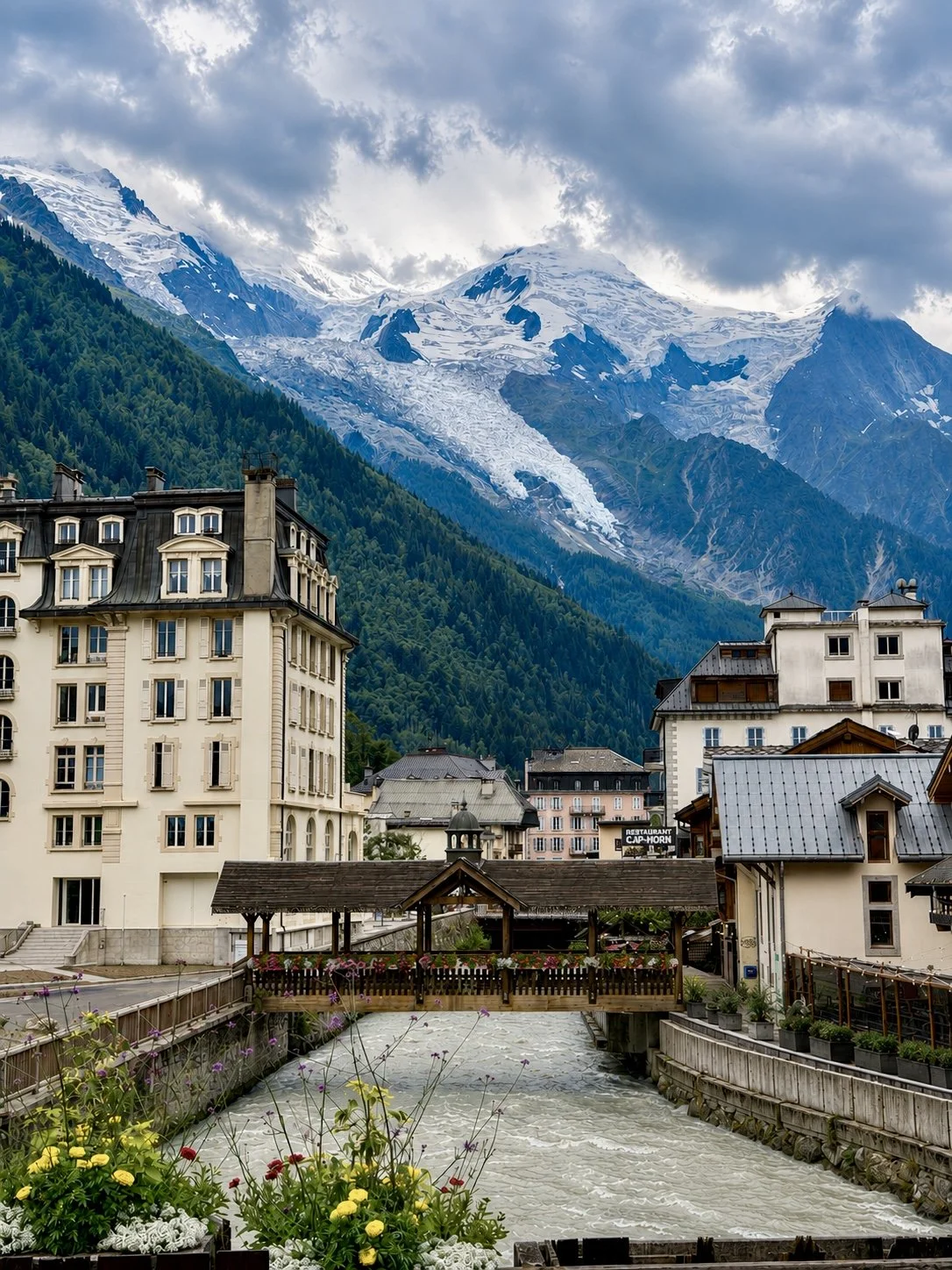
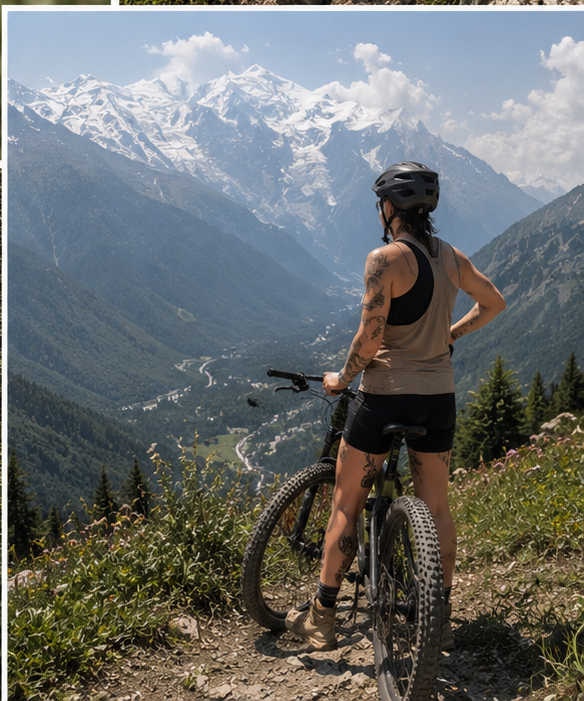
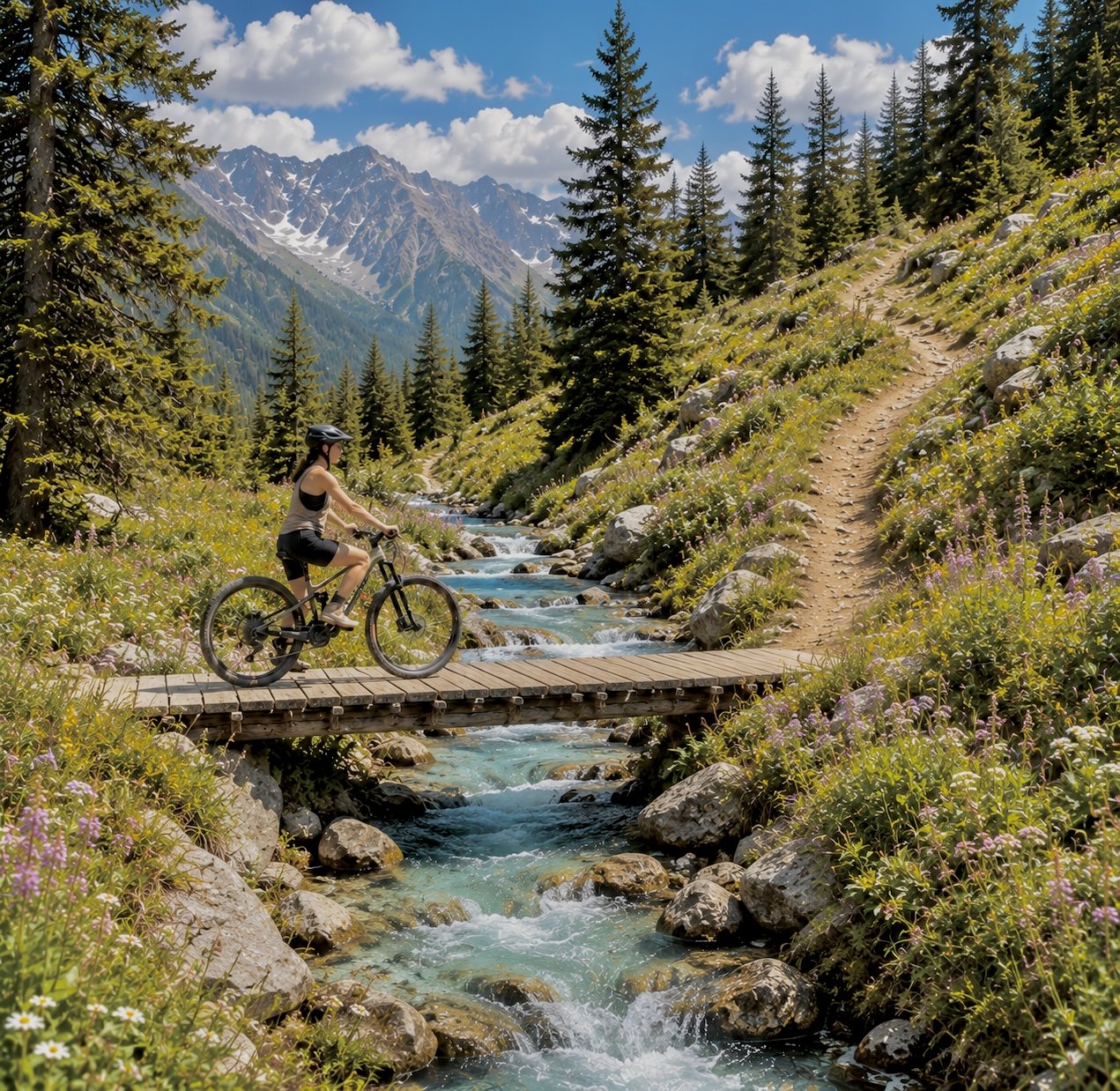
We flew into Geneva and landed in Chamonix on July 1st, checked into Hotel Plan B, and had our first dinner at Bistro Bonatti — which, in hindsight, was a pretty on-the-nose way to kick off a trip that would end with us standing in front of an actual Bonatti refuge a week later. NOTE: You can leave alternate luggage with most hotels in Chamonix for when you return at the end of your trip. We left a bag with a couple pairs of clean clothes with Plan B for the week for $30. The next day was built entirely around getting ready: breakfast at the hotel, a gear run through Decathlon and Intersport for the last-minute things we didn't know we needed, and lots of food. We also rented e-bikes from Bike Chamonix — good bikes, and the GPS units made it easy to just point ourselves down the valley — and rode out to Vallorcine for coffee at Le Café Comptoir, which turned out to be a great way to spend nervous energy the day before a long hike. A quiet, slightly nervous day of double-checking straps and buckles before the real thing started.
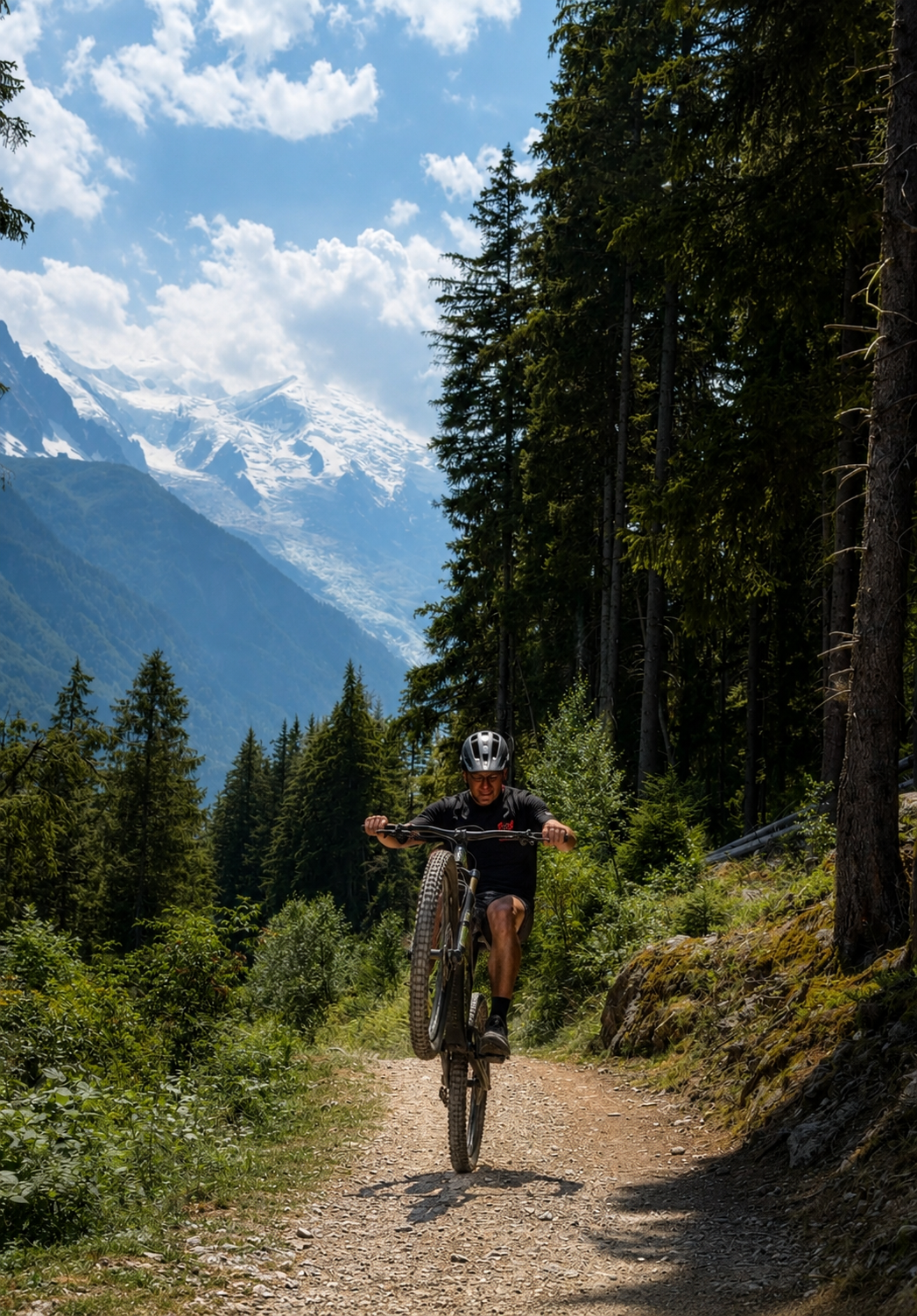
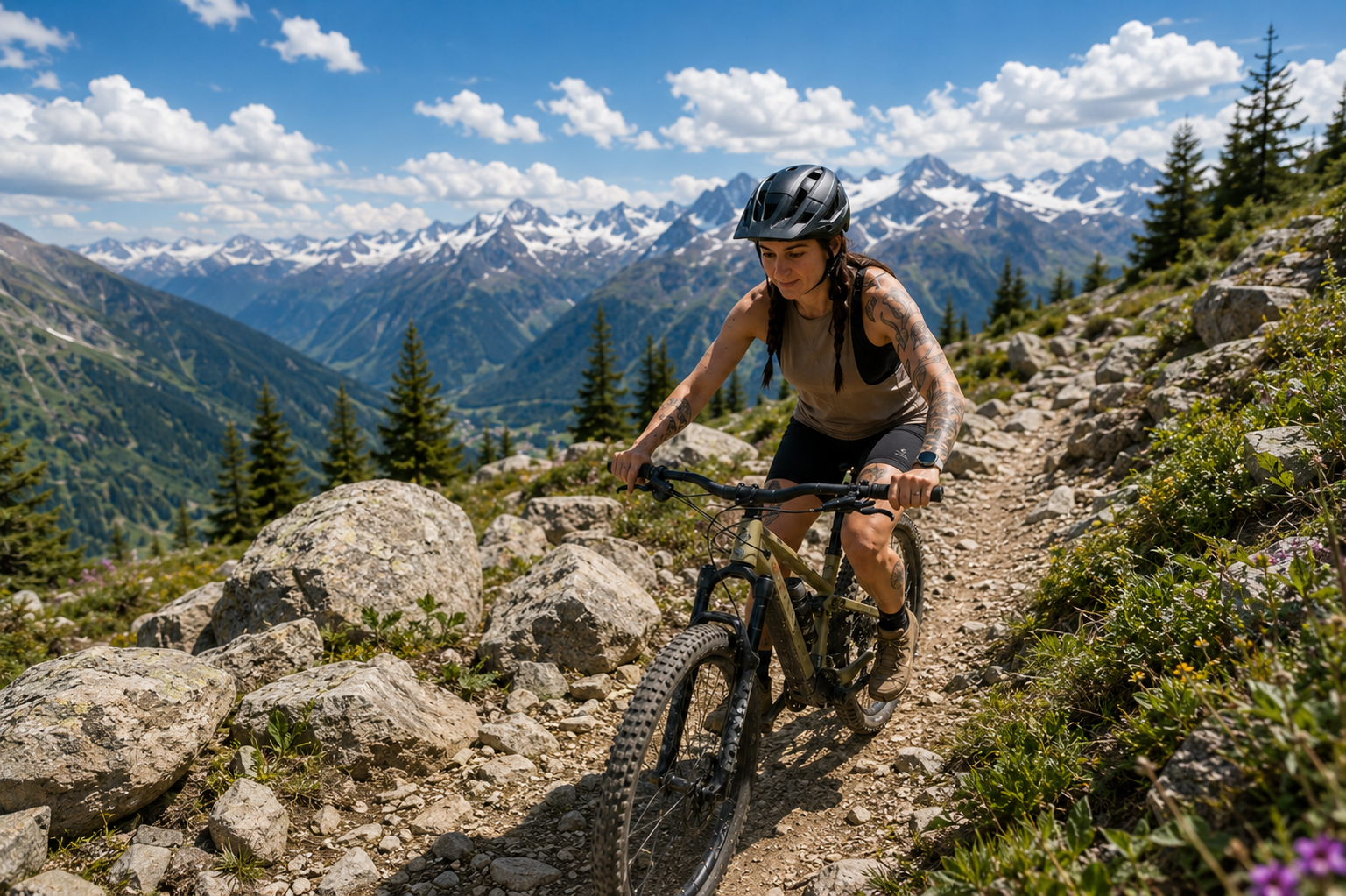
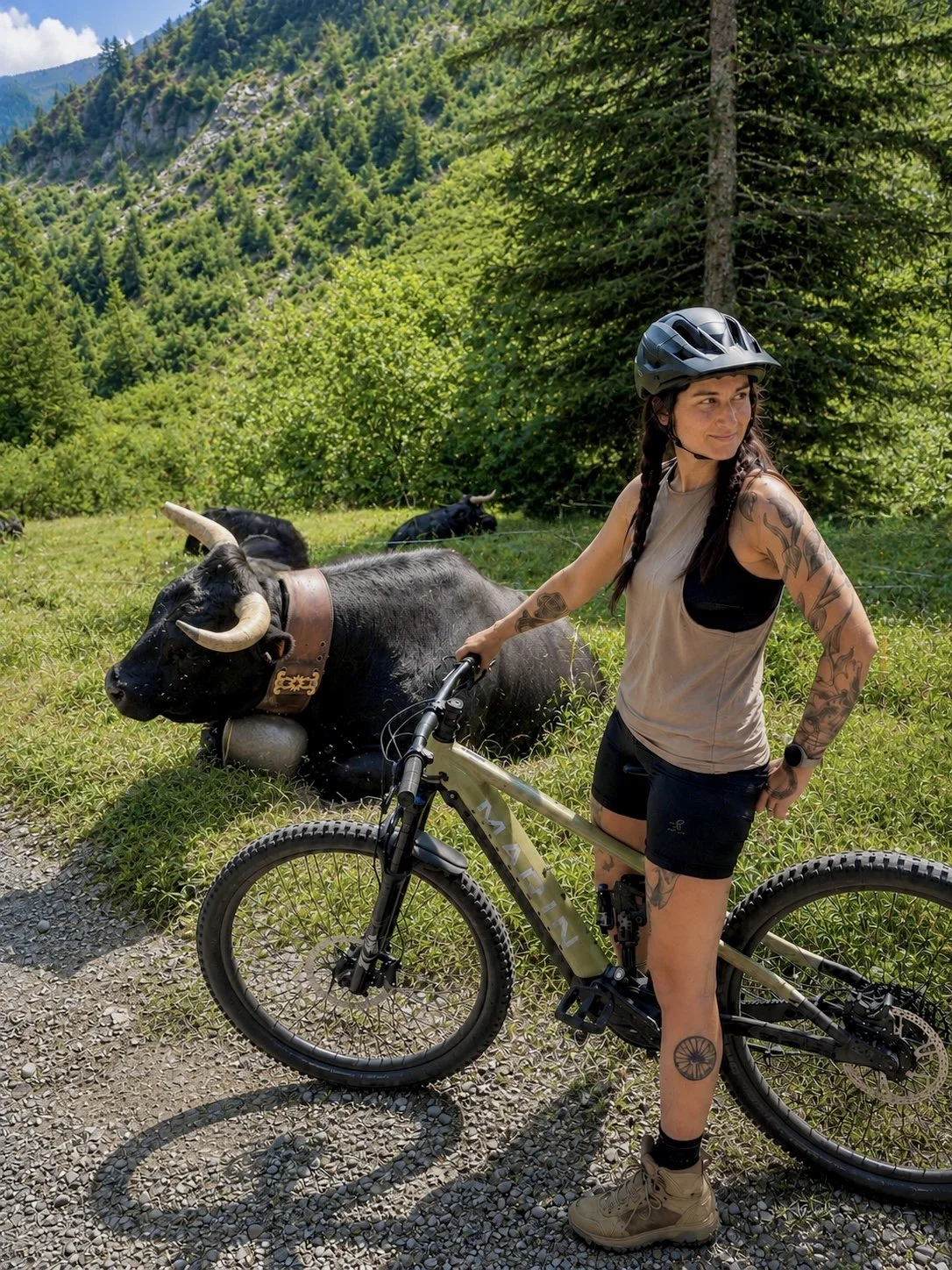
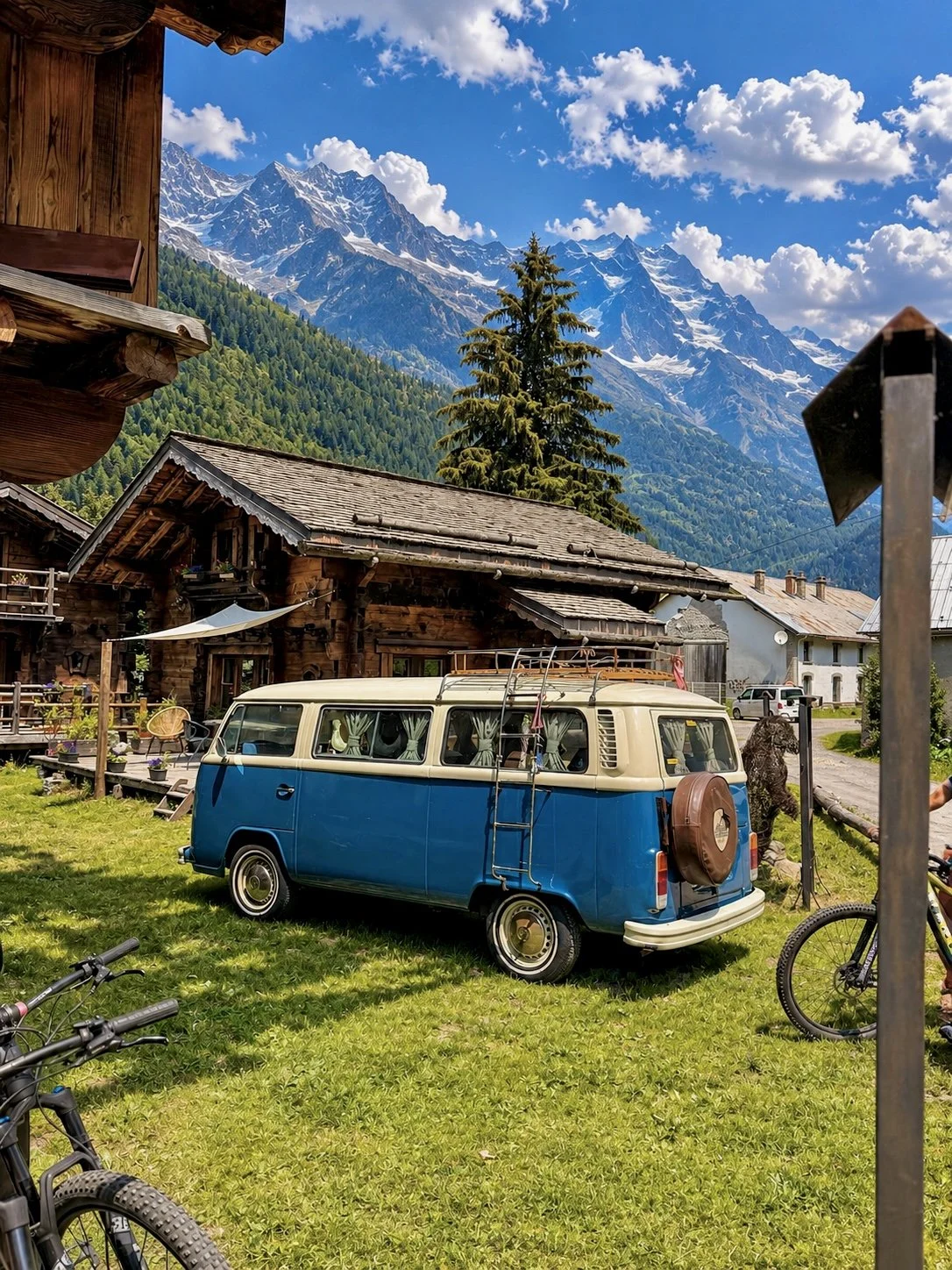
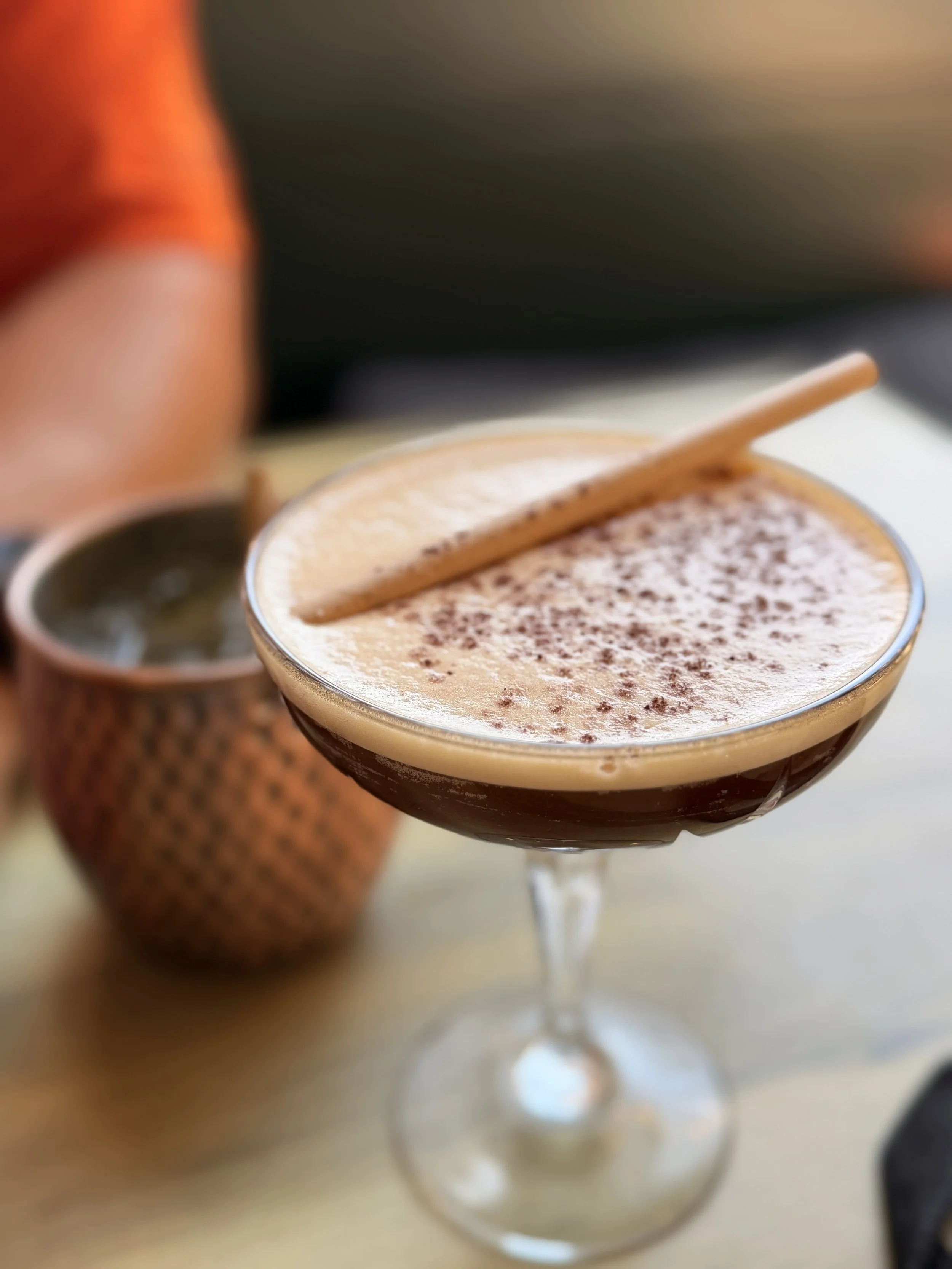
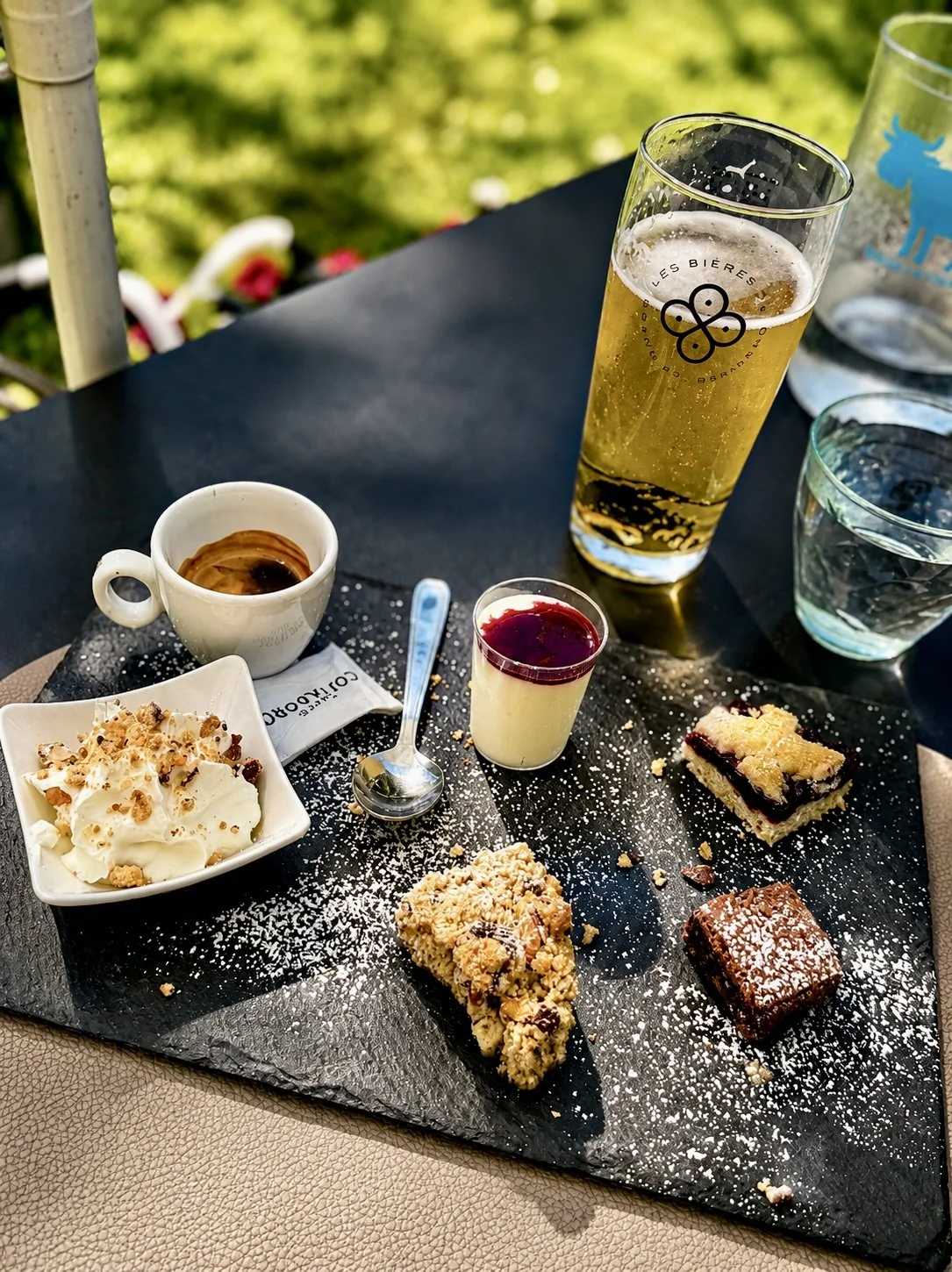
A couple more Chamonix spots worth knowing about, whether you're arriving or passing back through at the end: L'Hydromel and Annapurna both earned five stars from us on food alone, and Aux Petits Gourmands is worth a stop if you want something sweet before a long day on trail. You can see all the restaurants we ate at via my Google Local Guide Reviews!
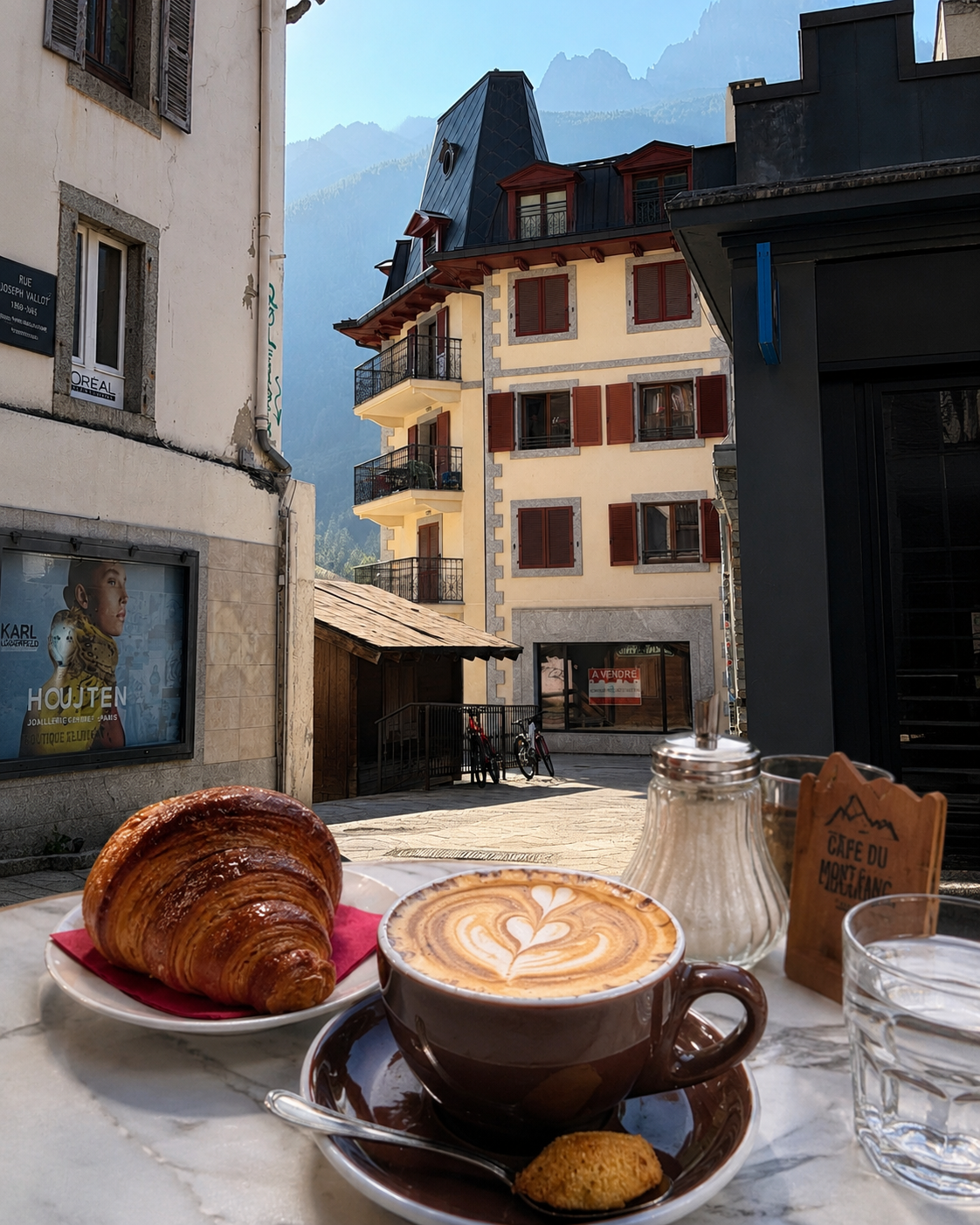
What I didn't expect was how satisfying it would feel to end up back in that same hotel, in Chamonix, on the other side of the whole loop — same town, same address, completely different pair of legs. We stayed at Hotel Plan B, right in Chamonix, both at the start and the end, and it was a solid, comfortable base both times.
One more logistics note while we're talking hotels: don't count on taxis being easy to book in this part of the Alps, and don't even bother trying Uber — it doesn't run in any of these towns or valleys. For getting to and from the airport, we used Mountain Dropoffs for our Geneva transfers and they were reliable both directions, door to door.
Stage 1: Les Houches to Nant Borrant
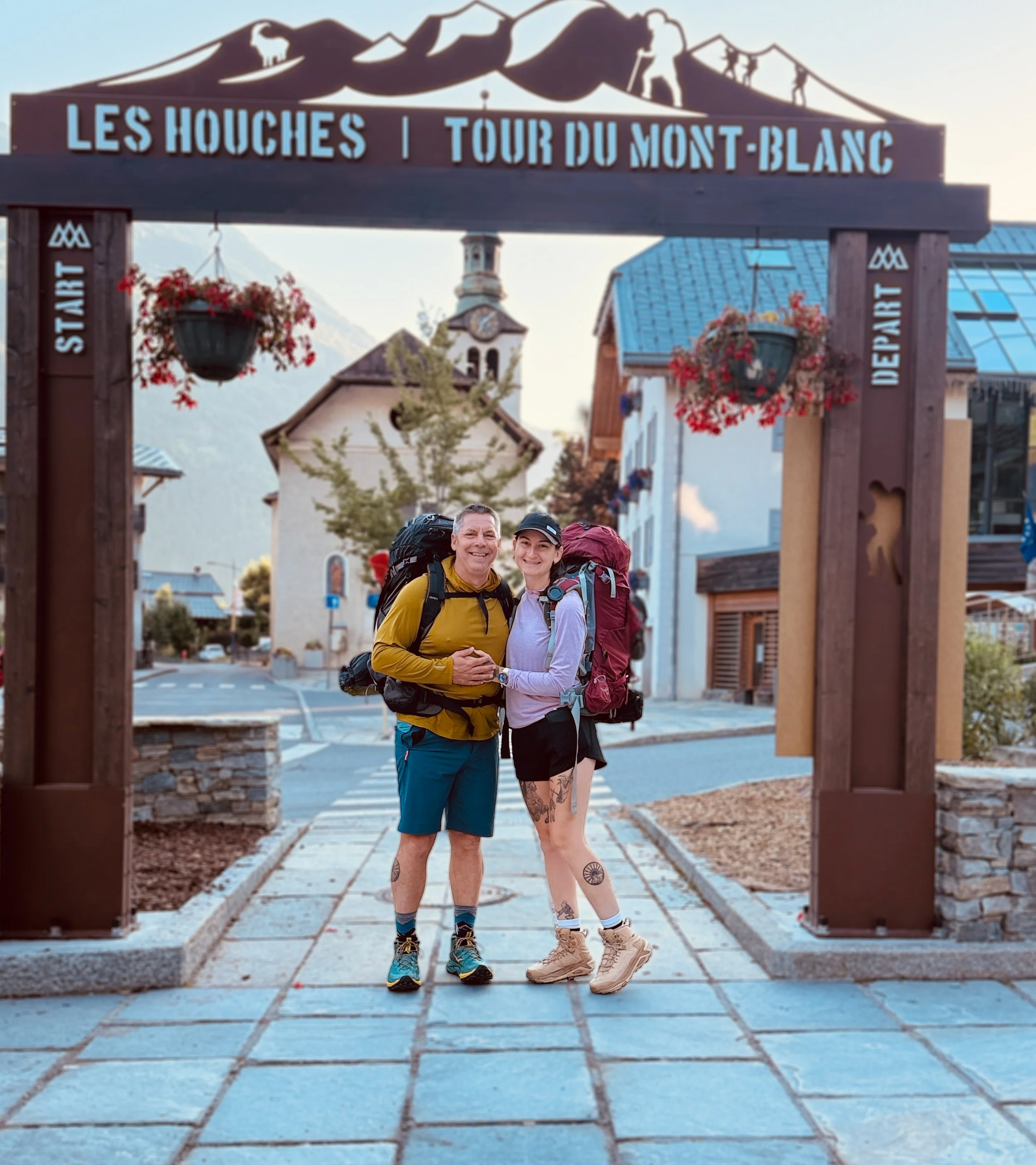
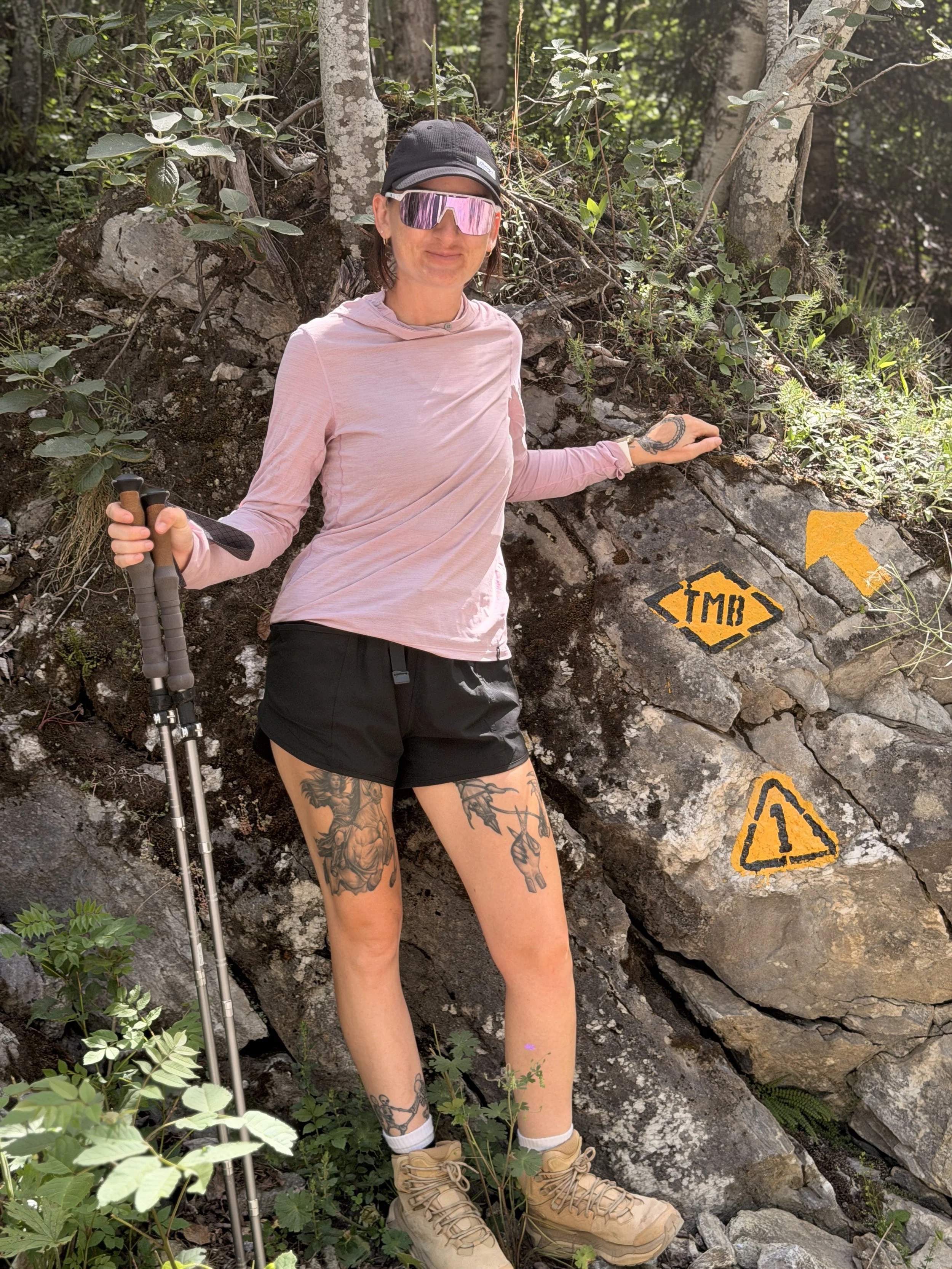
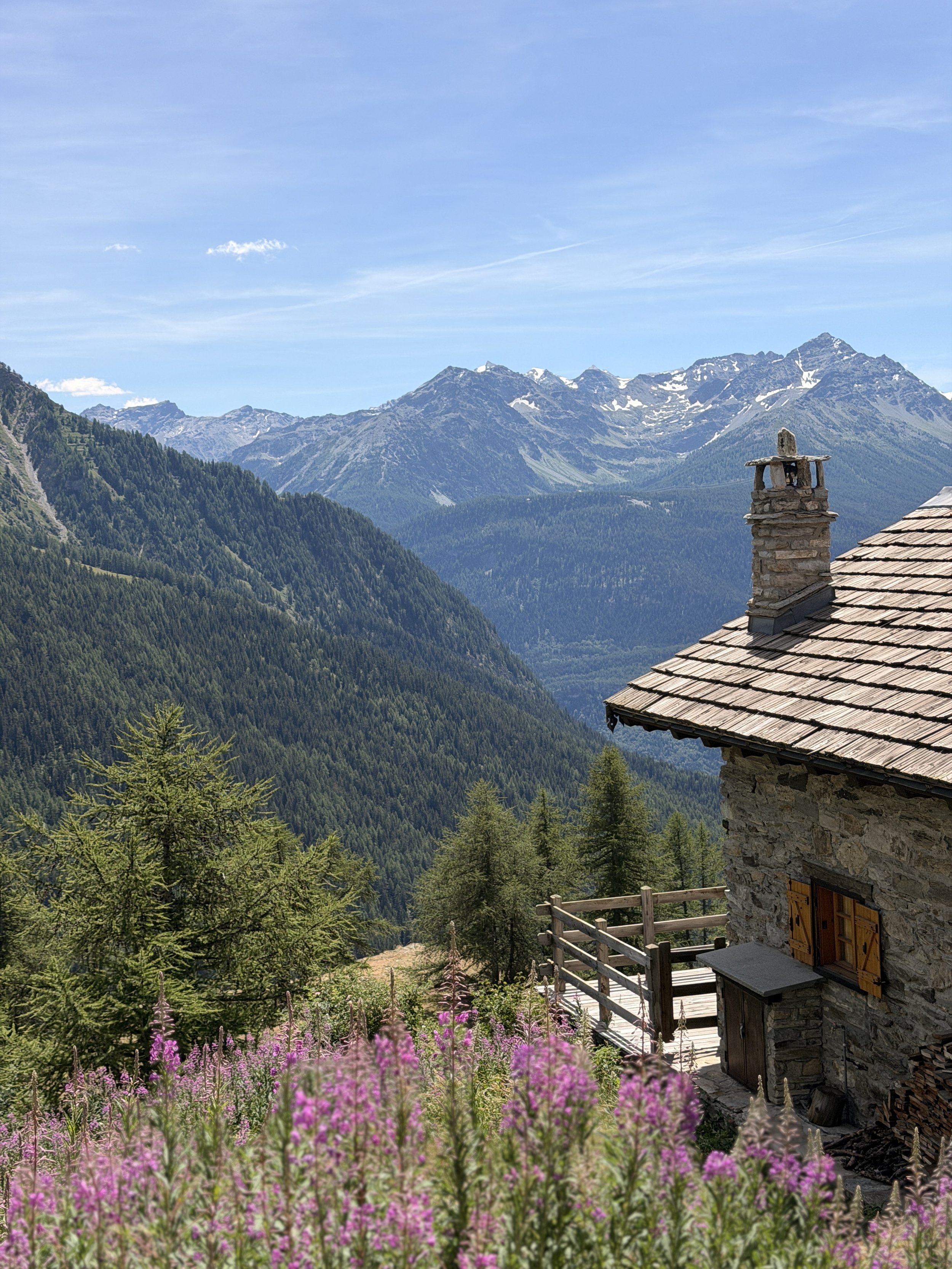
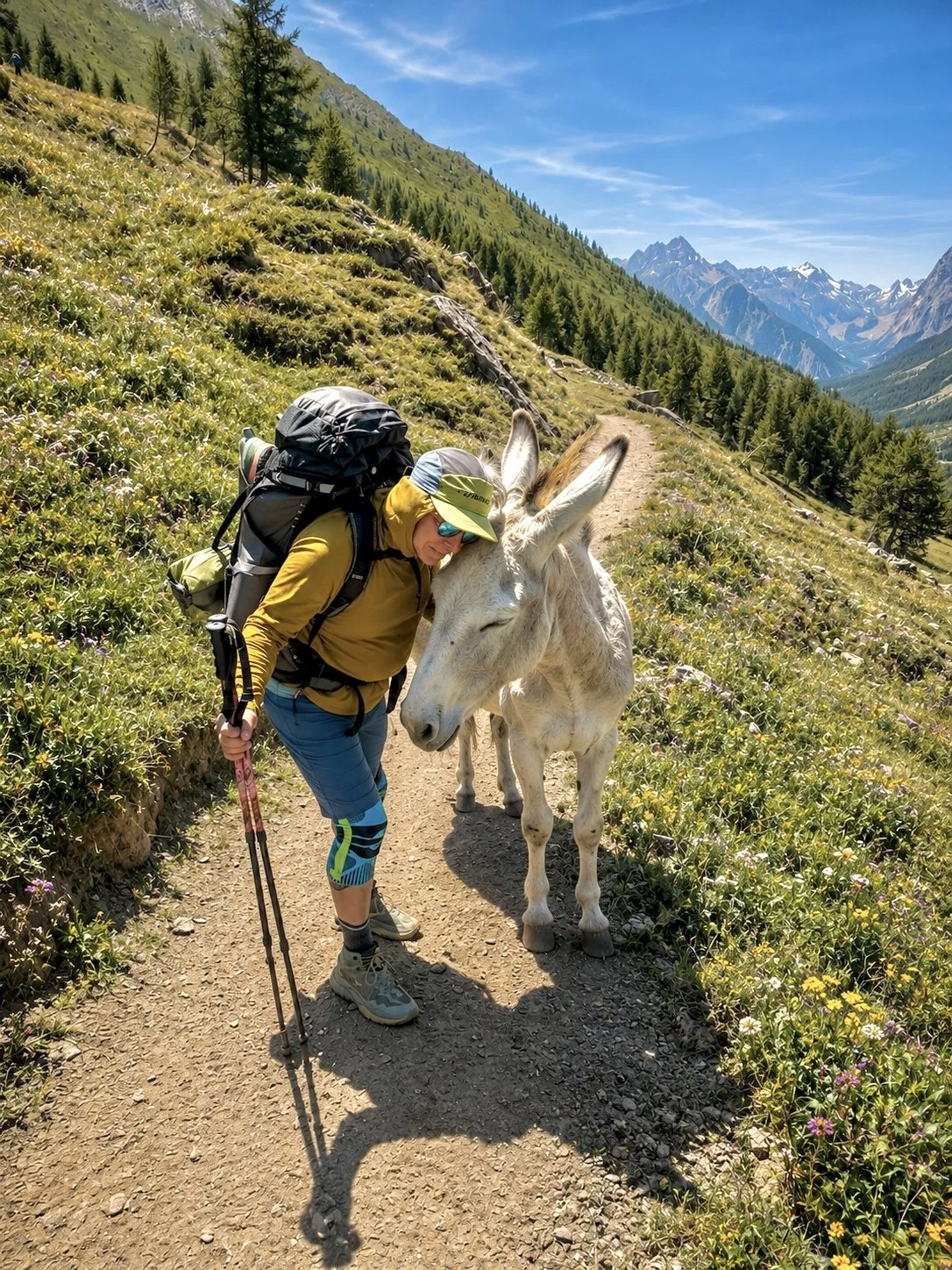
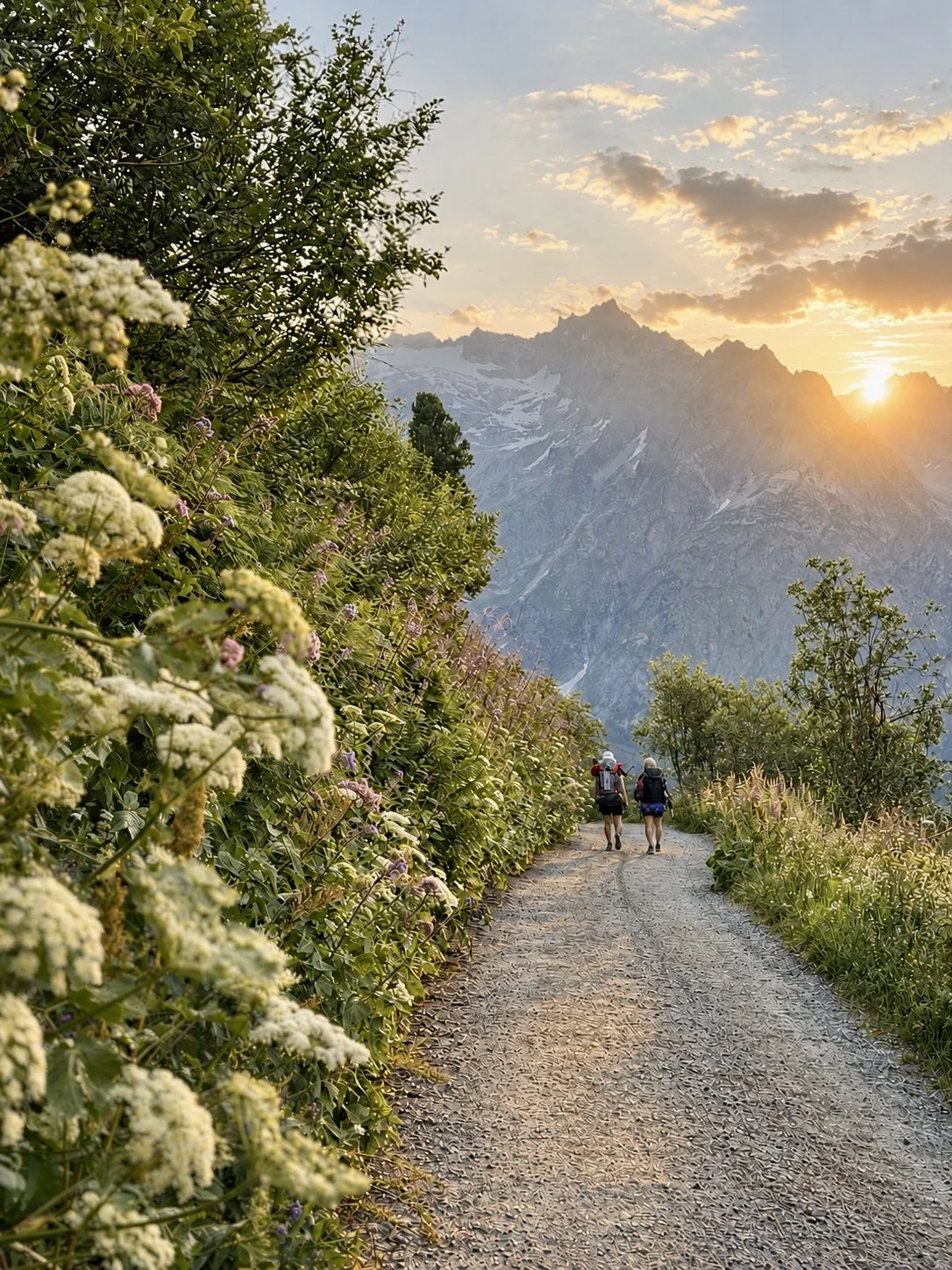
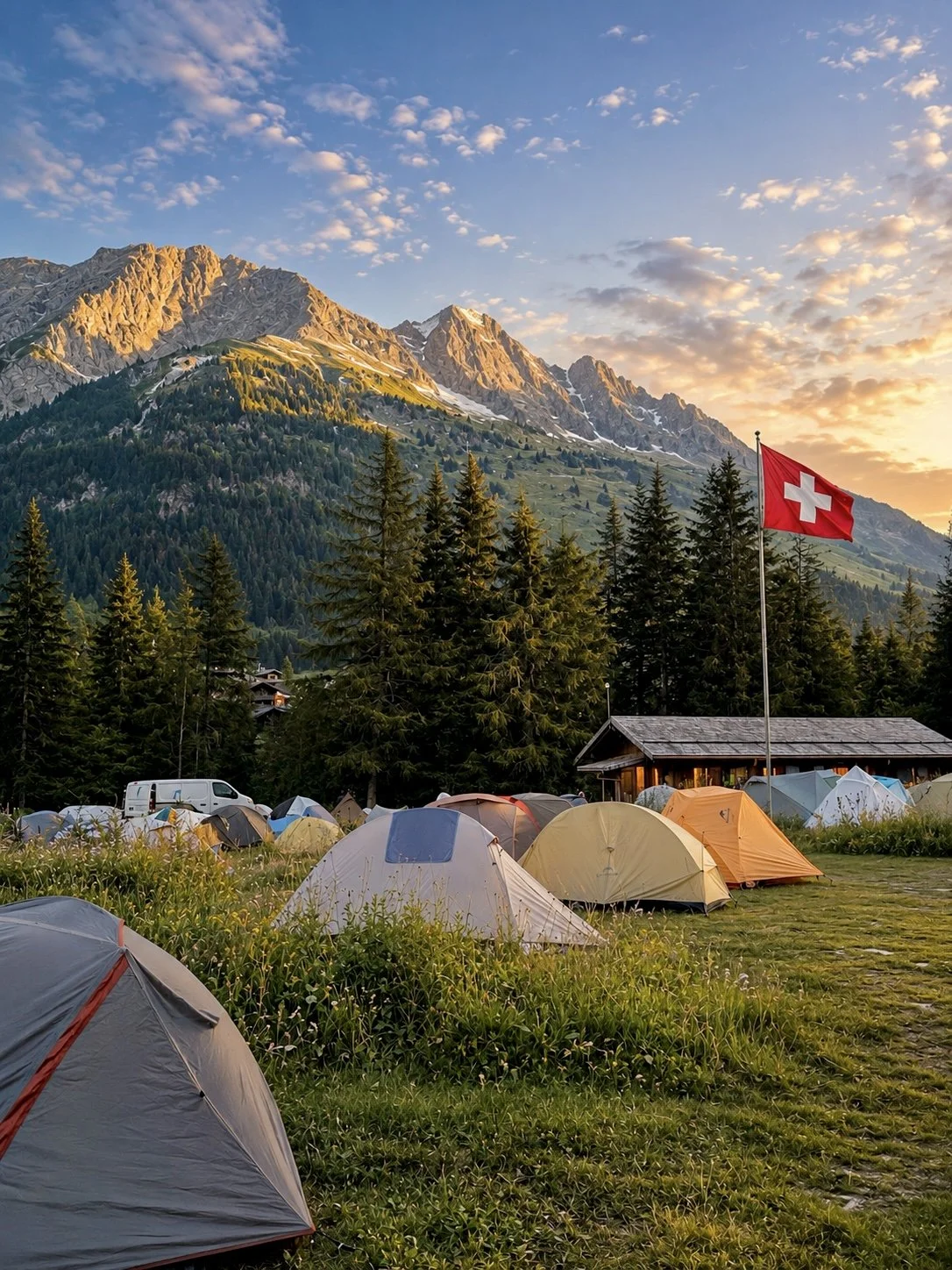
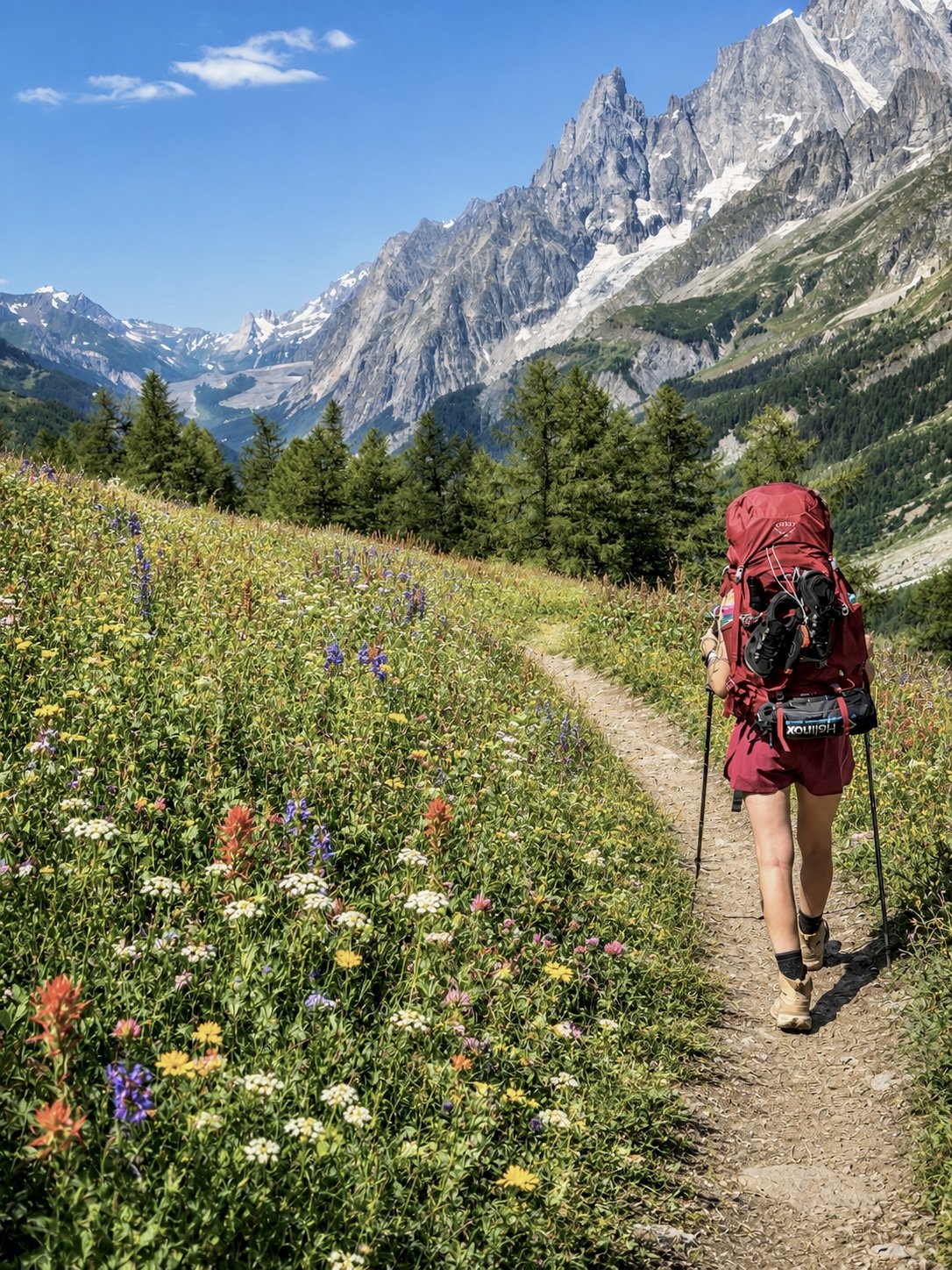
Stage one started with a short bus ride from Chamonix to Les Houches, and no self-respecting TMB hiker skips the photo at the trail sign before setting off. From there the Bellevue trail climbs almost immediately into properly alpine views, and the French side gives you the trail's whole personality in miniature: pine forest one hour, open meadow the next, wildflowers thick enough — lupine-purple spikes, yellow buttercups, white cow parsley — that it was hard to remember we were supposed to be making distance. We ended the day at the bivouac beside the refuge at Nant Borrant, tents scattered across the designated camping area, a fountain a couple hundred meters off, and a very good, very simple refuge dinner.
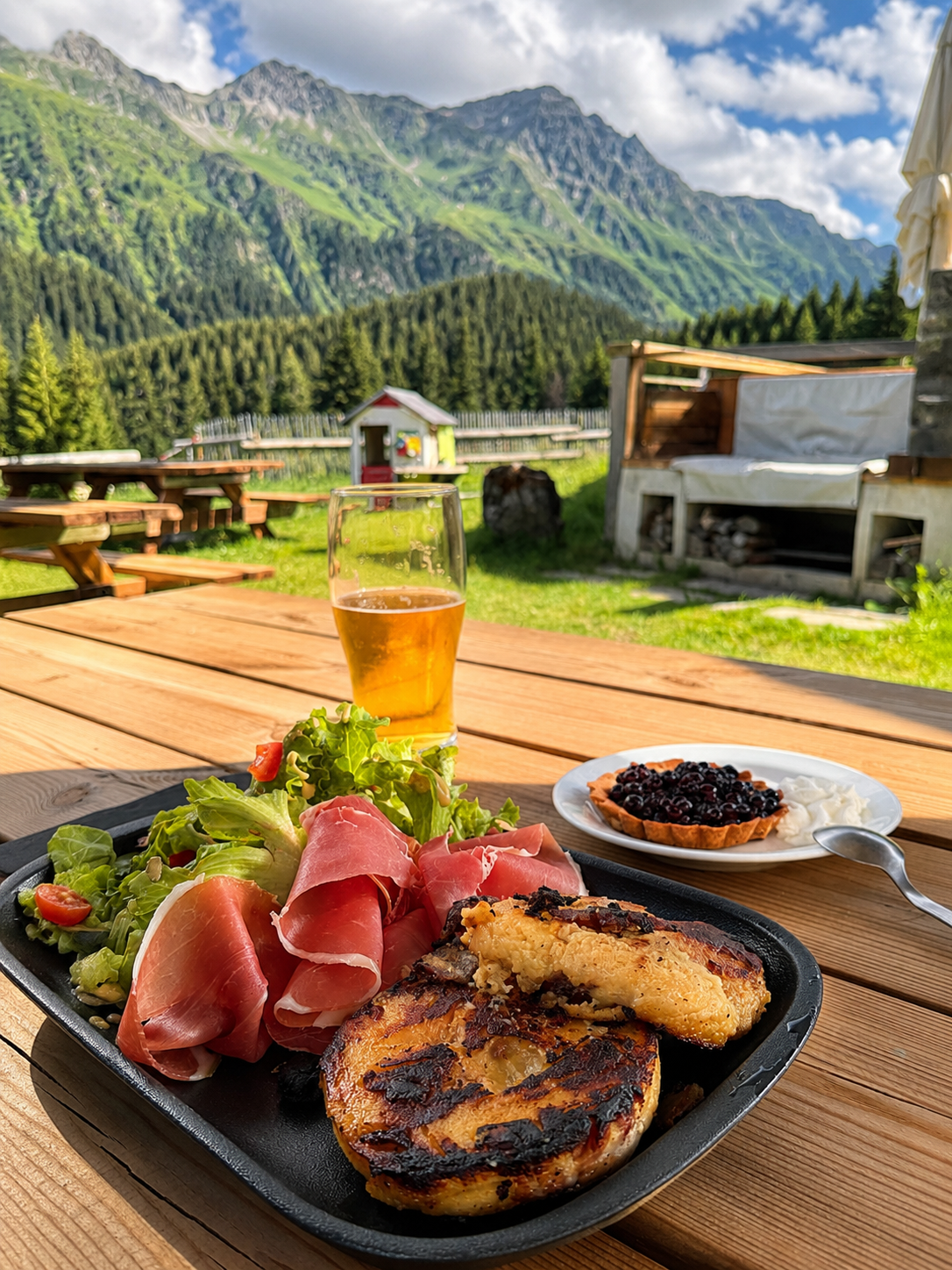
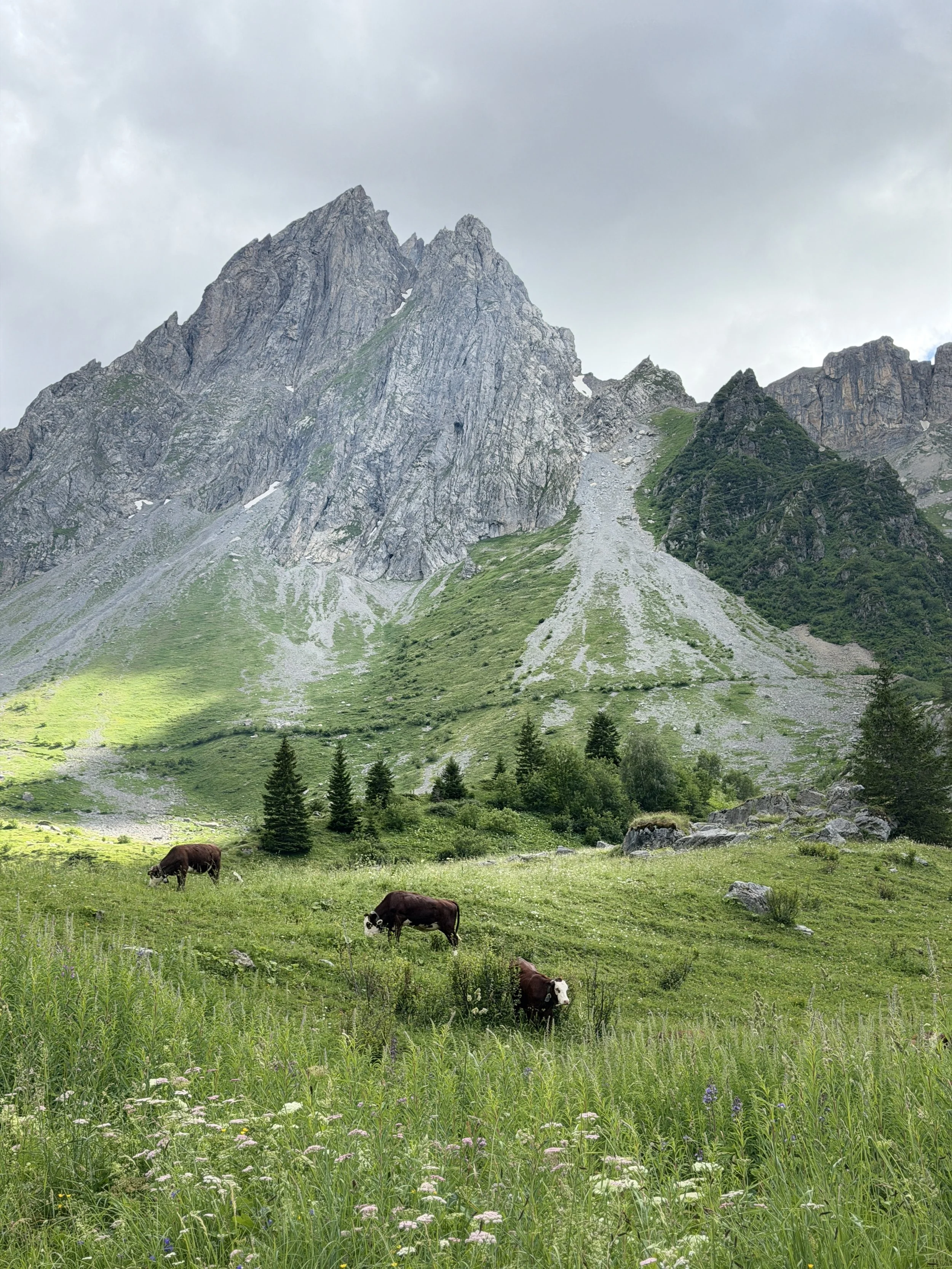
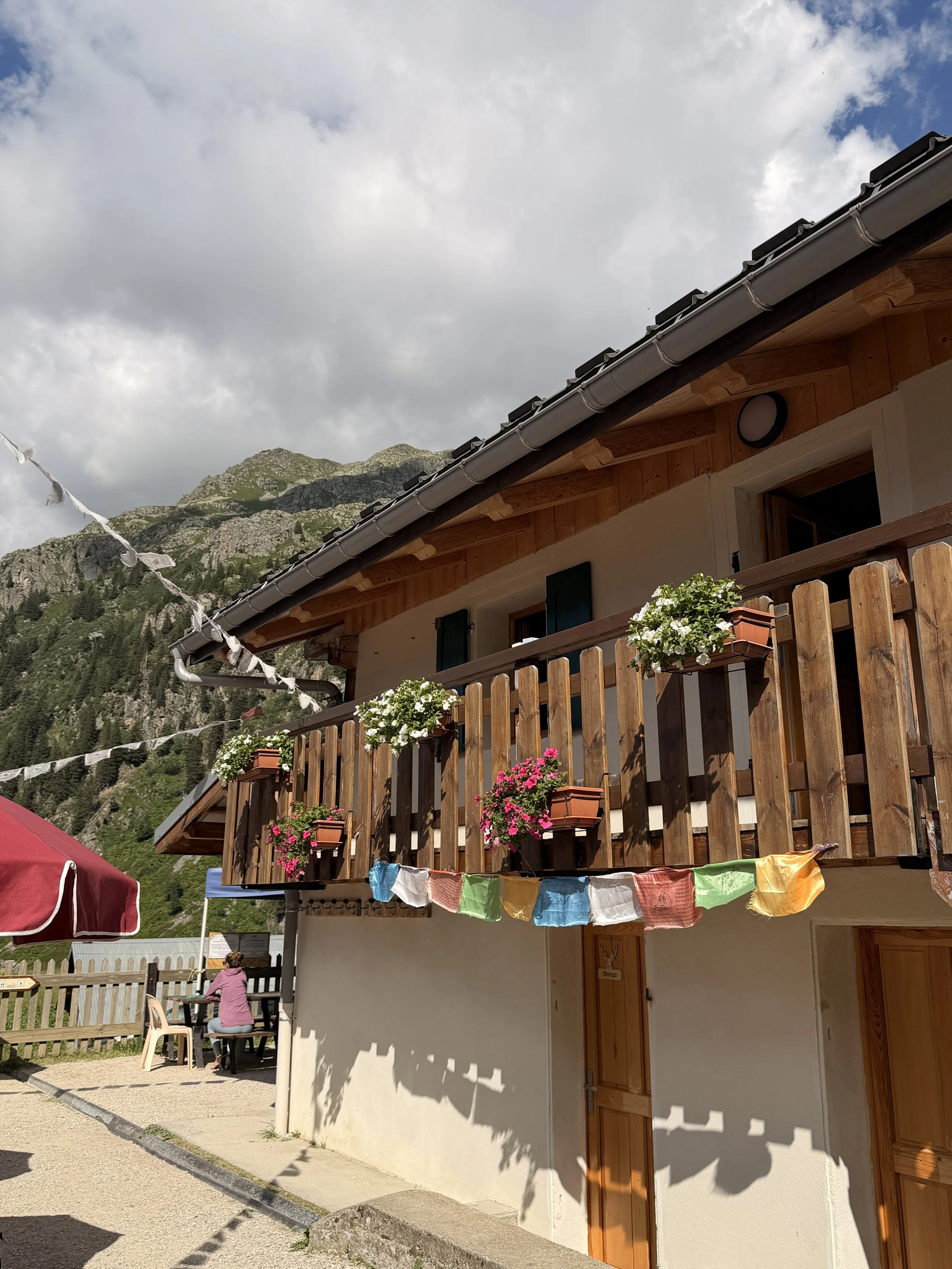
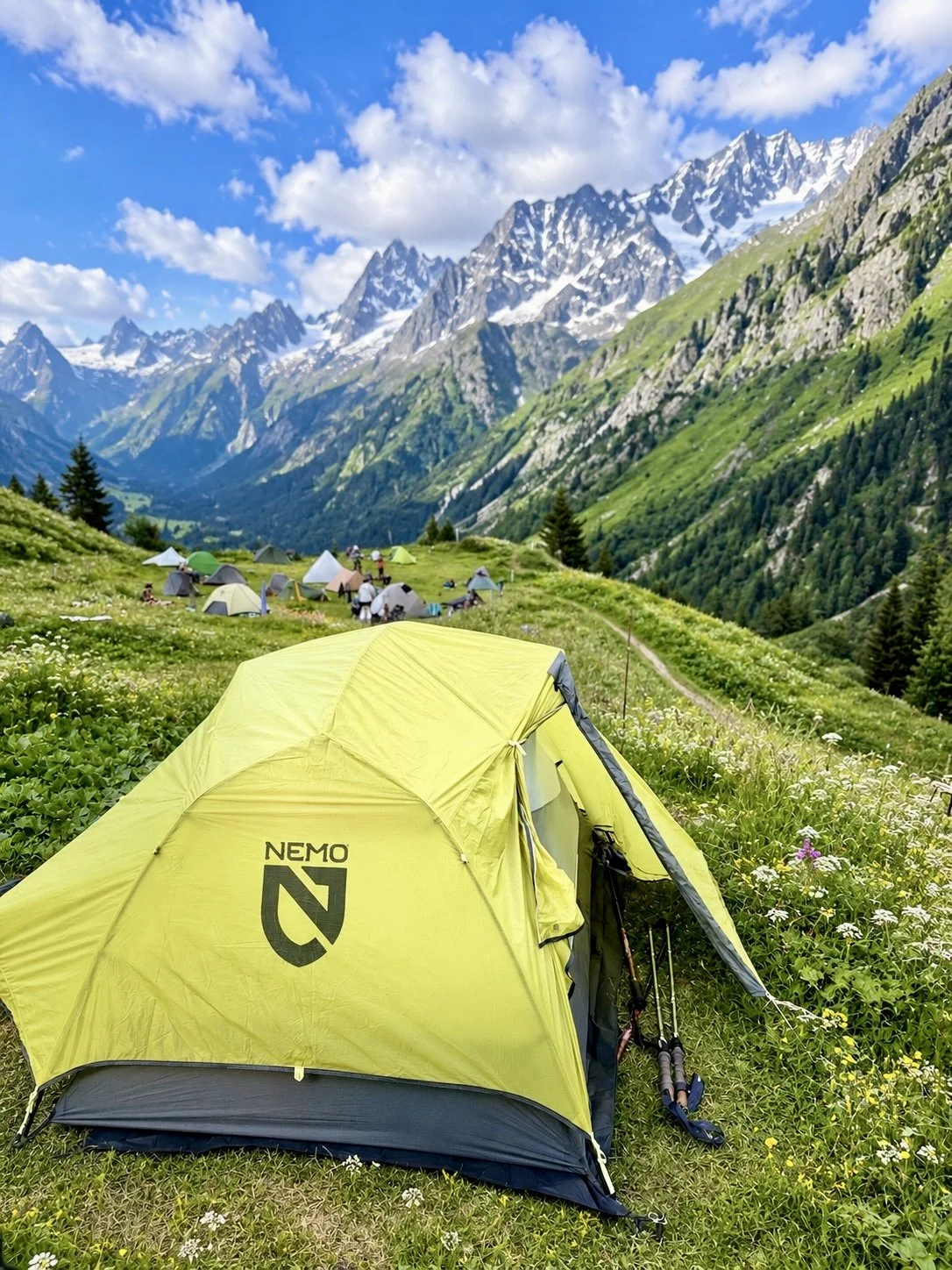
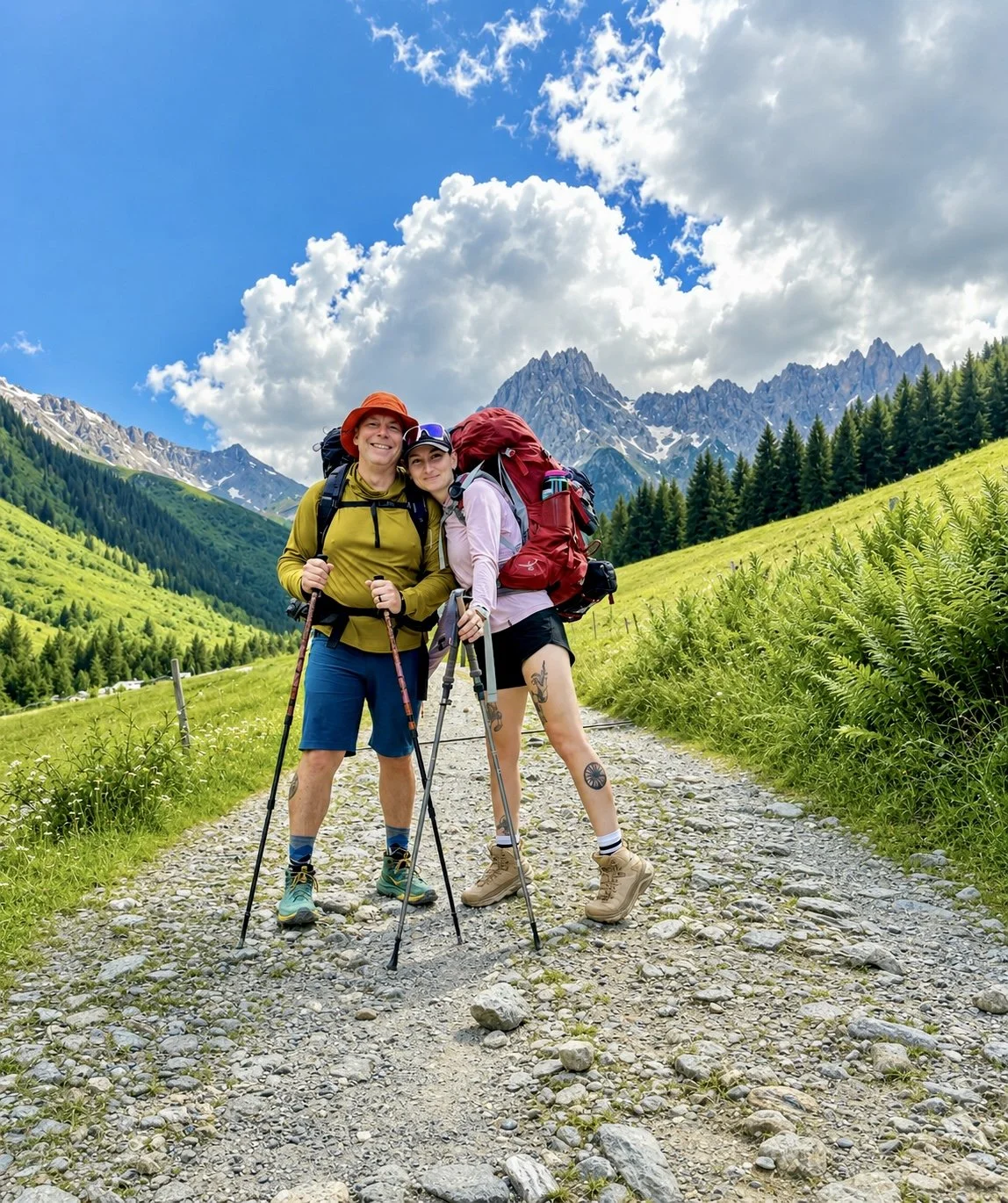
A note on that last part: popular refuges along this route book up months in advance for the summer season, and Nant Borrant was no exception — not all refugees serve dinner to hikers who are not staying there. Always have a backup plan.
Stage 2: Col du Bonhomme and Col de la Croix du Bonhomme to Les Chapieux
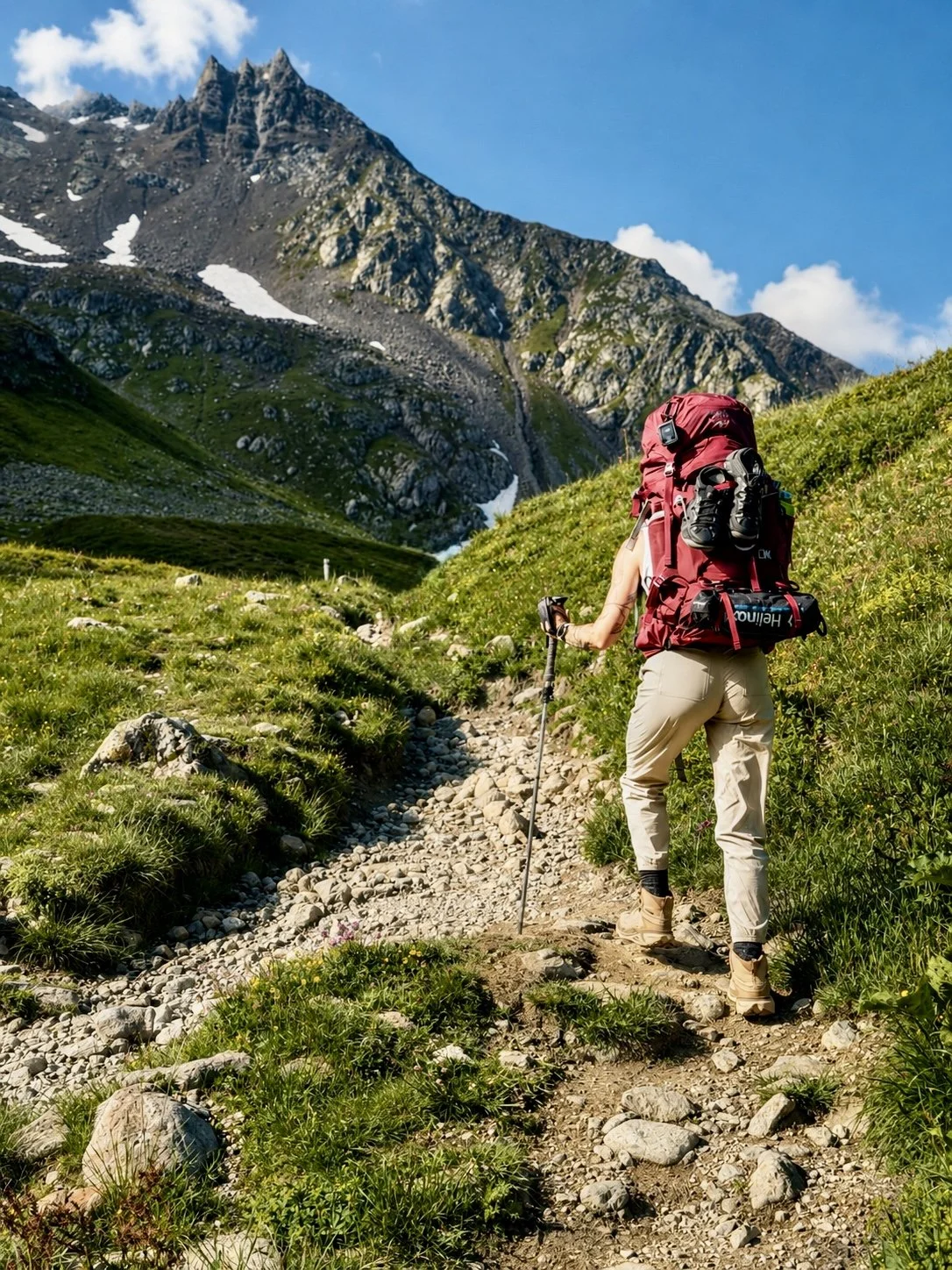
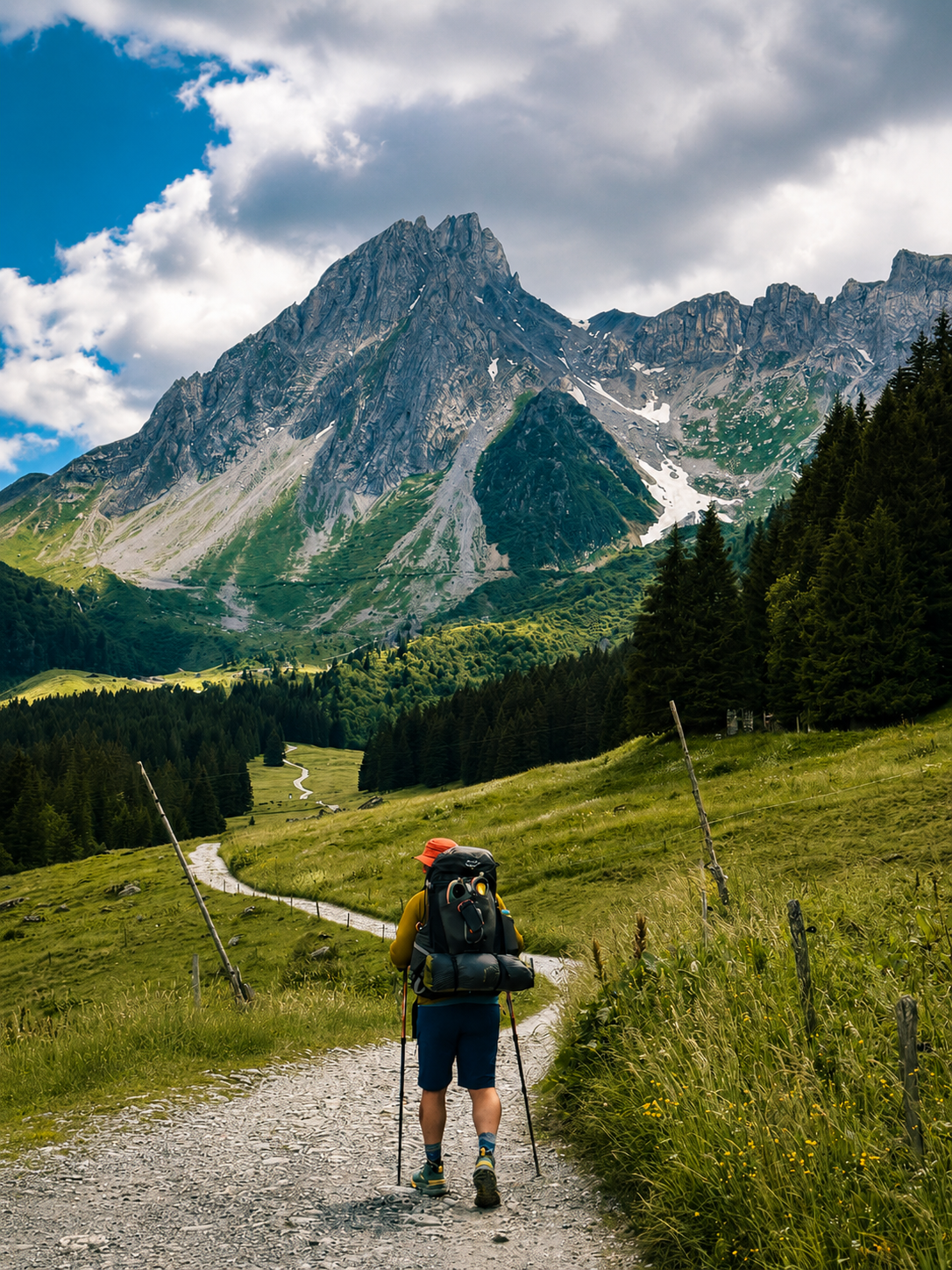
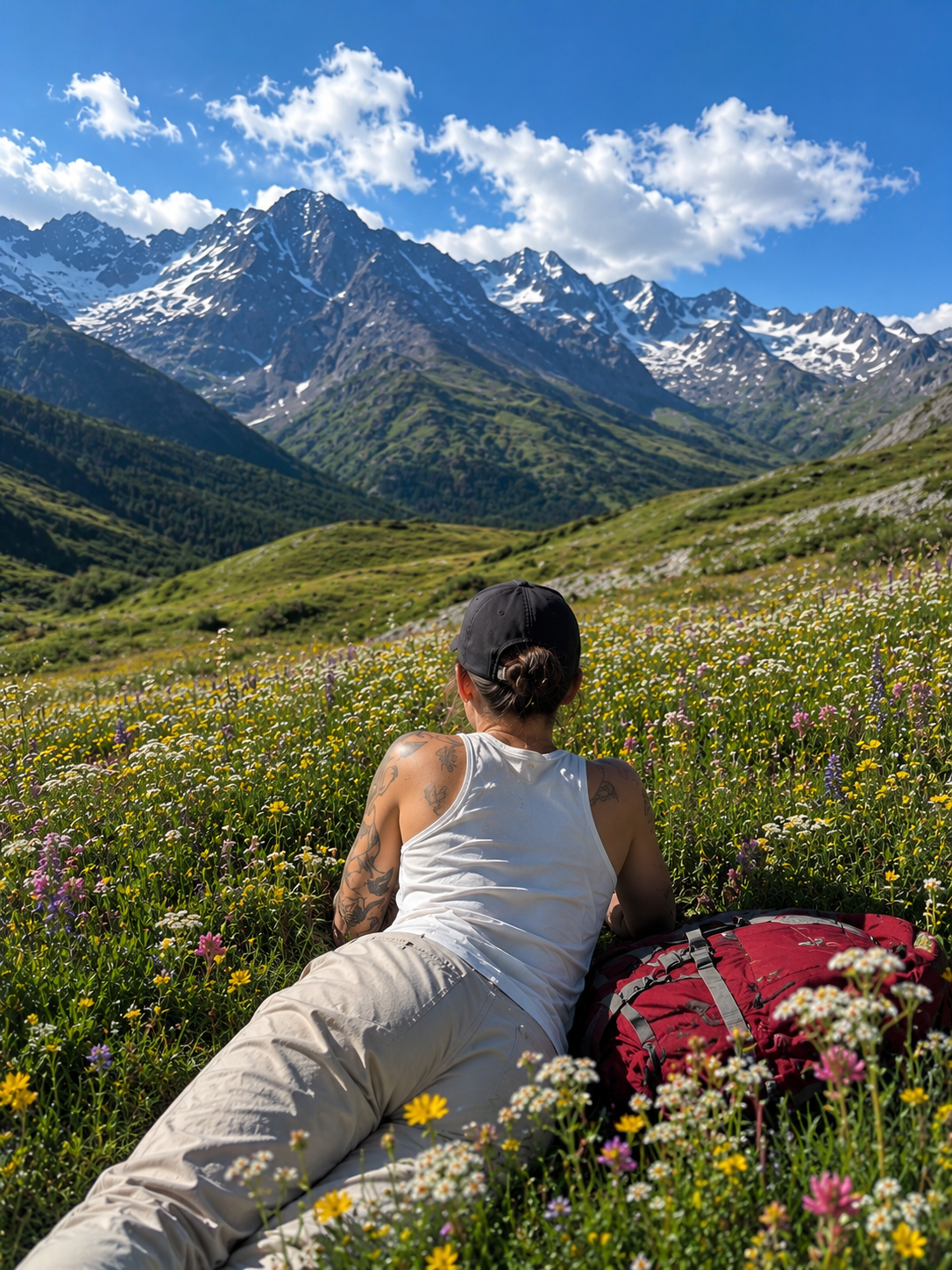
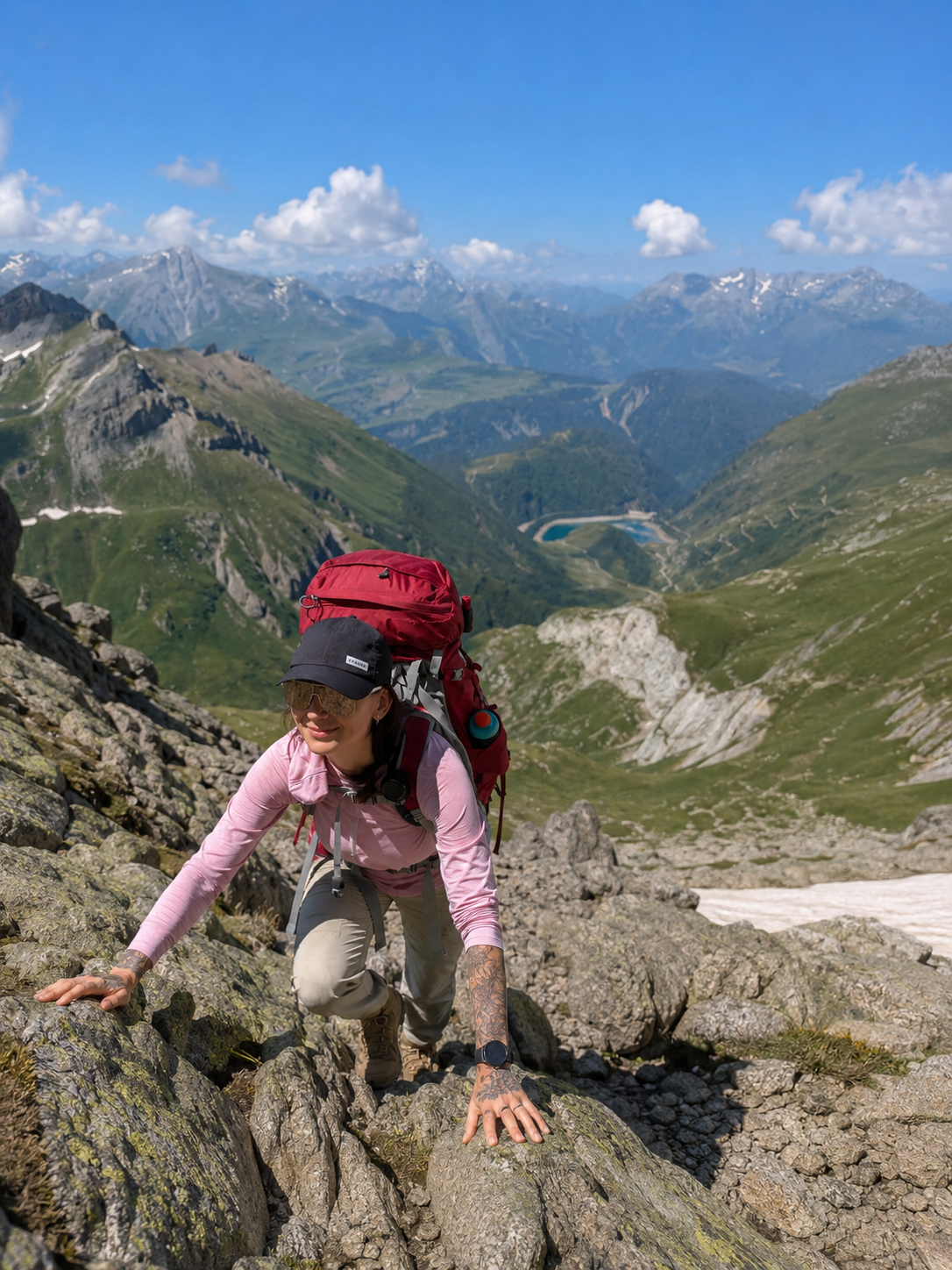
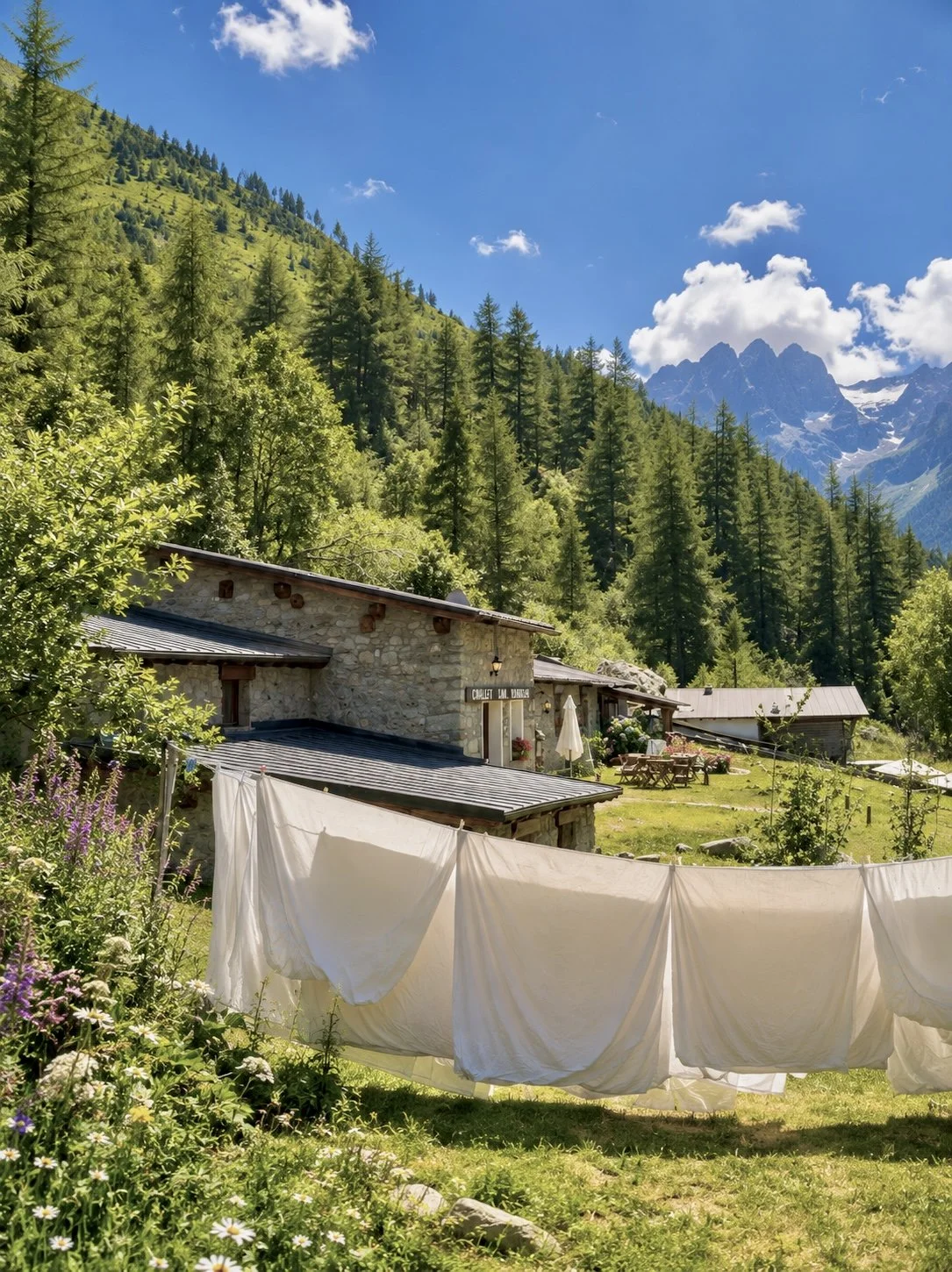
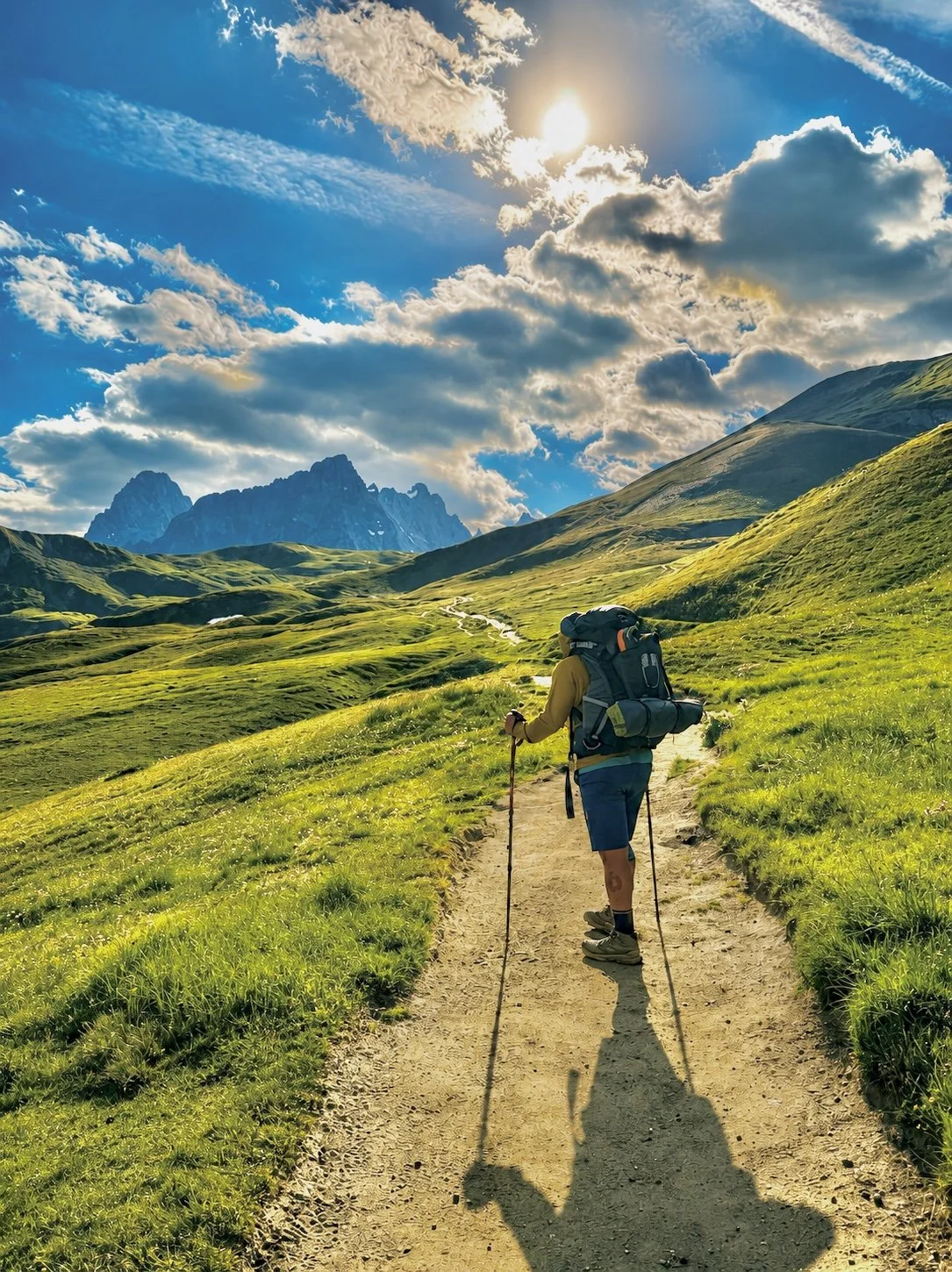
The next stage was the one that had "demanding" written all over it before we'd even left camp: up through alpine meadow to Col du Bonhomme, and then higher still to Col de la Croix du Bonhomme at 2,483 meters, with the kind of exposure that makes you place every footstep on purpose. We made a point of getting over both passes before early afternoon — alpine weather up there can flip from clear to socked-in fog or a full-on storm in fifteen minutes, and the exposed sections are not where you want to be caught in one. We rested at the refuge near the top before a long descent into the Les Chapieux valley, camping that night at the official bivouac area there. They have a small market, a pizza restaurant, and a beer garden there. They also have showers and a massage cabin!
Sidebar on the Refuge du Col De La Croix Du Bonhomme: it sucked. We waited over an hour for a piece of cake…we tried to order pasta and ratatouille and they dont have a way to track who ordered what. Food was coming out and they had no idea who ordered it and when. We got out of there pretty quickly and were dissapointed after that massive climb.
Les Chapieux was also the one spot on the entire trip where we had zero cell service. We'd brought a Garmin inReach as a backup and ended up having real signal about 90% of the trip, so it genuinely caught us off guard — we needed a taxi to Courmayeur later on and had to track down a pay phone to make the call happen. Worth keeping in mind: don't assume you'll have a bar just because you've had one everywhere else.
Stage 3: Col de la Seigne — Crossing from France into Italy
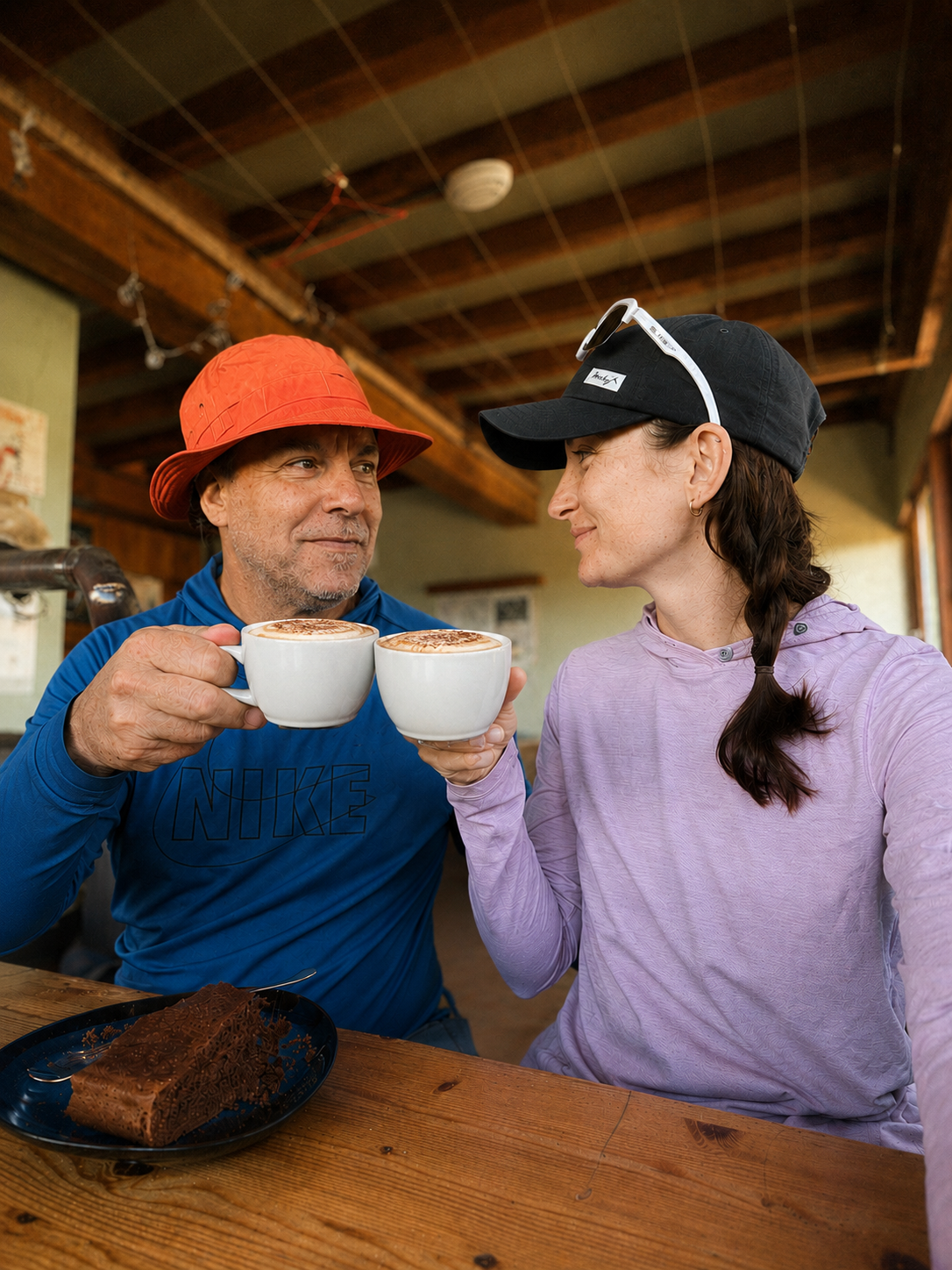
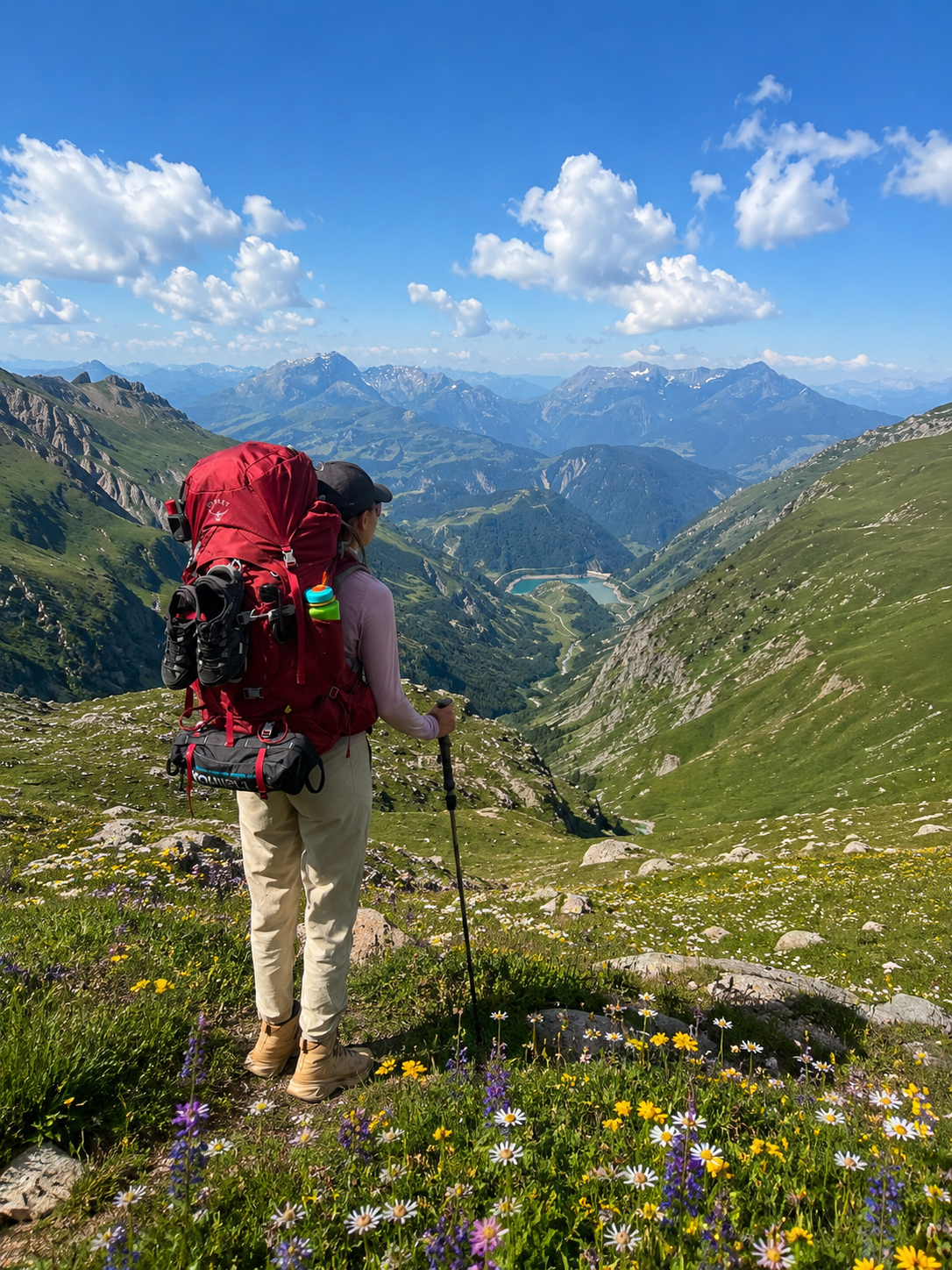
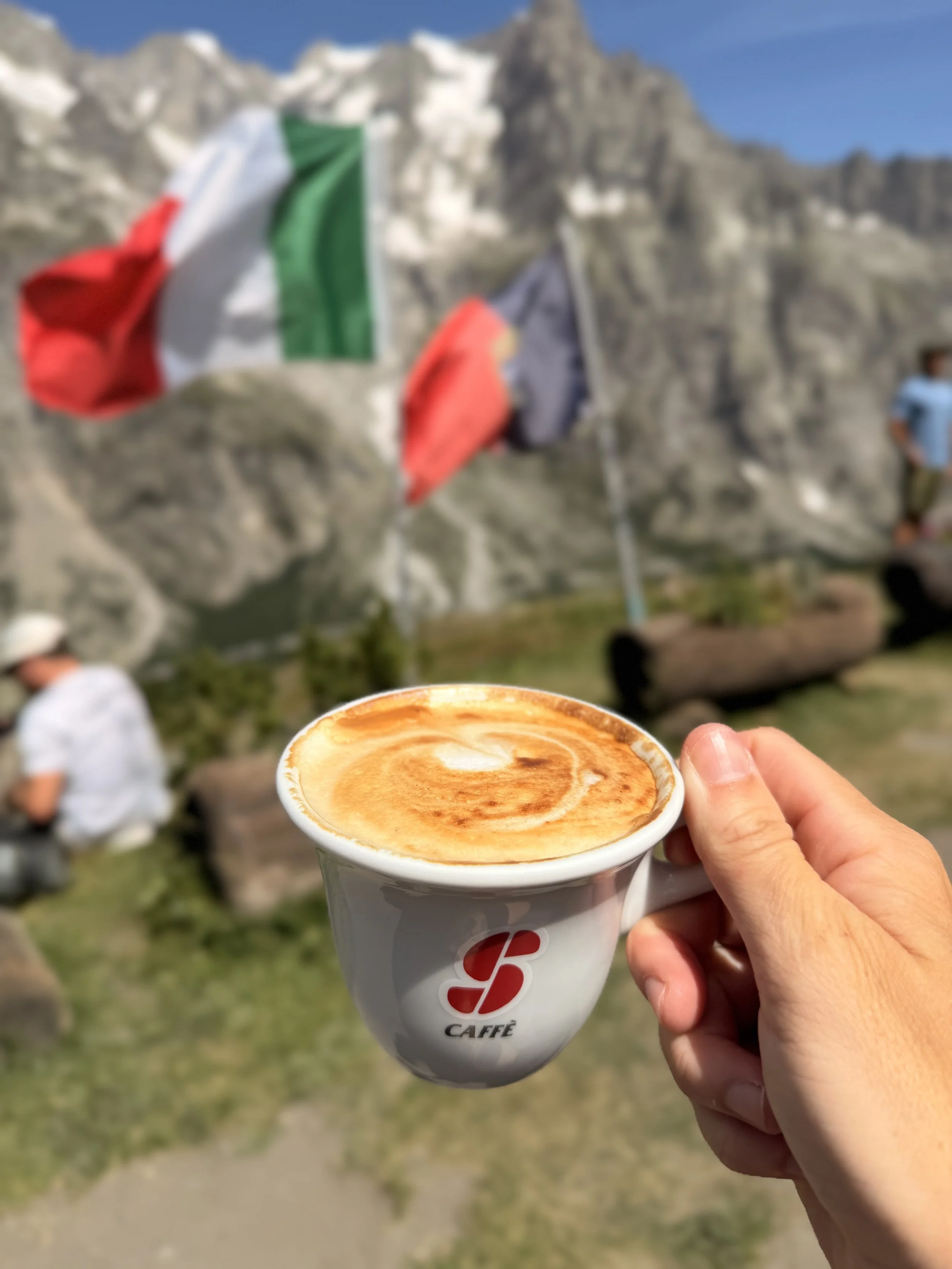
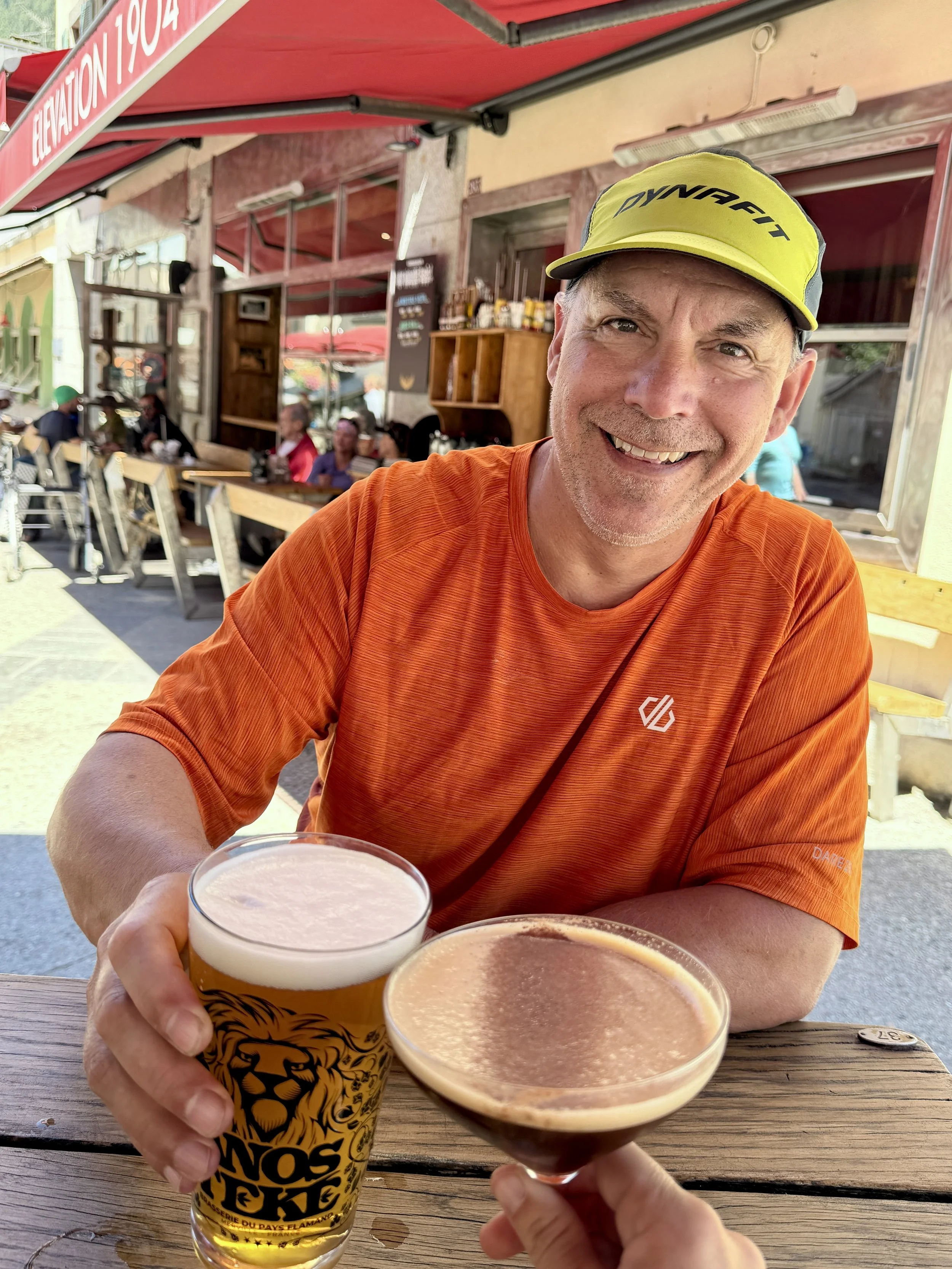
Day three took us out of France for good, up and over Col de la Seigne at 2,516 meters — the border crossing into Italy — with the Italian side of the Mont Blanc massif suddenly laid out in front of us from a completely different angle. We stopped at Les Mottets for a crêpe and coffee, then again at Rifugio Elisabetta, which might have been the best lunch stop of the entire trip, before descending into Val Veny to camp near Cabane du Combale. Some of my favorite frames from the whole trip aren't views at all — they're the in-between moments, two mugs raised across a wooden table, the particular relief of taking your boots off at the end of a pass-crossing day like that one.
One adjustment worth planning around: France and Italy run on very different clocks. In France, most places are open by 6am, so getting breakfast before an early start on trail is easy. In Italy, almost nothing opens before 8 or 9am, and dinner isn't served until 7 to 9pm — which is a real shift if you're used to hiking out at dawn. Once you cross into Italy, plan to either sleep in a bit or stash your own breakfast the night before.
Stage 4: Courmayeur, Italy — Rest Day and Hotel Picks
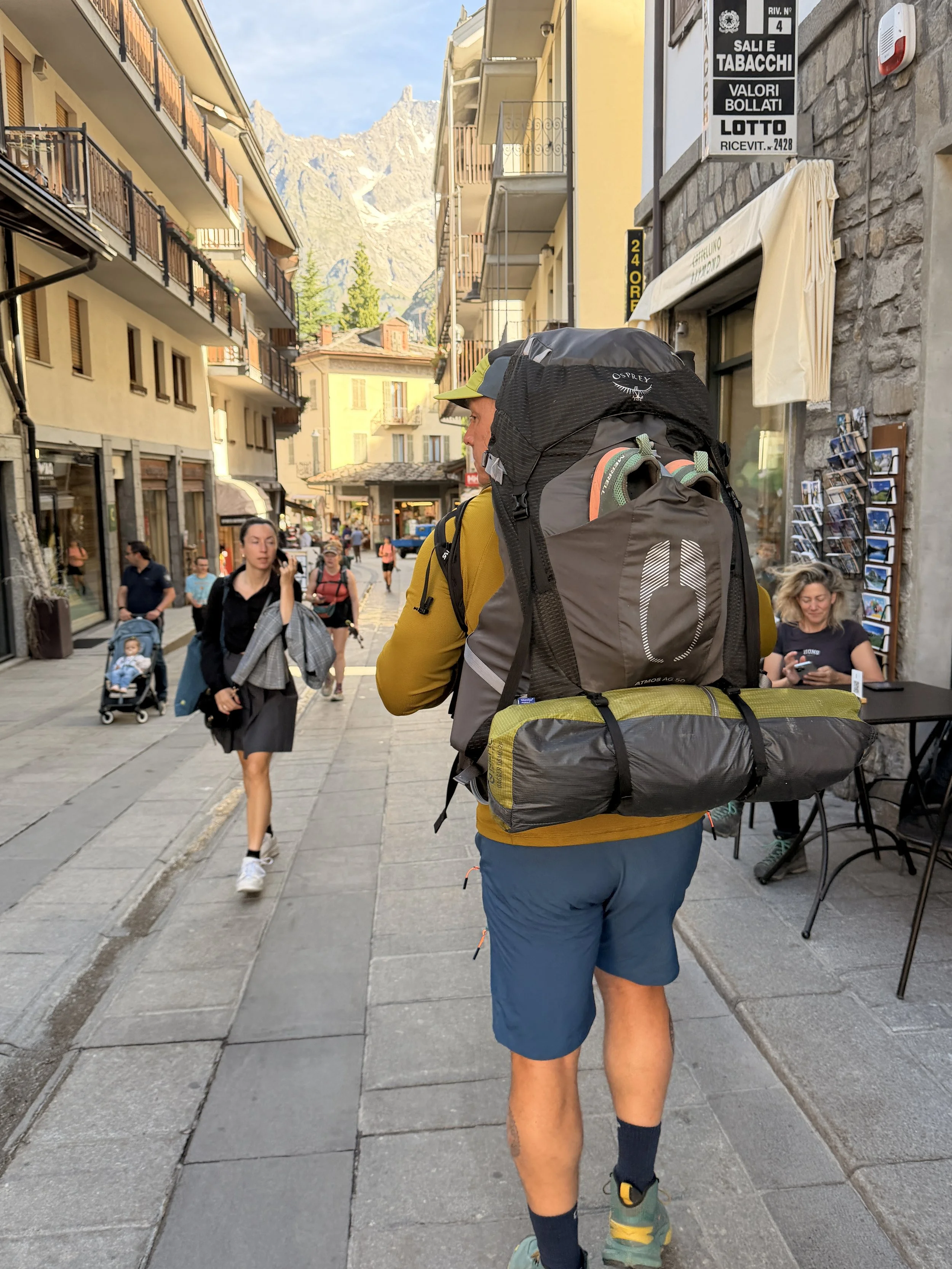
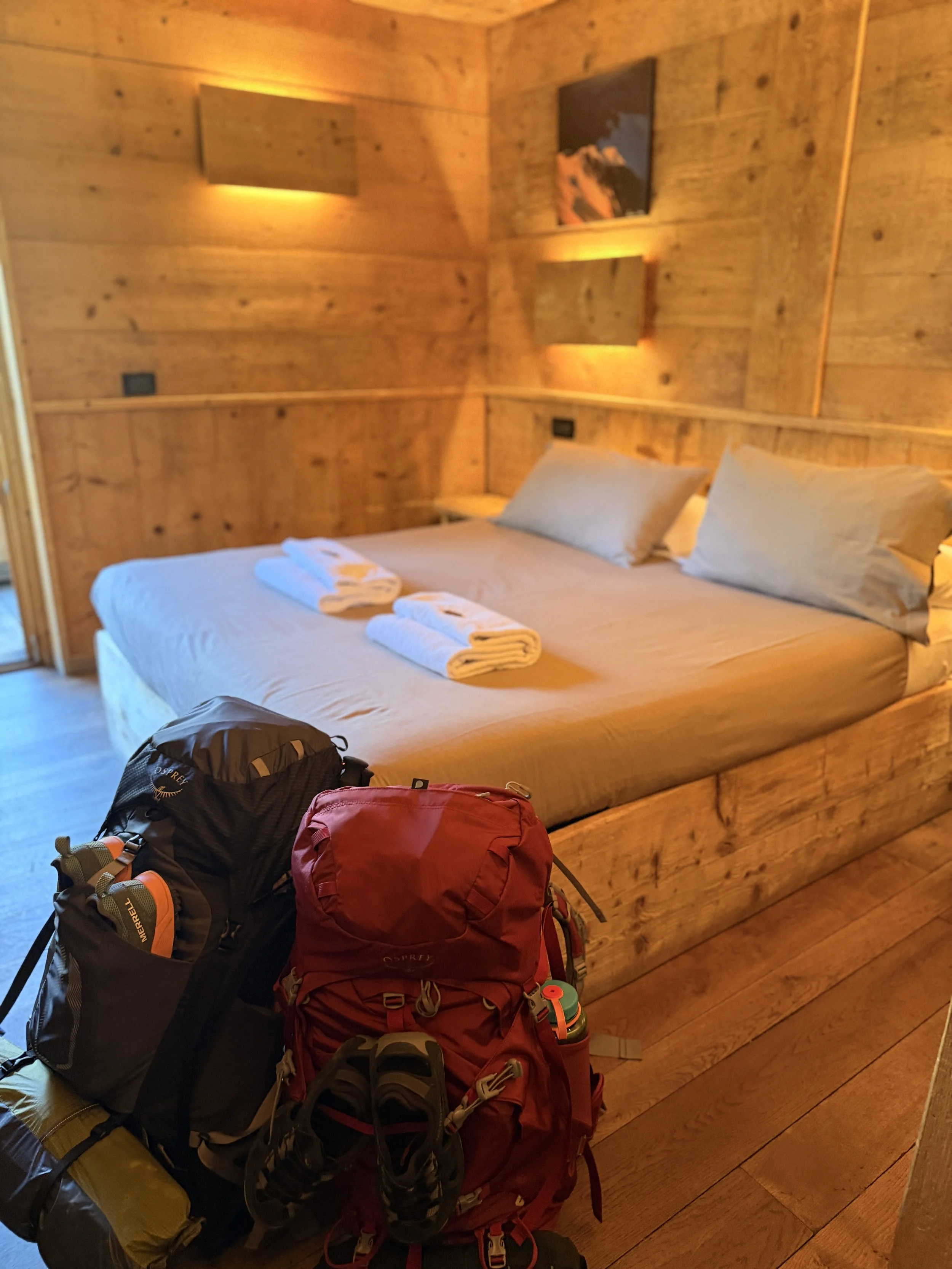
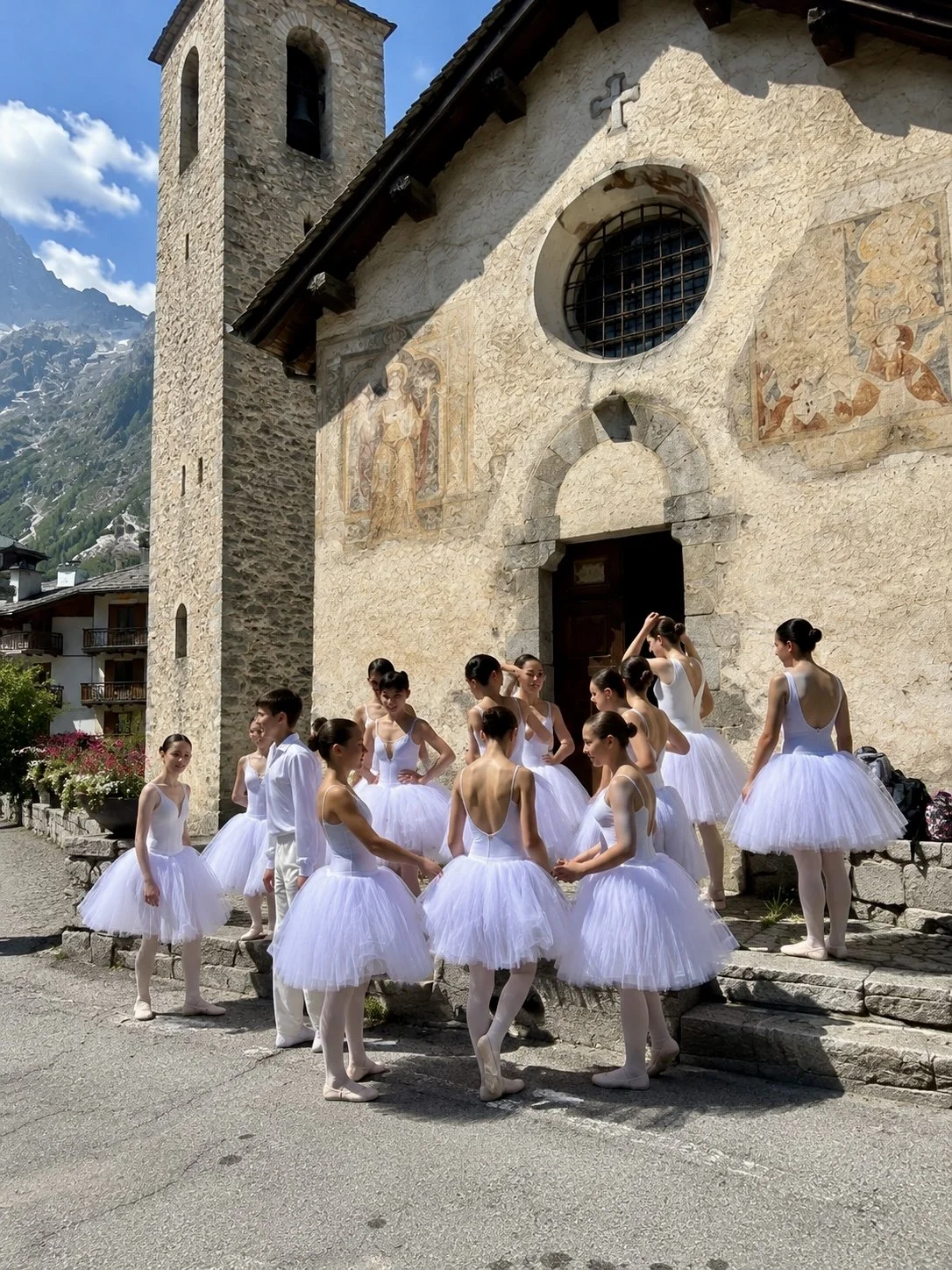
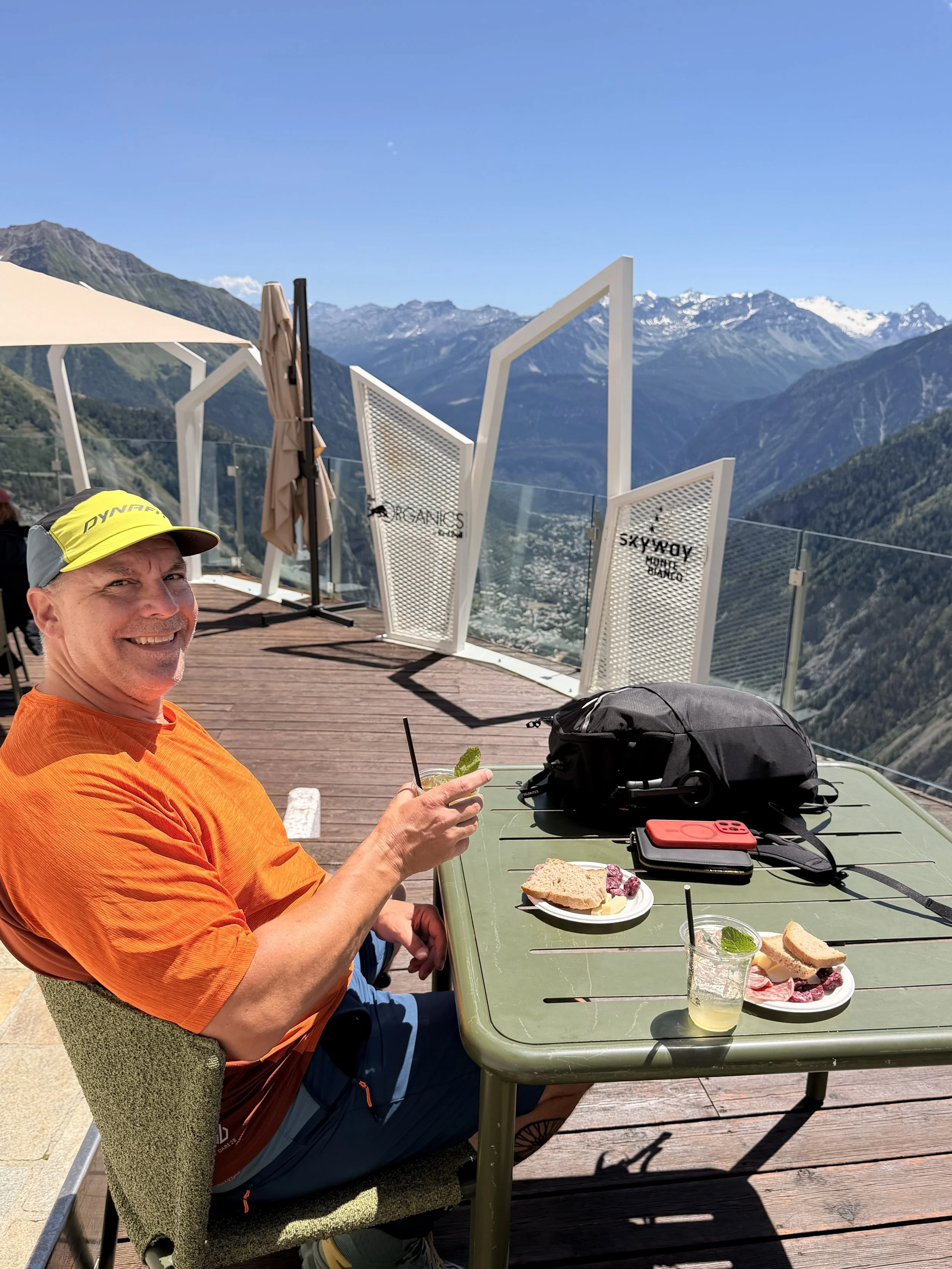
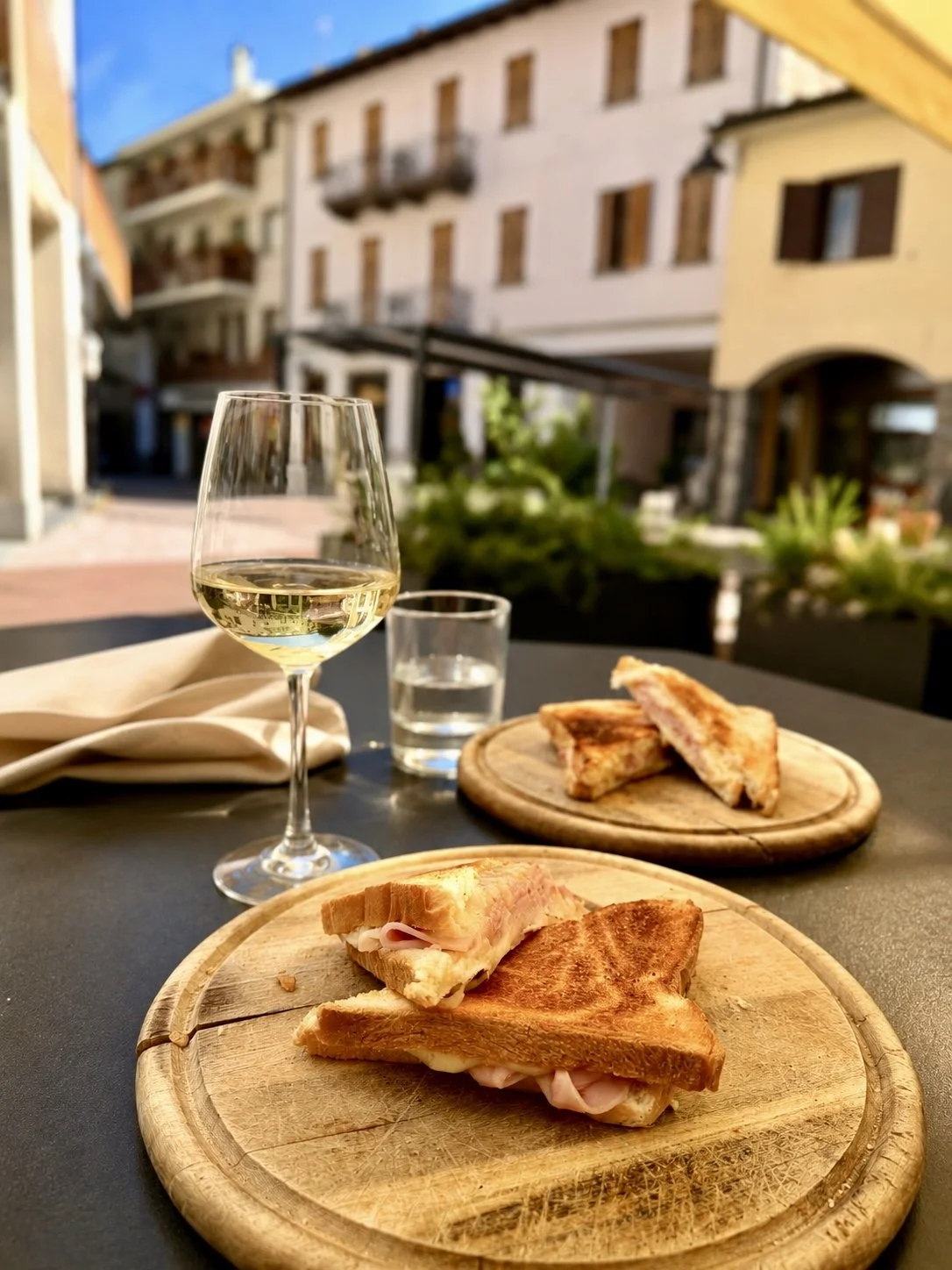
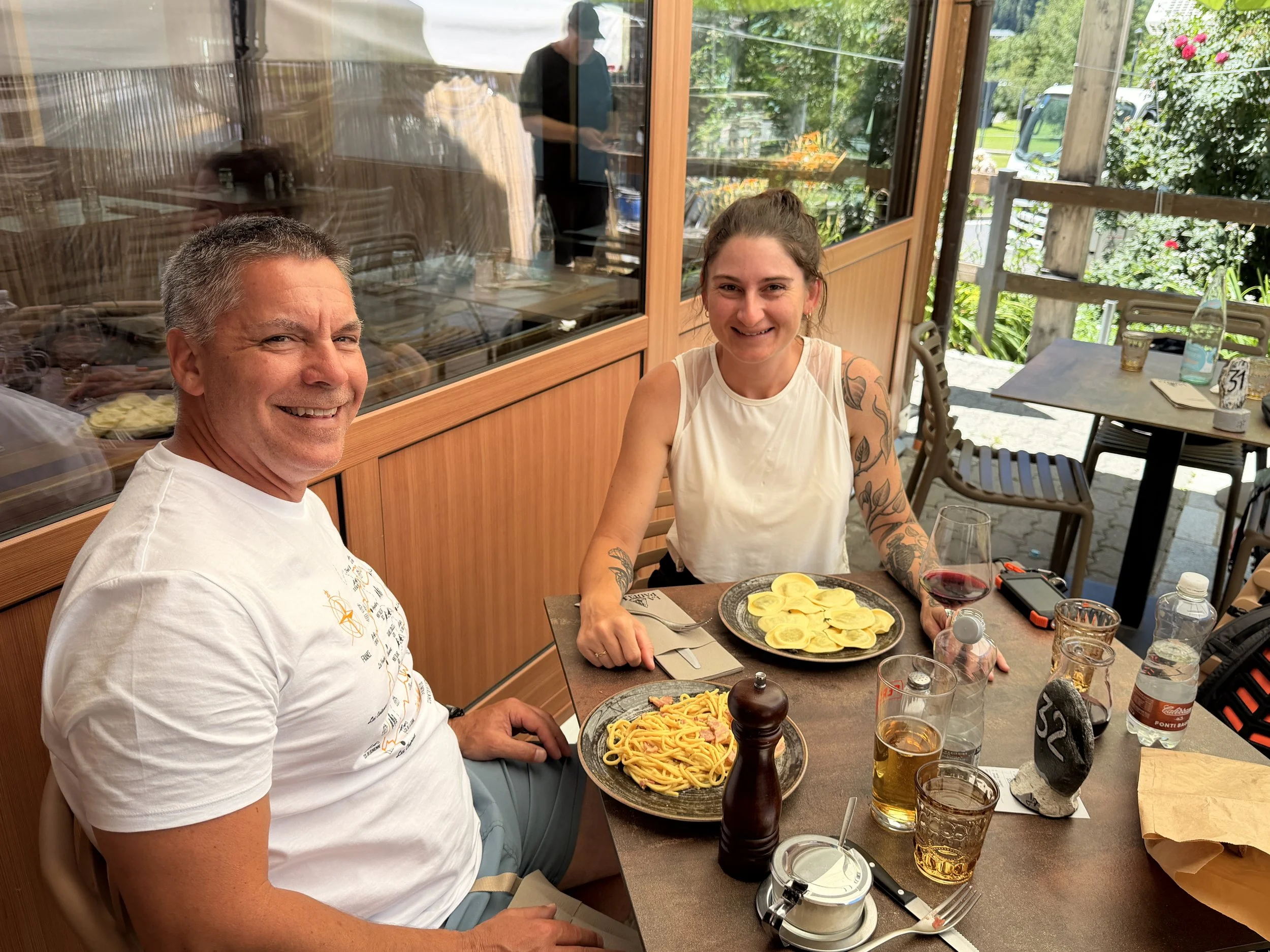
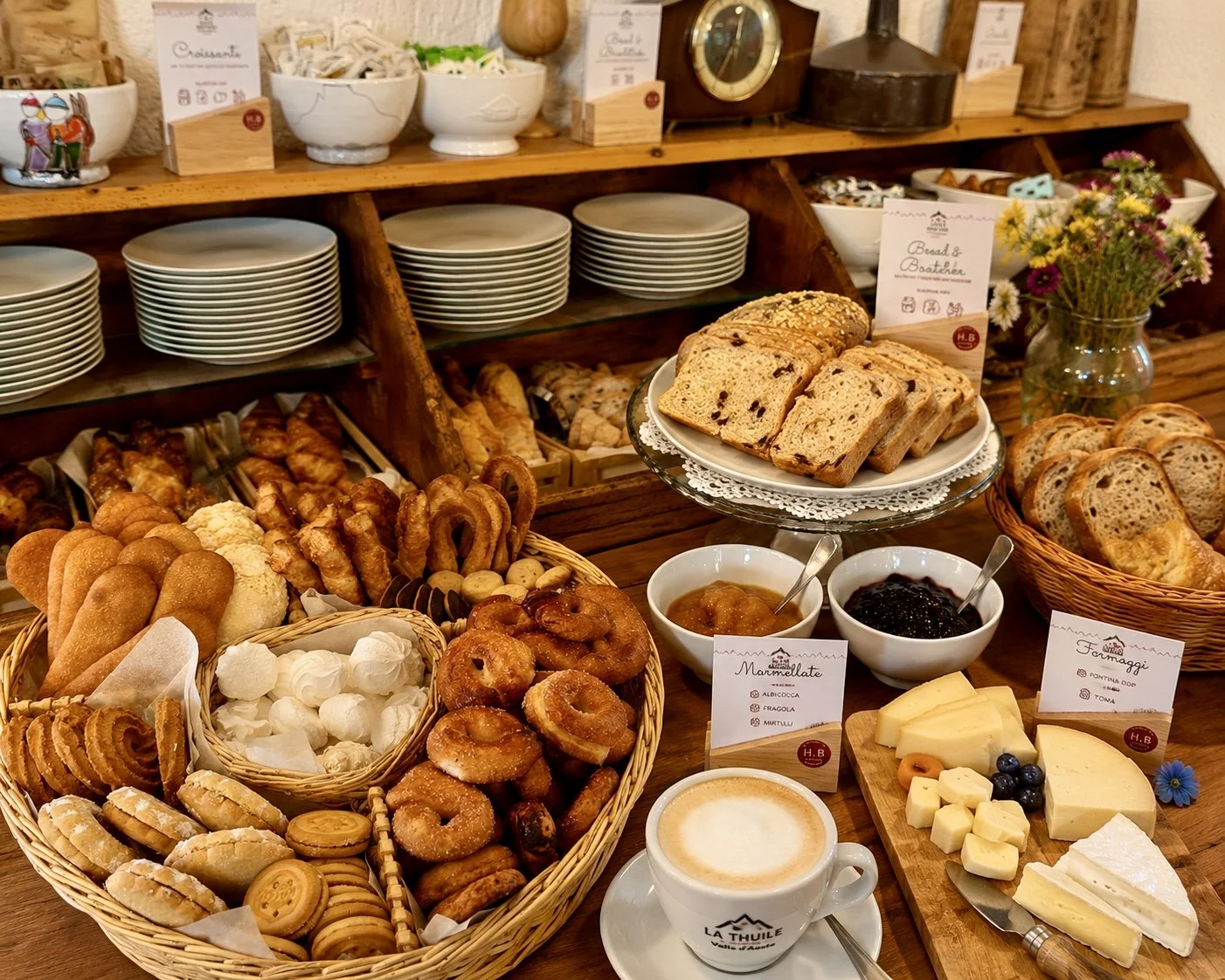
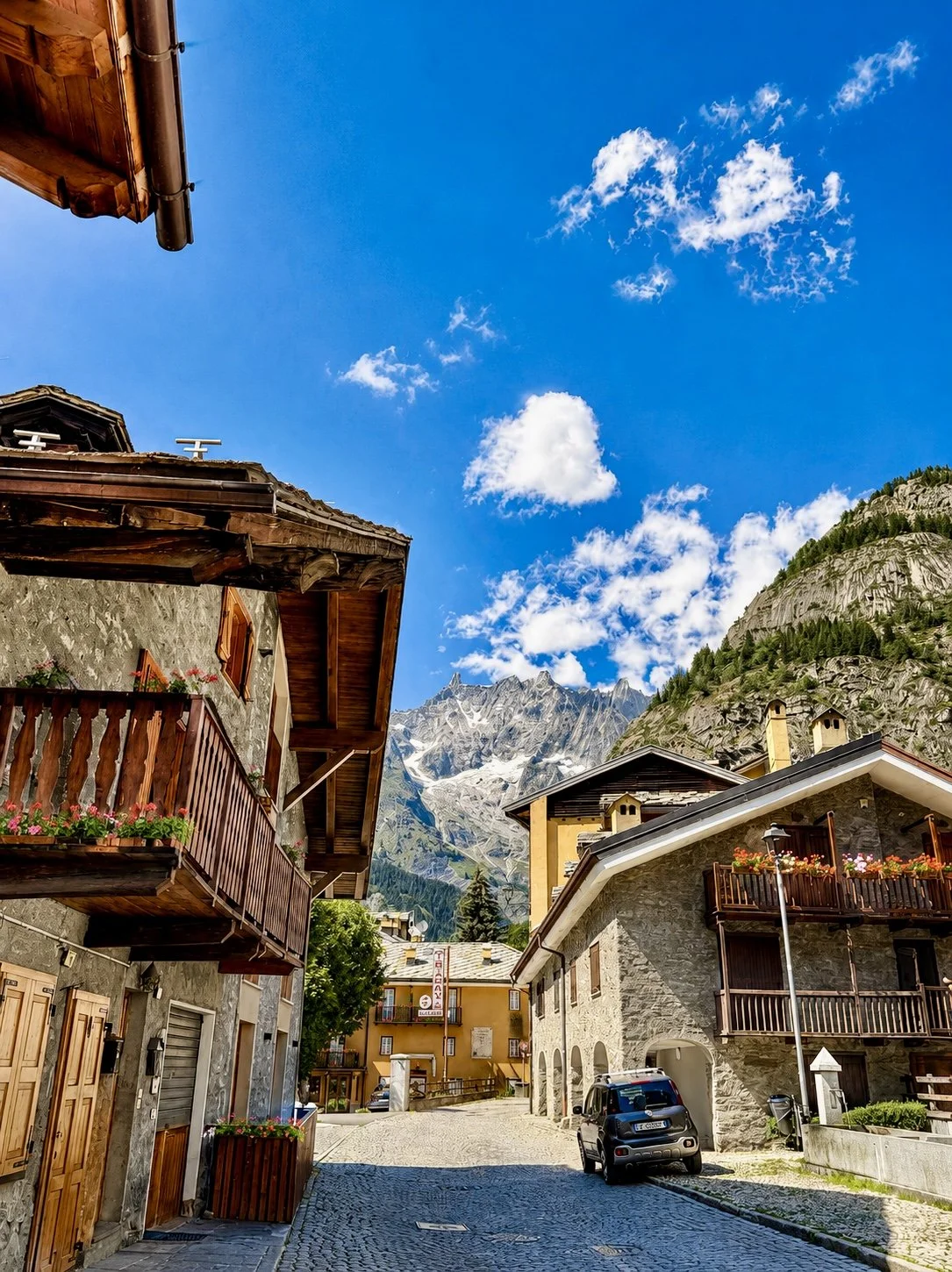
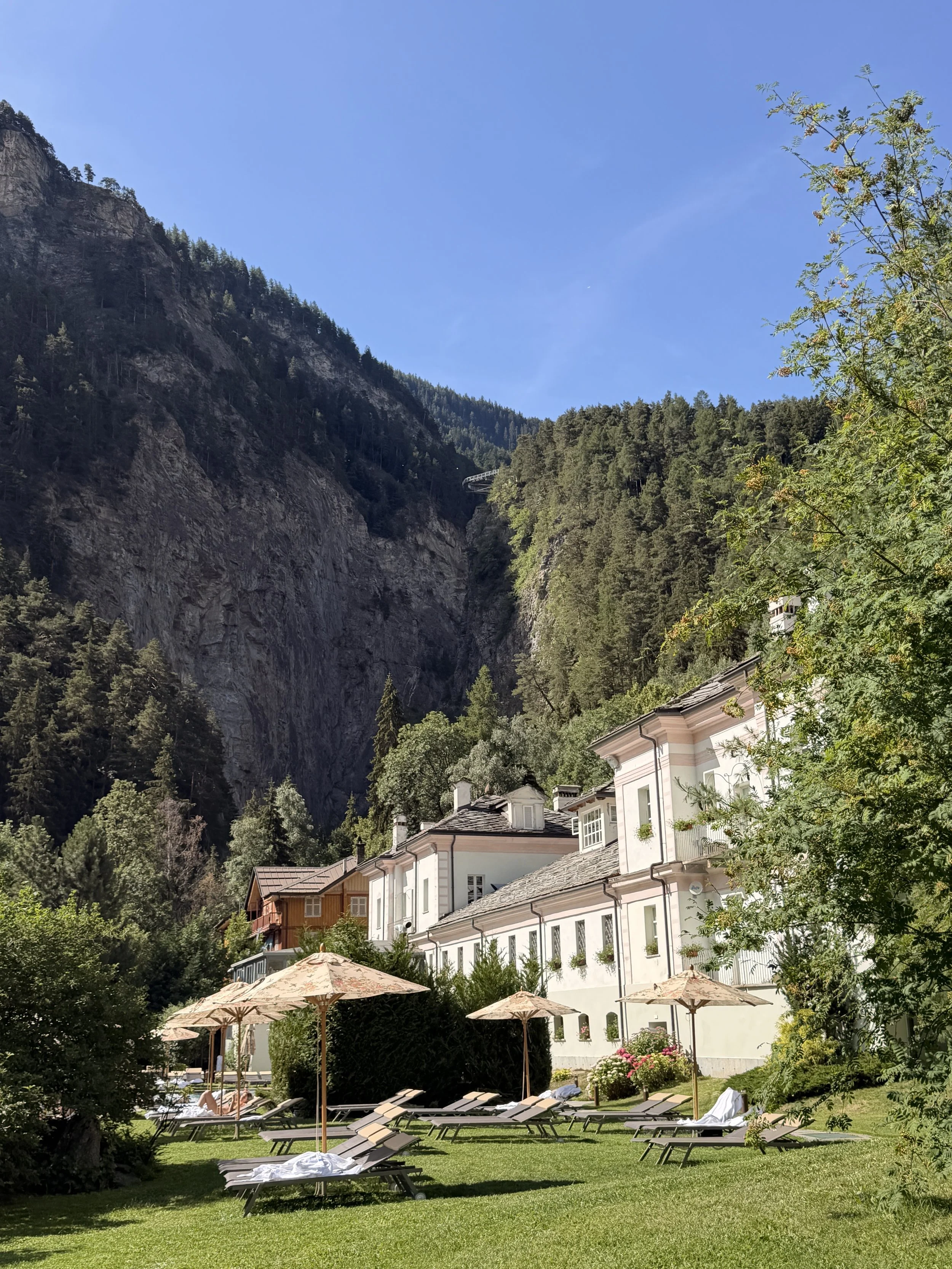
Stage four was mercifully short — the trail from Maison Vieille connects almost gently into Dolonne and then Courmayeur — which left plenty of time for gelato and espresso in town and handing our laundry over to the hotel, a small luxury that felt enormous after four days on trail. We stayed at Hotel Chalet Svizzero, a few hundred meters from the center of town, which worked well for both nights we spent in Courmayeur. If I'm being honest about hotel recommendations though, my favorite of the whole trip was Hotel Berthod — also in Courmayeur, right off the pedestrian street, and worth booking ahead if you're planning your own version of this trip.
We spent part of our rest day at the QC Terme spa in Pré-Saint-Didier, and honestly, it was a bit of a letdown — overpriced for what amounts to one big crowded pool, and the bus out there only runs every couple of hours, so you end up building your whole day around its schedule. We left earlier than planned. The better use of the day was a wellness lunch and an afternoon wandering Courmayeur's cobbled streets restocking supplies.
Stage 5: Val Ferret to Rifugio Walter Bonatti
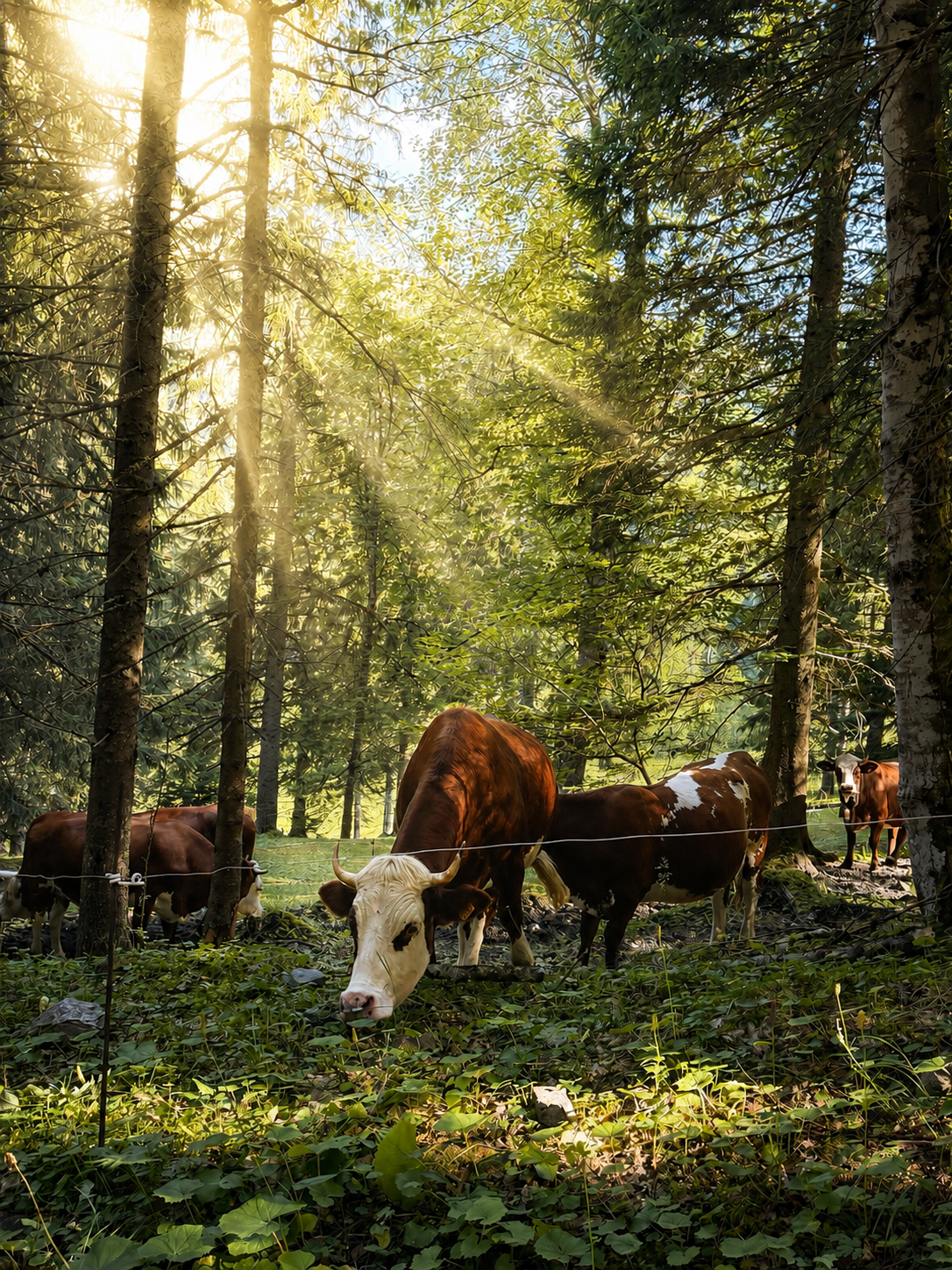
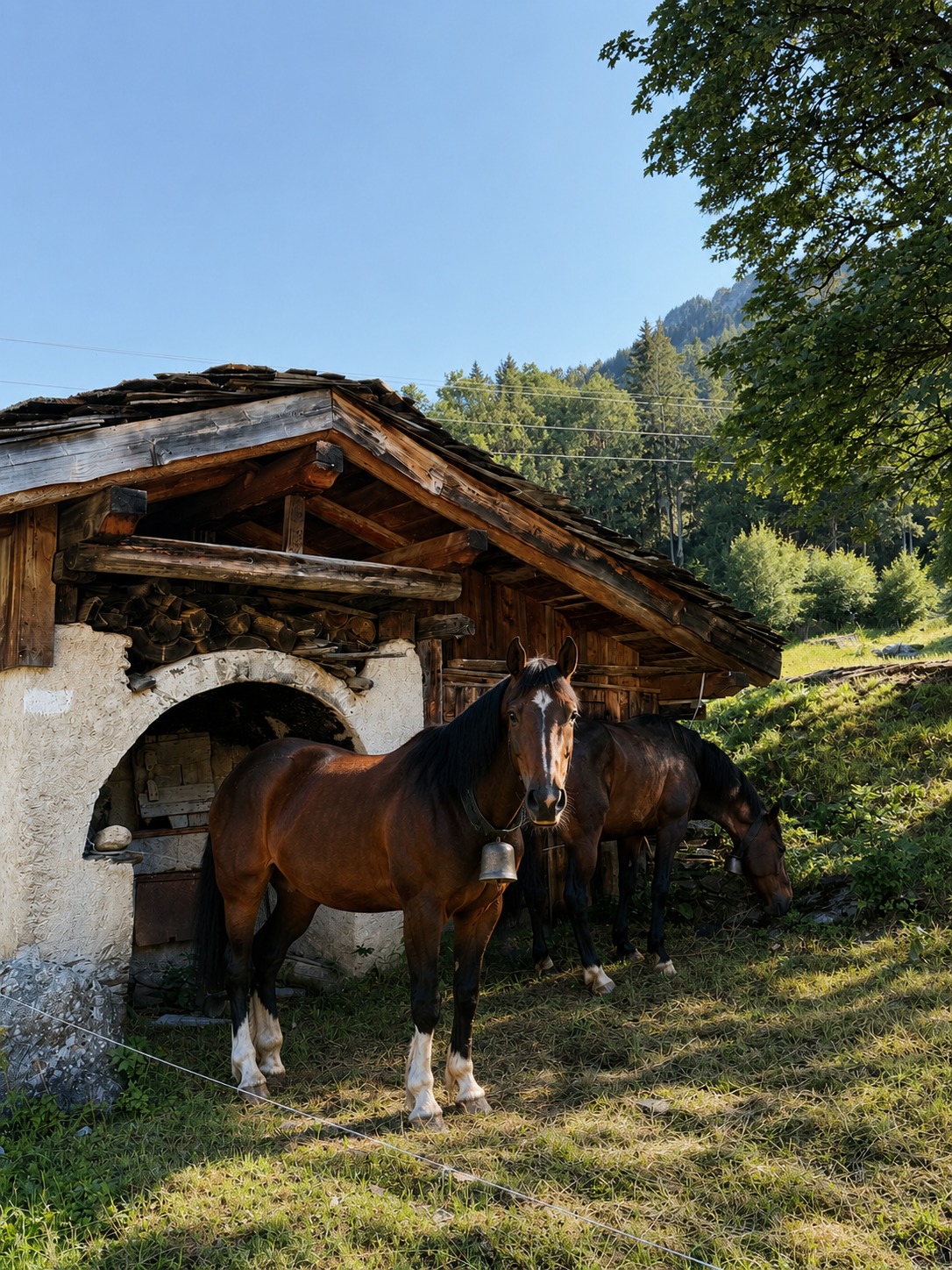
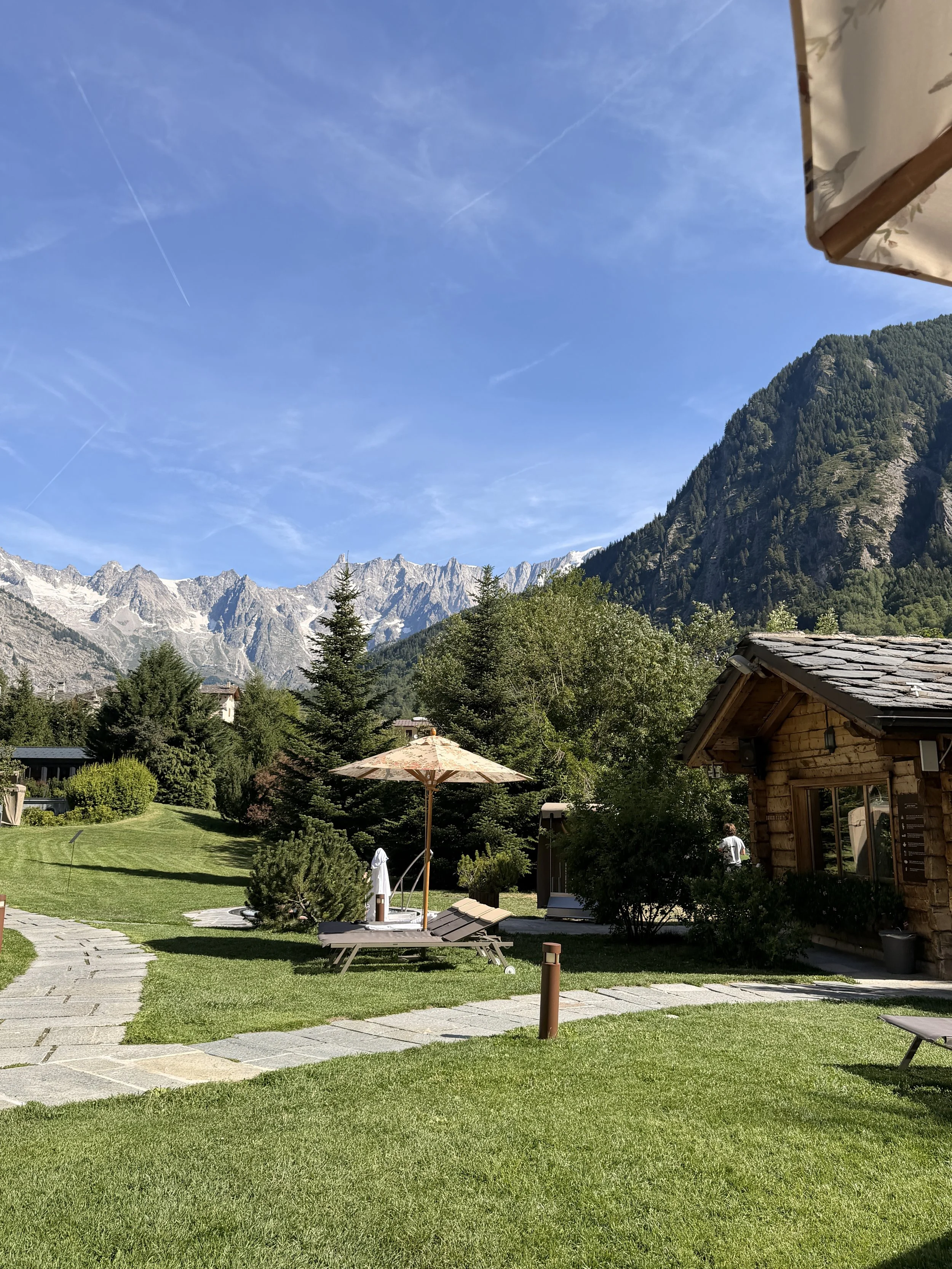
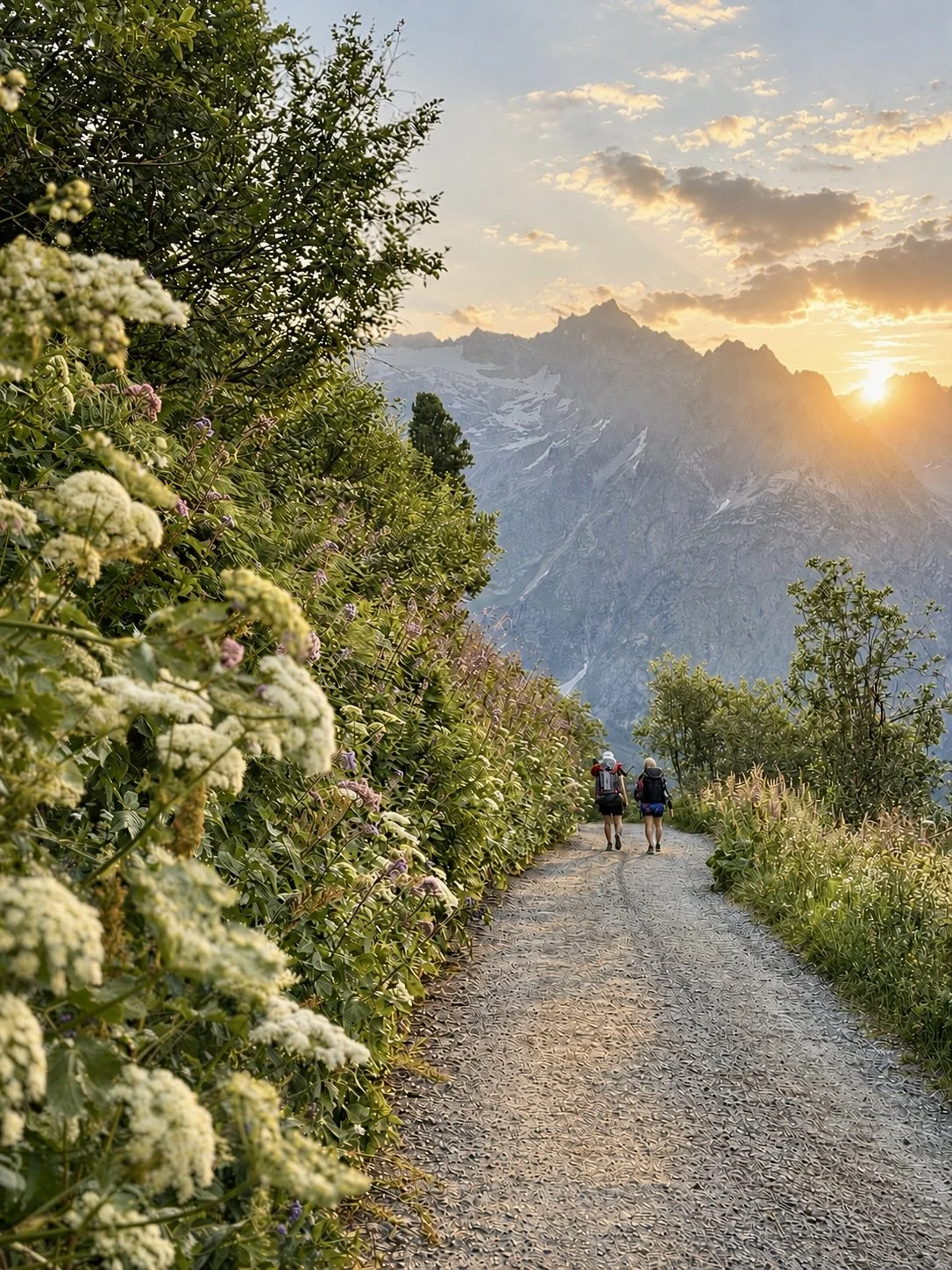
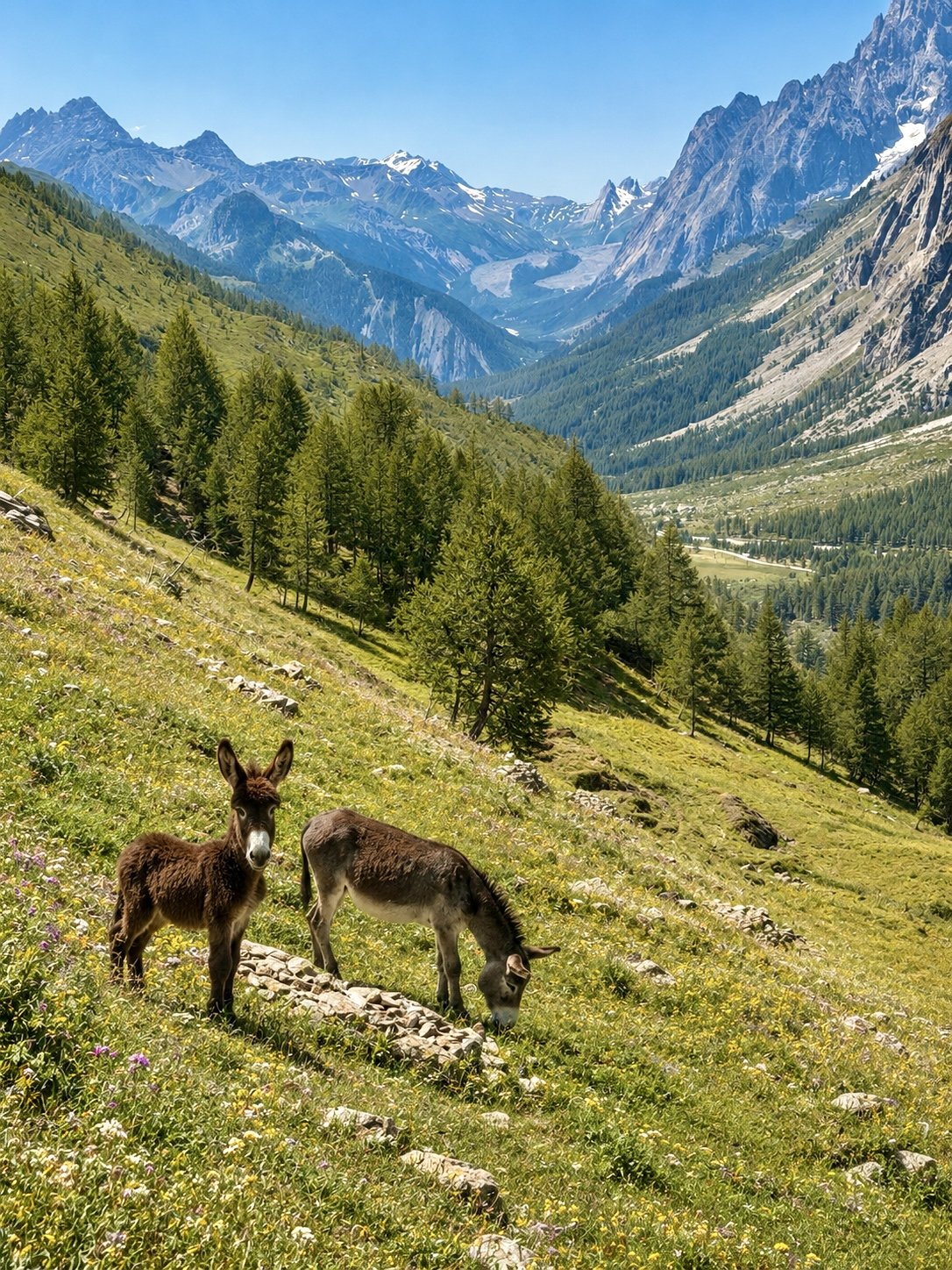
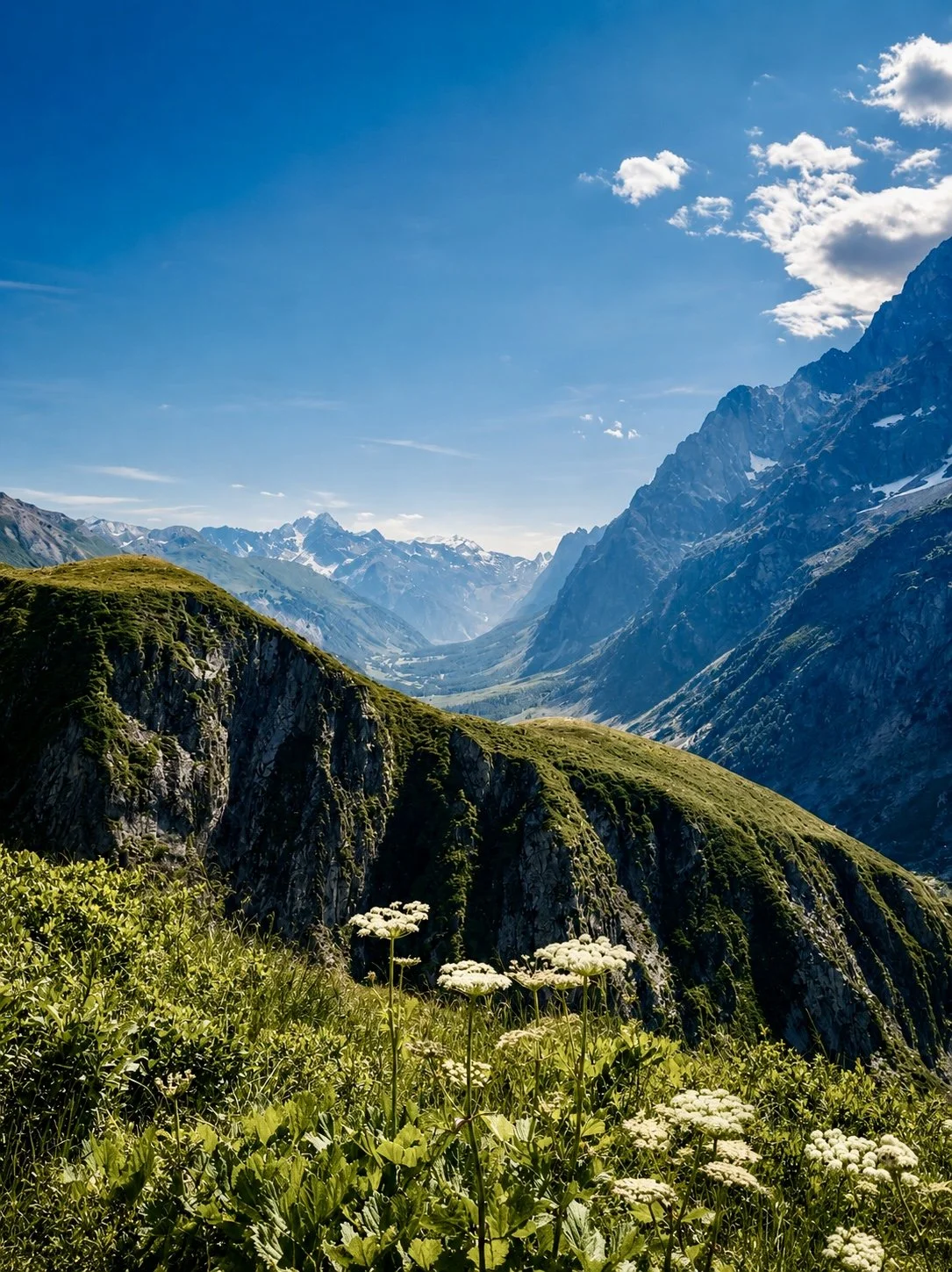
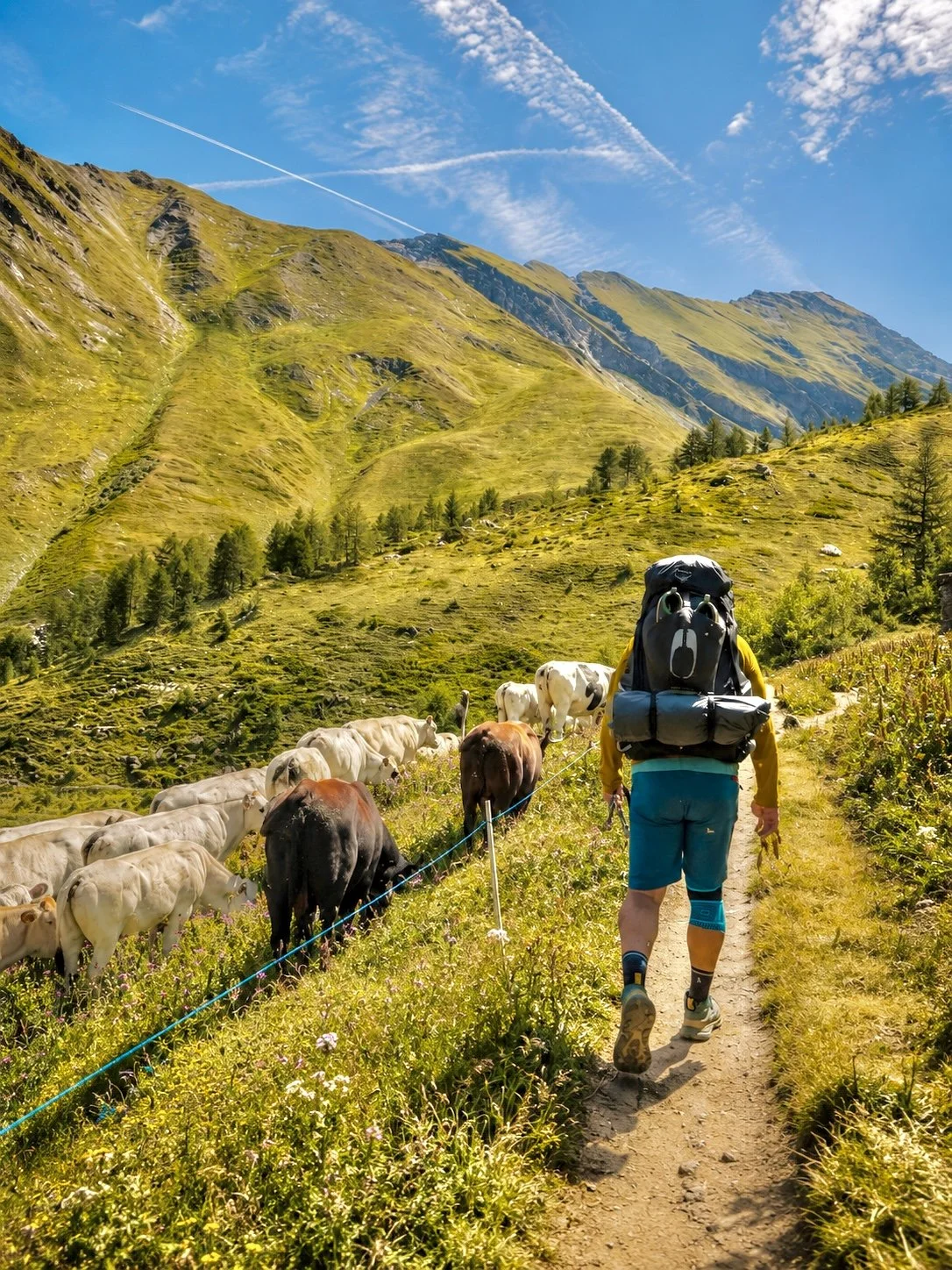
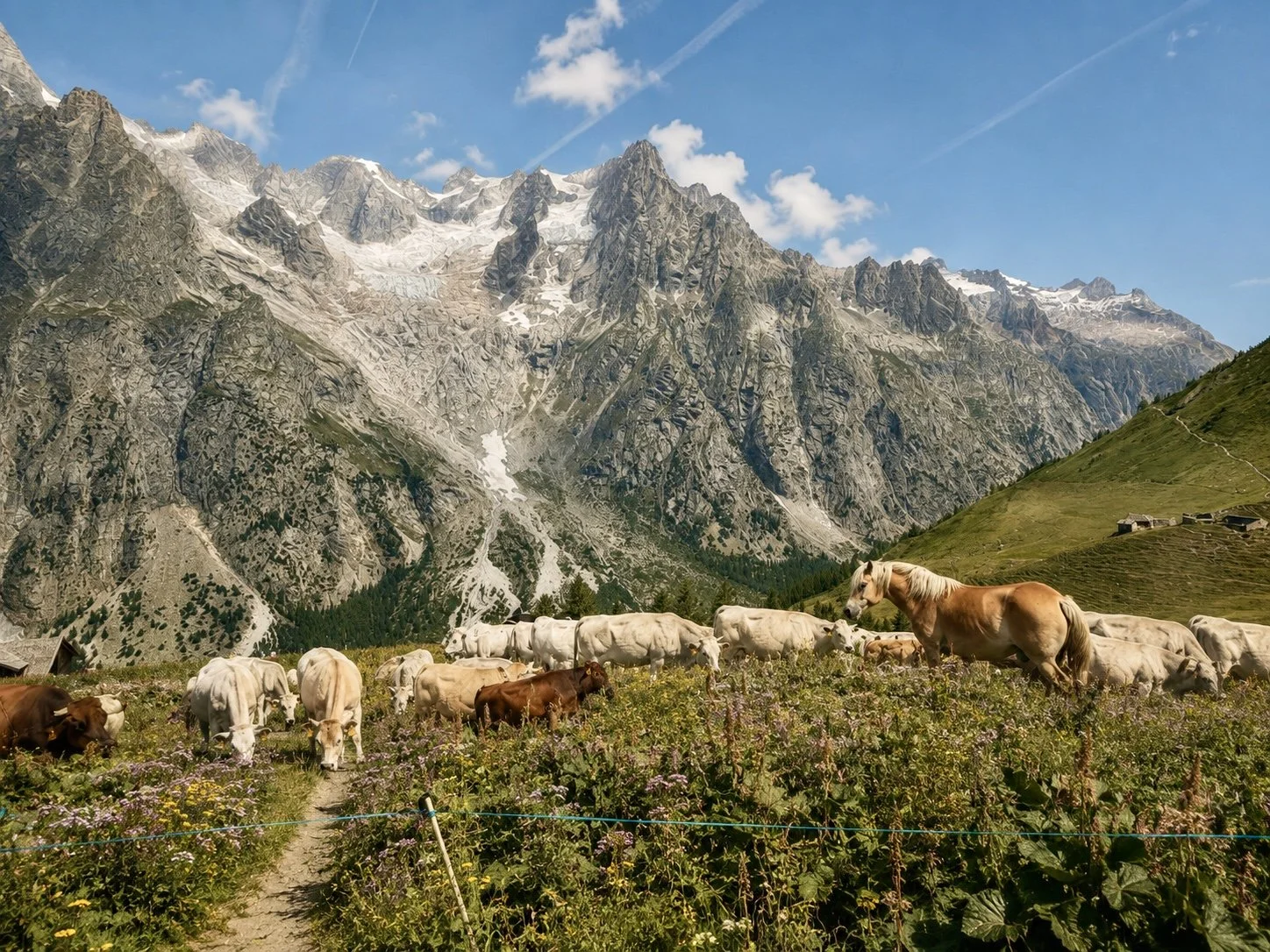
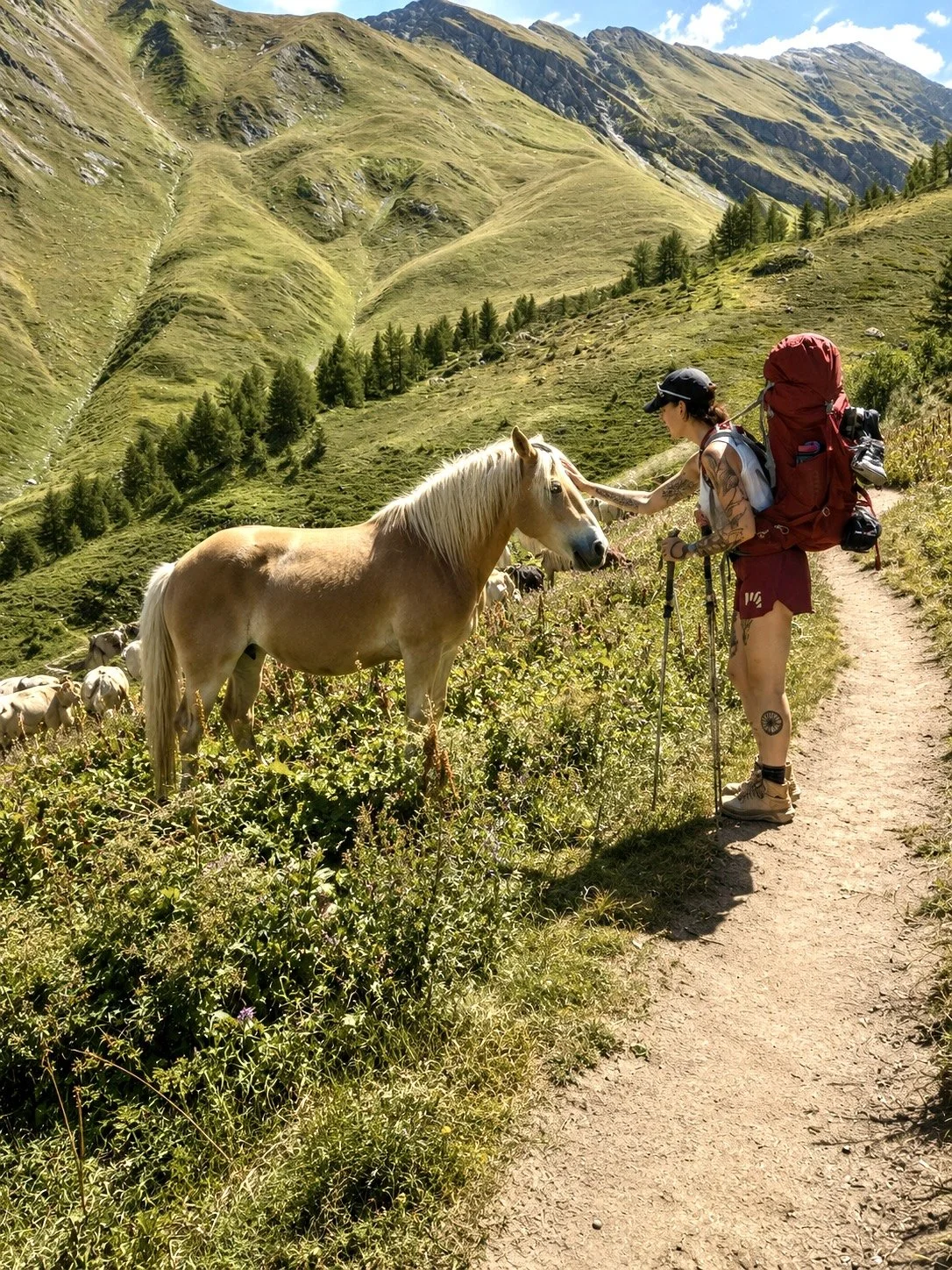
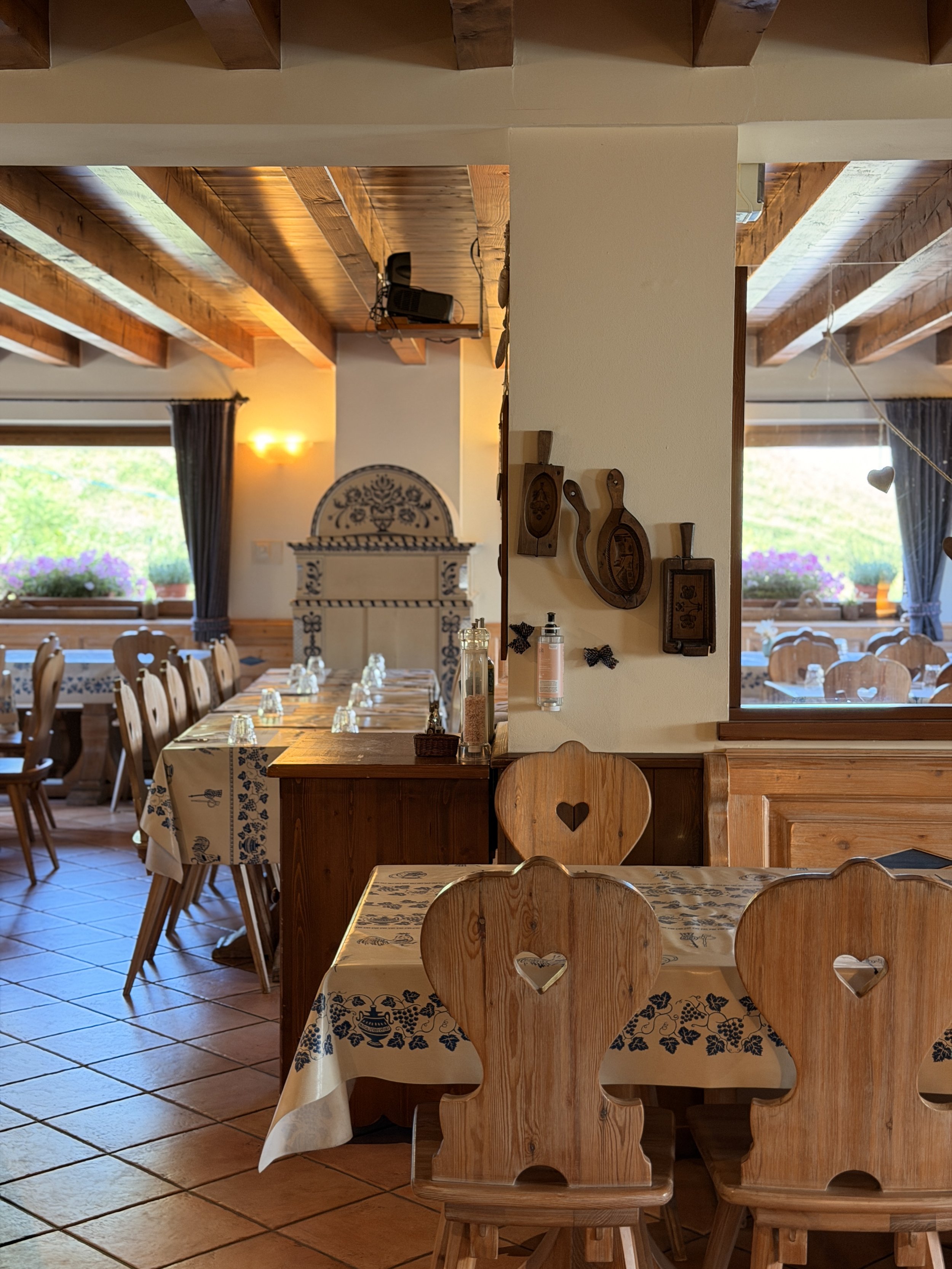
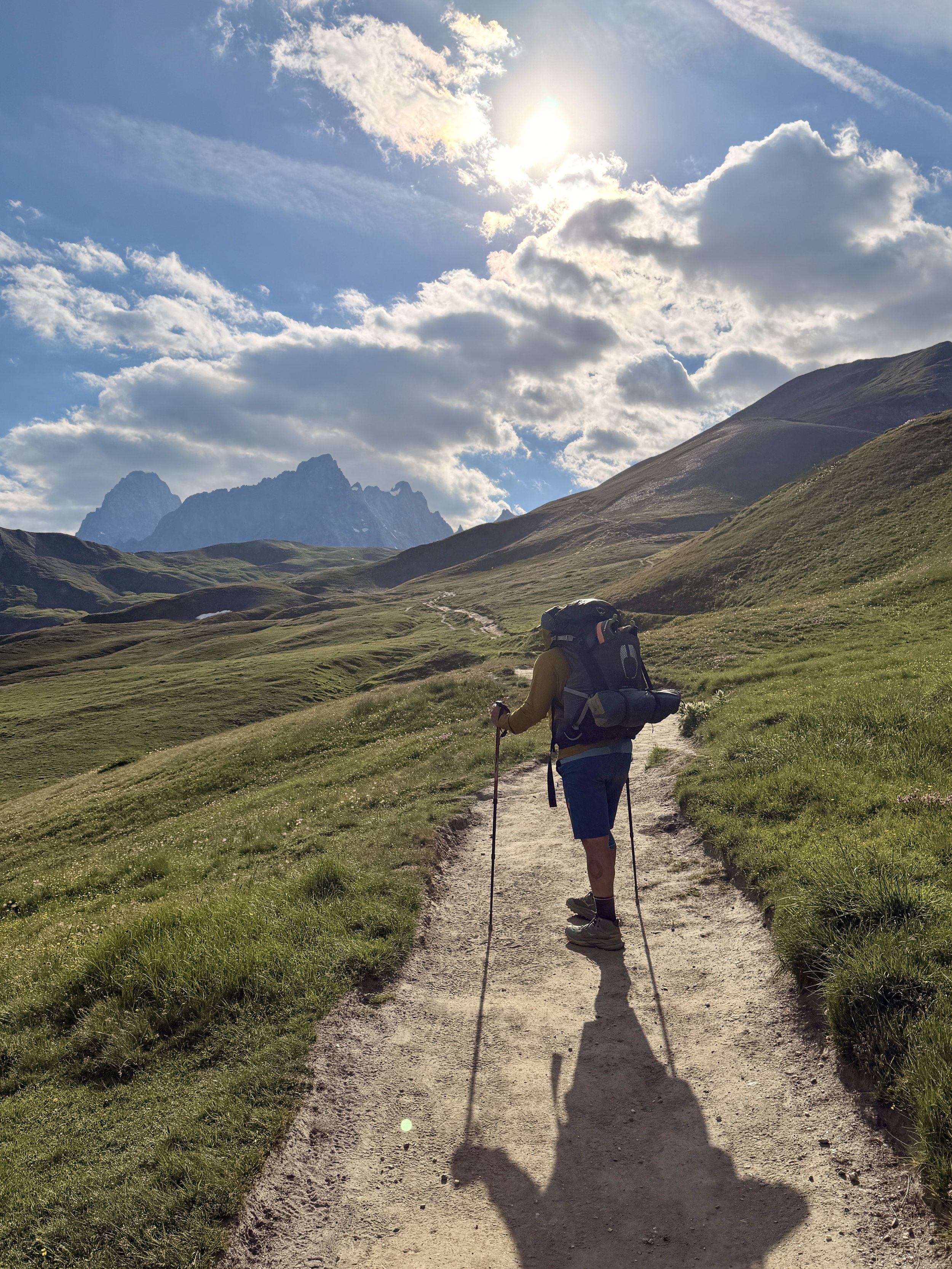
Back on trail, we climbed steadily up Val Ferret out of Courmayeur, which is genuinely one of the most spectacular sections of the entire TMB — a high trail with constant views of Mont Blanc and the Grandes Jorasses the whole way. Val Ferret on the Italian side felt different from the French valleys we'd left behind: wider, sunnier, with working farms and wooden barns, and cows grazing in dappled light, bells clanking, entirely uninterested in the line of hikers filing past. We reached Rifugio Walter Bonatti perched perfectly for sunset over the valley — and, refuge complaints aside, this was the one genuine exception on the whole trip: clean, well-run, and worth the stop even if you're not staying the night — before dropping down to camp for the night, with a short bus ride the next morning to rejoin the route.
Stage 6: Grand Col Ferret — The High Point of the TMB, Crossing into Switzerland
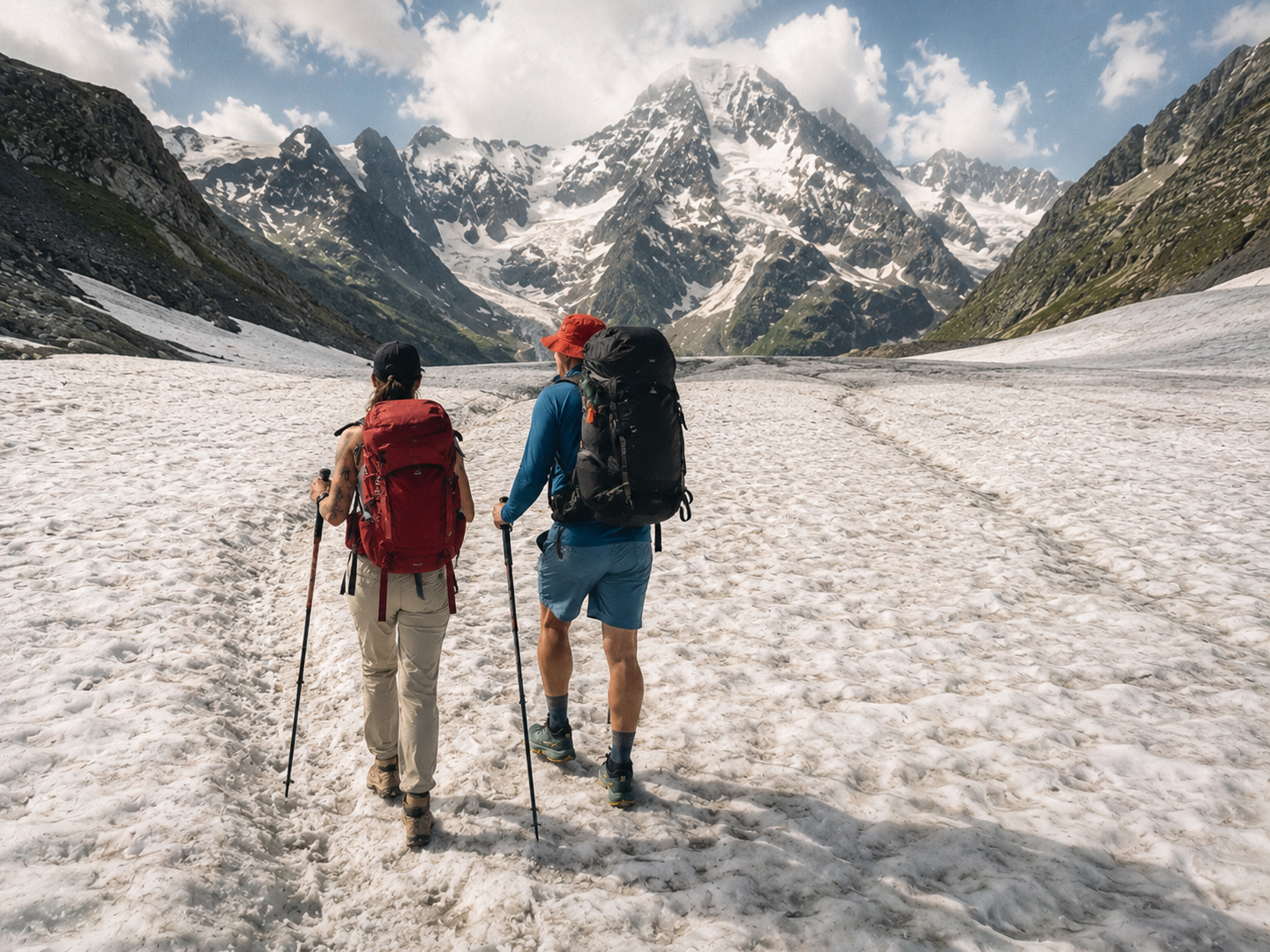
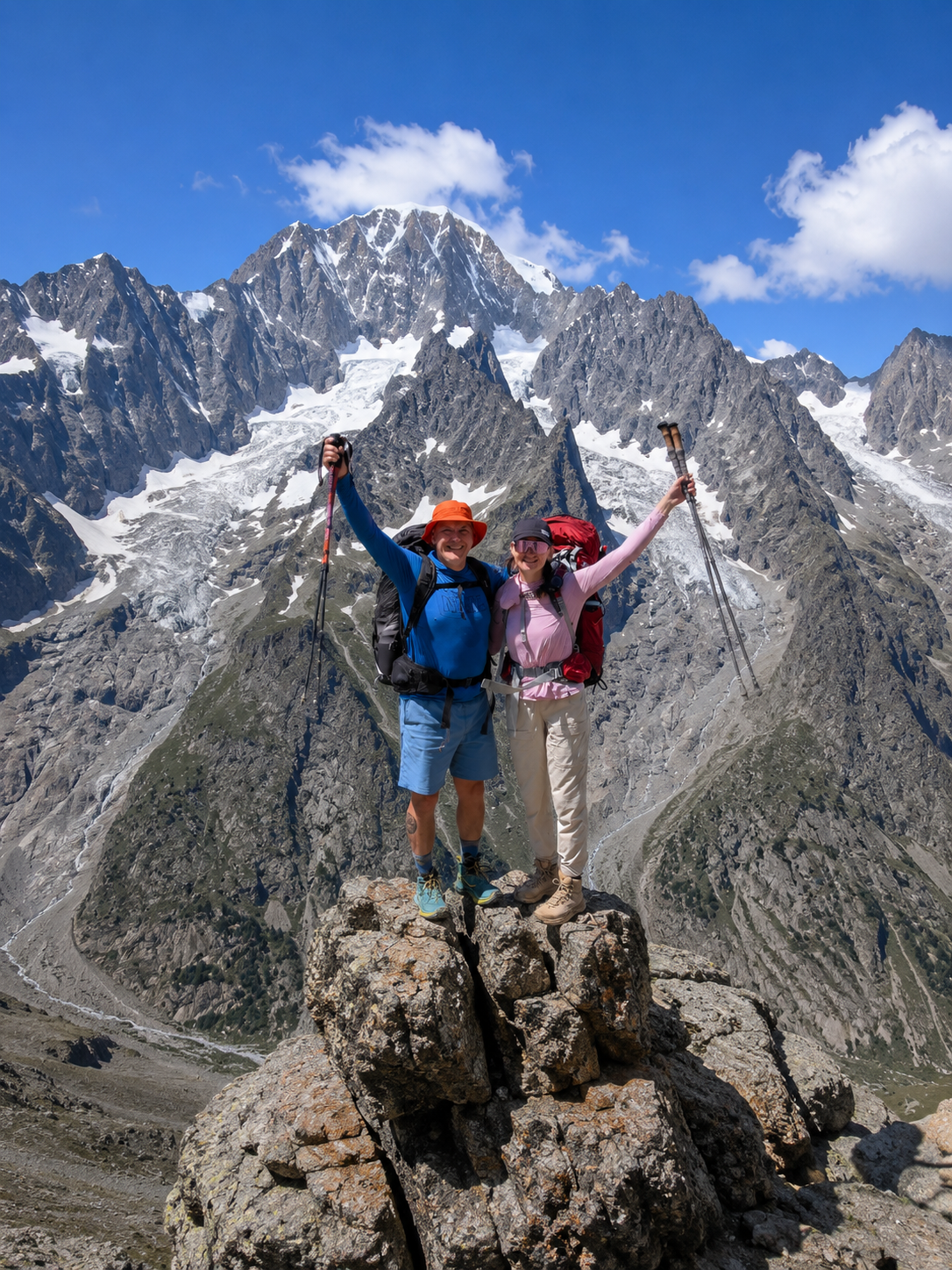
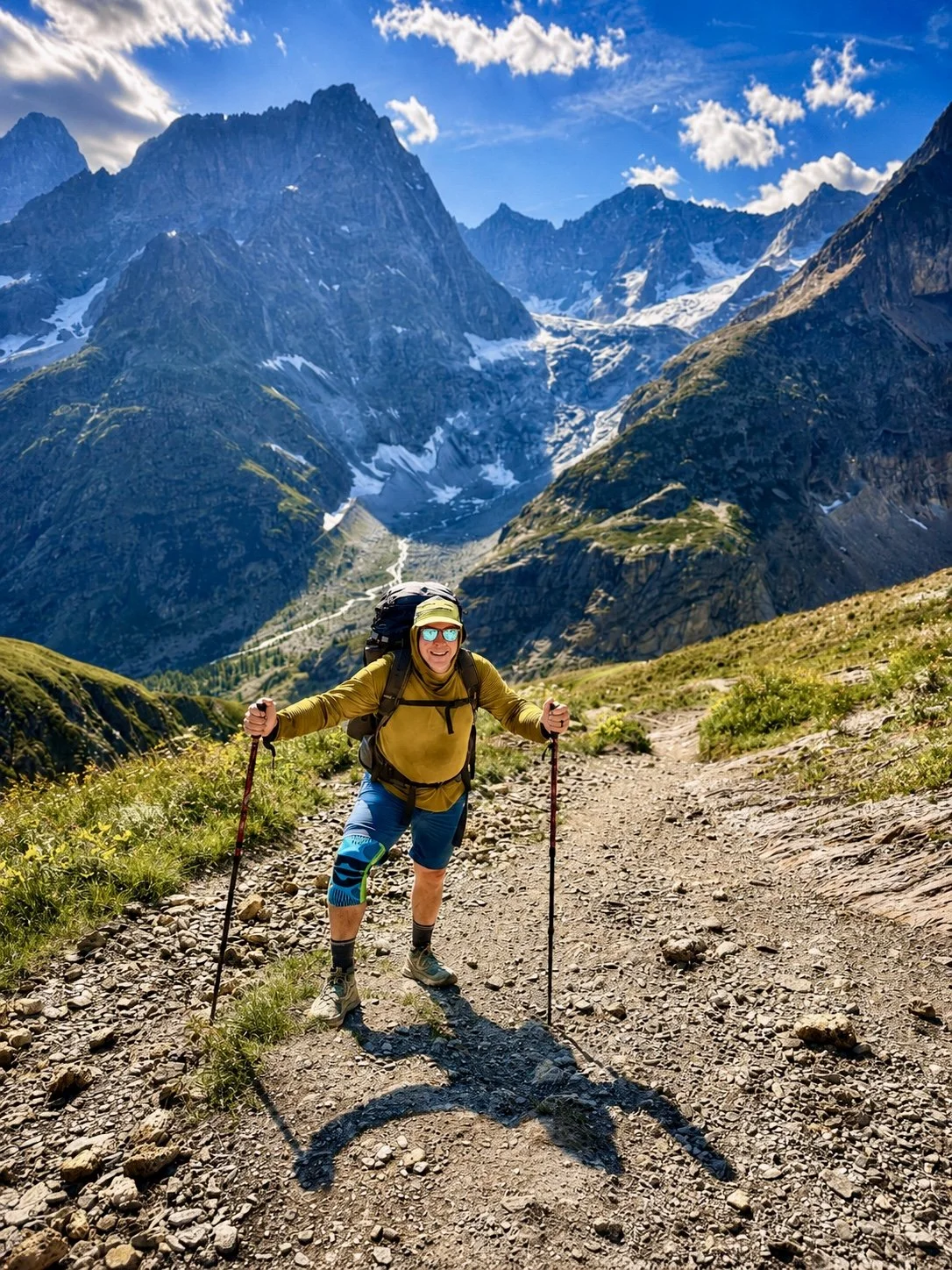
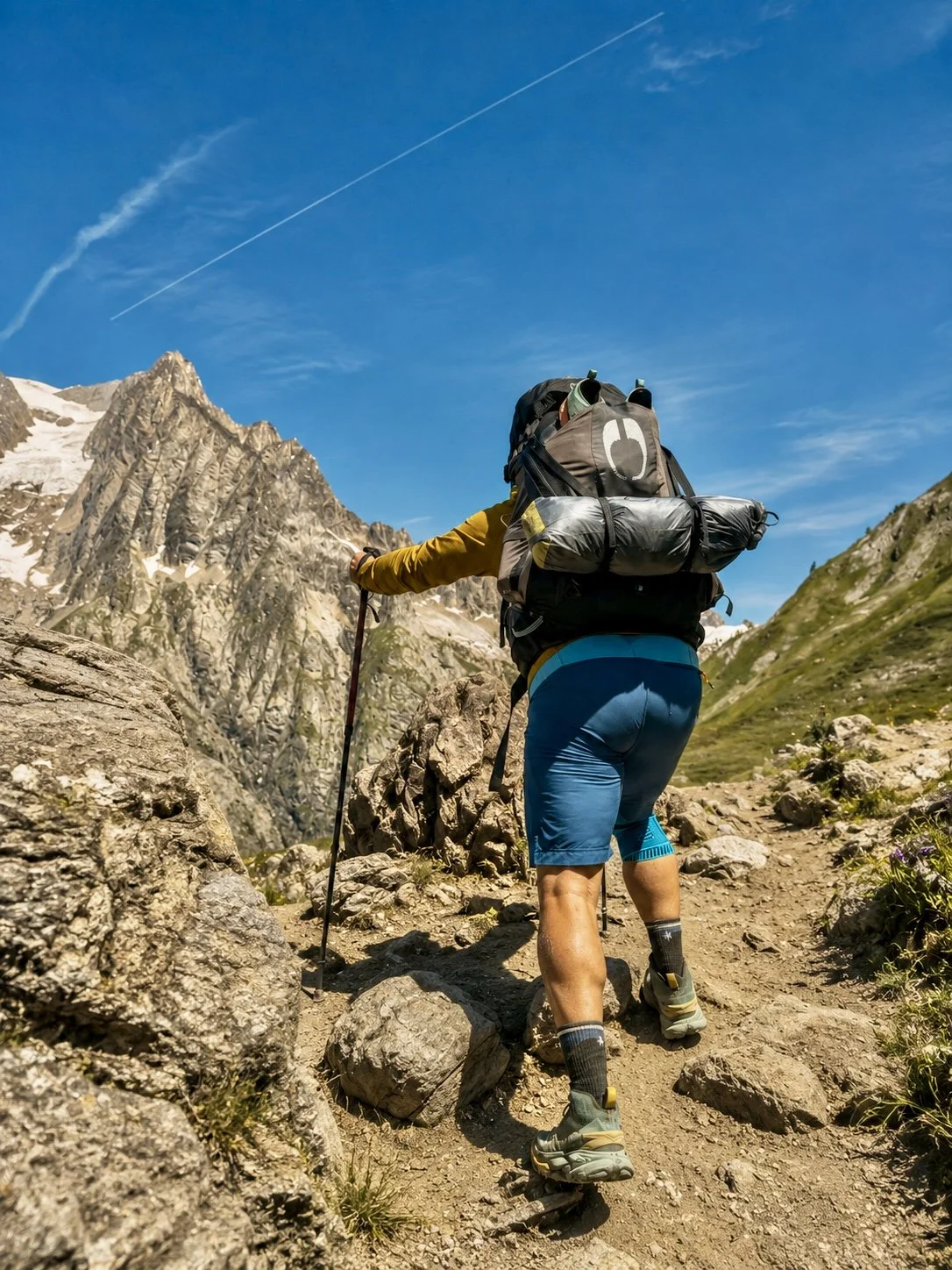
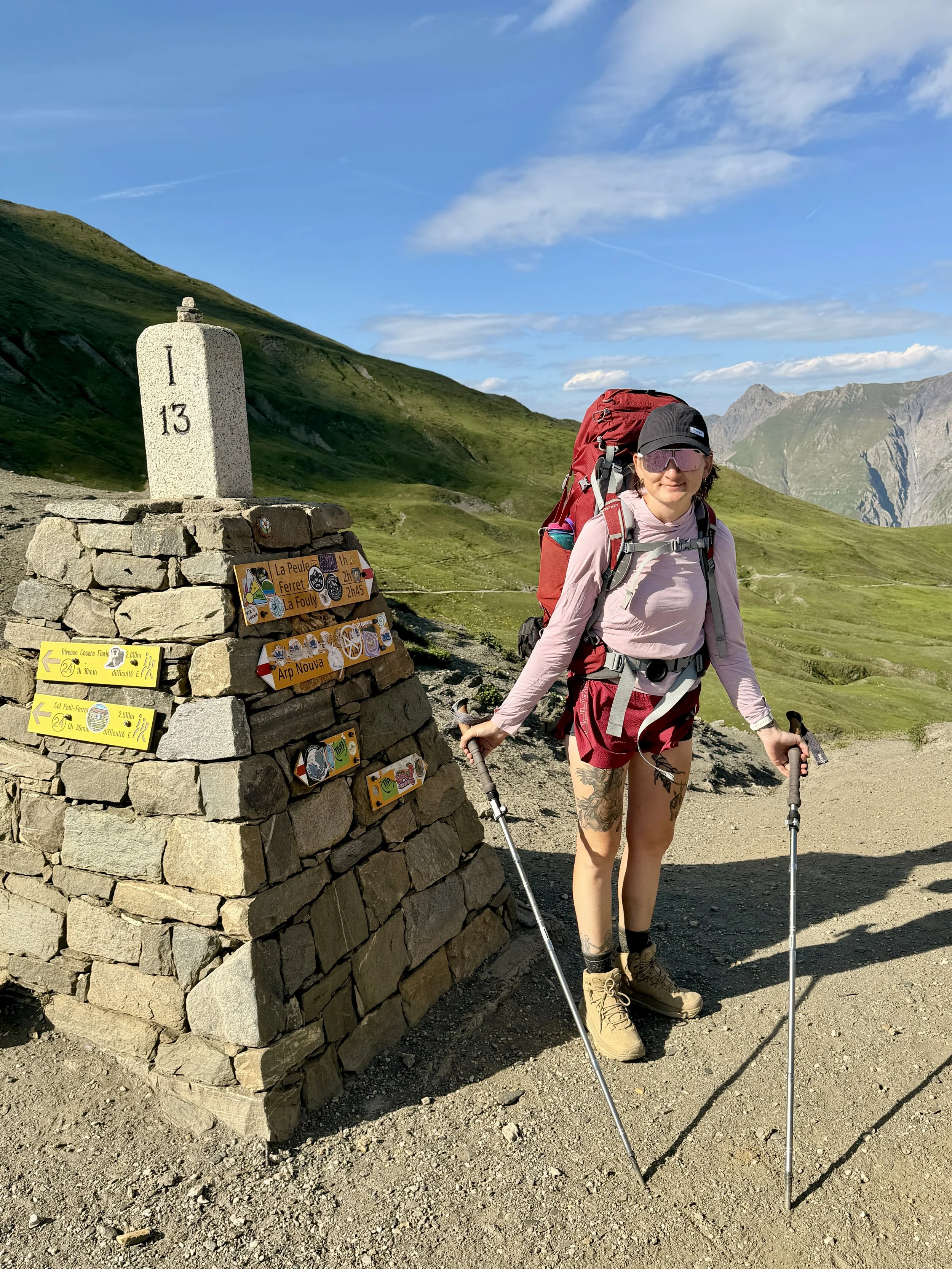
This was the day the trip's stats promised and delivered on. A stunning balcony trail above Val Ferret with nonstop views of the Grandes Jorasses, a stop at Chalet Val Ferret for a mid-morning espresso, then Rifugio Elena for coffee (and, memorably, some genuinely fun merch) before the climb to Grand Col Ferret itself — 2,537 meters, the actual high point of the trip, sitting right on the Italy–Switzerland border. Part of the approach crossed an honest-to-god snowfield, poles out, sunglasses on, the ice underneath scored with the tracks of everyone who'd crossed before us, which felt like the trip's most obvious reminder that this is a genuinely high mountain range and not just a scenic backdrop. We descended through green pastures on the Swiss side, stopped for ice cream at La Peule, and rolled into La Fouly for the night — worn out, fifteen-some miles in, and grateful to find Mont Fromage La Fouly still open. A wall of hanging cured meats and wheels of cheese, open late enough to catch two exhausted hikers right on the TMB, and the shop dog was happy to make friends with two people who missed their own.
One thing that catches people out crossing here: Switzerland doesn't use the euro. France and Italy are both euro countries, so it's easy to assume the same cash will carry you the whole way, but you'll want Swiss francs (or just plan to pay by card) for this stretch through La Fouly and Champex-Lac.
Stage 7: Champex-Lac to Chamonix — Finishing the Tour du Mont Blanc
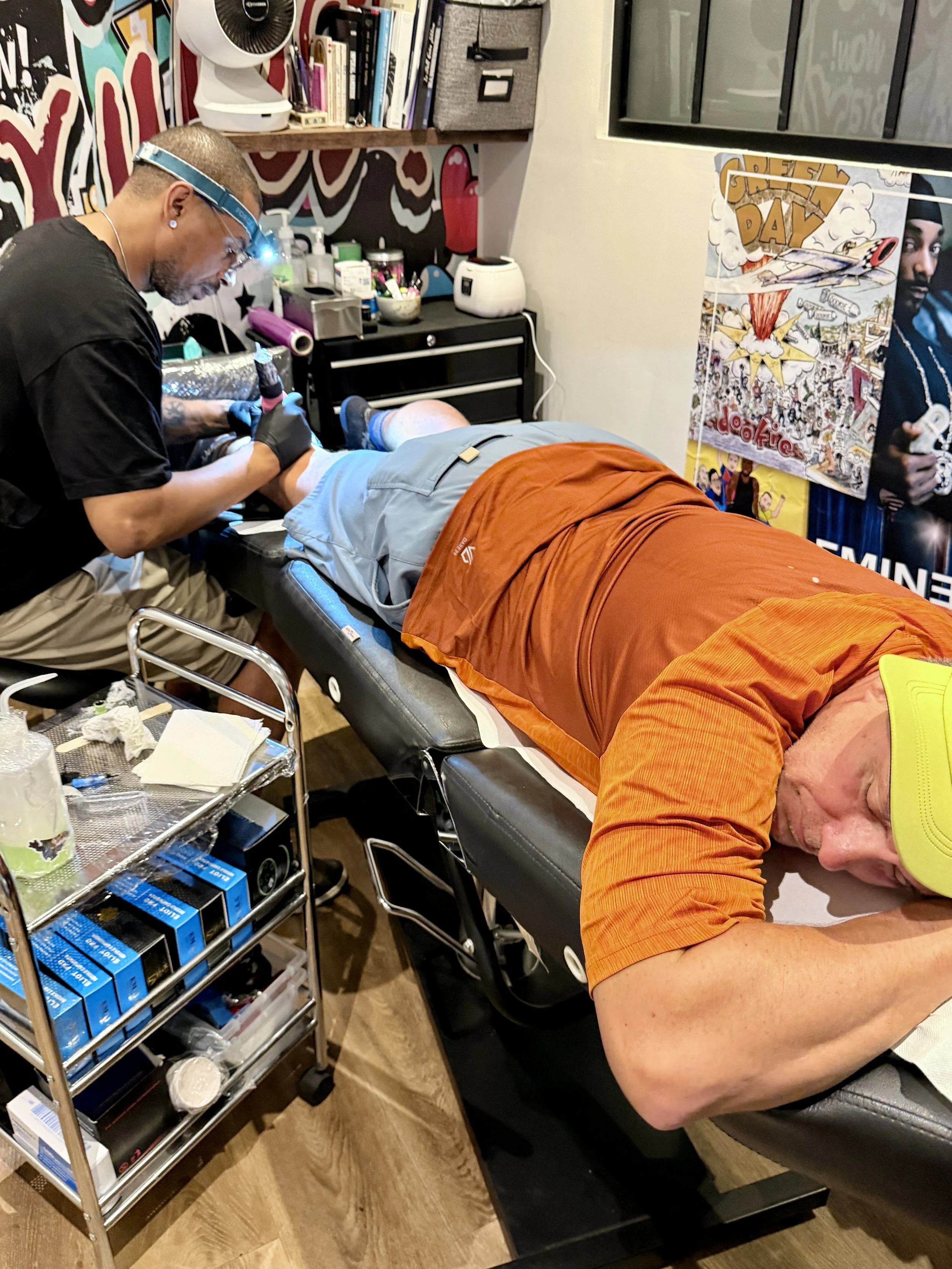
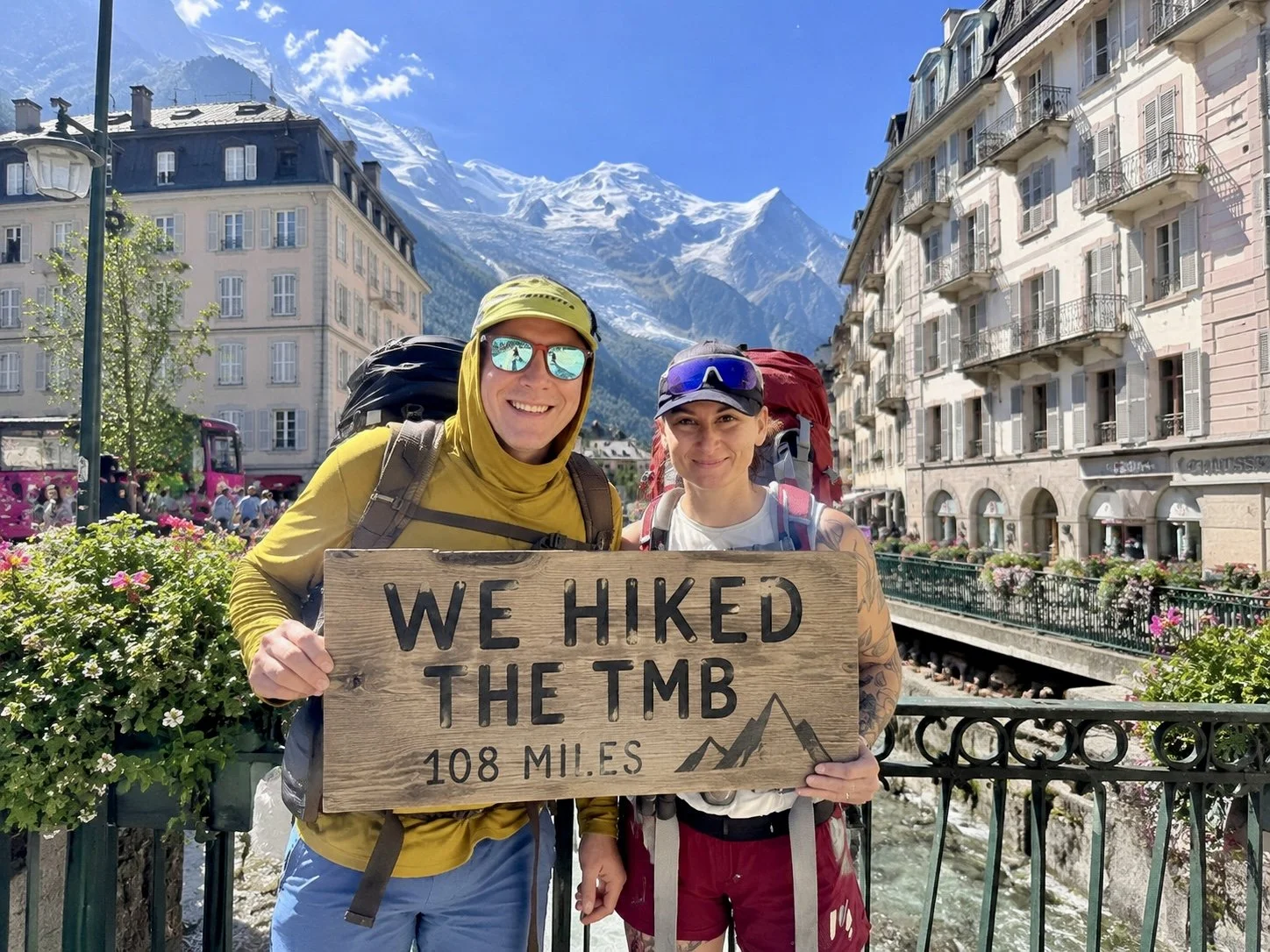
The final stage was the gentlest of the trip — quaint alpine countryside through Praz-de-Fort and Issert before the climb up to Champex-Lac at 1,470 meters, a genuinely postcard-perfect lake town. We celebrated finishing the trek the obvious way: a swim in the lake, then a private transfer back to Chamonix to close the loop. Final dinner was at La Fine Bouche, which felt like exactly the right note to end on. And yes, we did the thing plenty of TMB hikers do once it's over — matching tattoos at Chamon'ink, whose guys were so accommodating and friendly about the whole tradition that it felt like the right last stamp on the trip, literally.
Why Hike the Tour du Mont Blanc in 8 Days
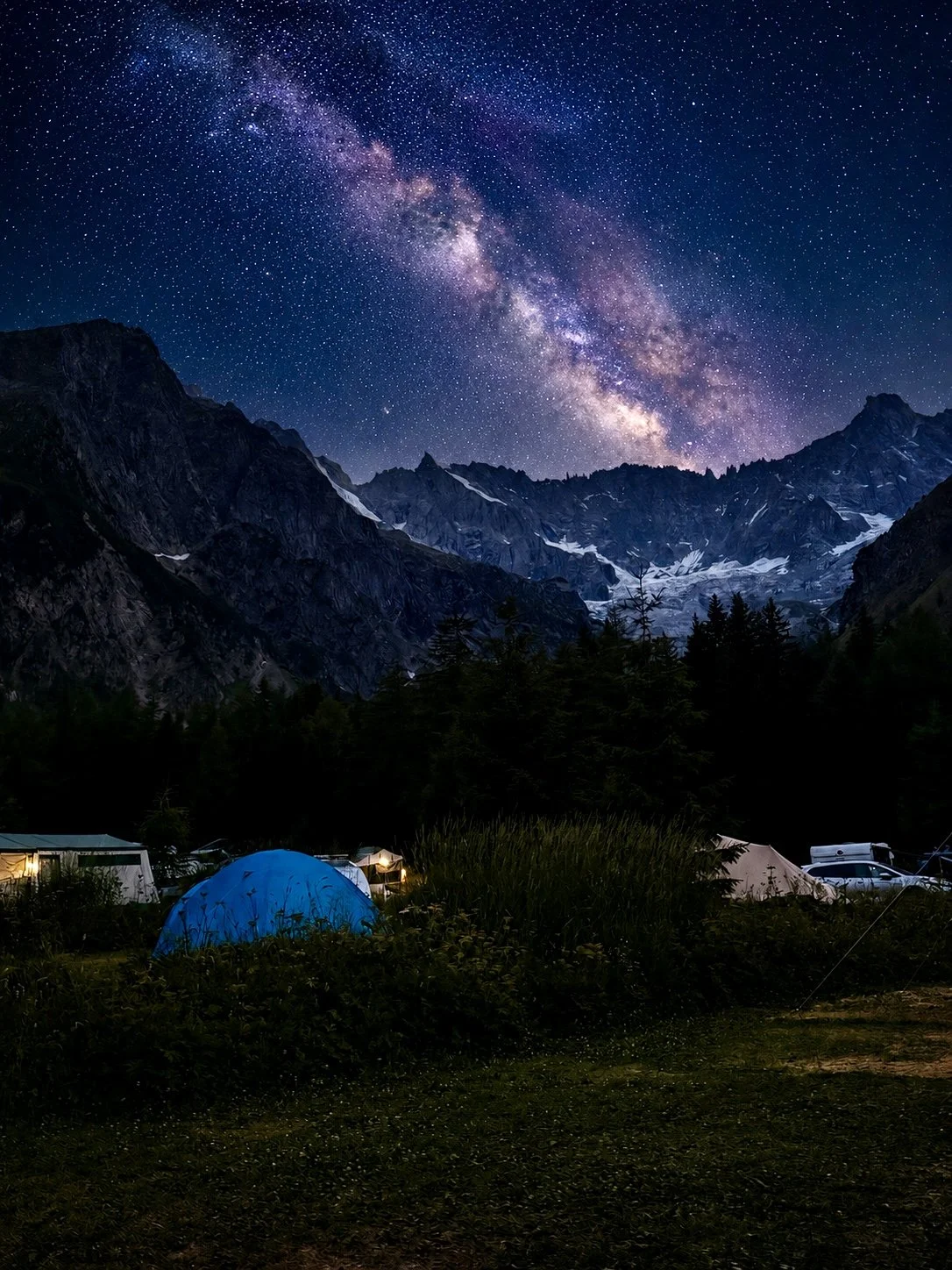
Eight days sounds modest written down next to the classic eleven-day version of this route, and it is — we leaned on a couple of buses, a rest day with a spa built into it, and camping instead of a strict refuge-to-refuge circuit, which made an ambitious three-country hike fit into the time and pace we actually had. But broken into daily stages, most somewhere between five and twelve miles, it becomes something closer to a rhythm than an ordeal: wake up, climb, eat something at the top, drop into a new valley, repeat. Three countries, one mountain, and by the time we were back in that same Chamonix hotel room we'd started in, the total distance mattered less than the accumulation of small, specific things — a cairn, a mug raised across a refuge table, a yellow tent in a field of other tents, a snowfield crossing at 2,537 meters, a cheese shop staying open late in La Fouly, a sky full of stars that no city ever lets you see.
Common Questions About Hiking the Tour du Mont Blanc
How many days does it take to hike the TMB? The classic full circuit is usually done in 10 to 12 days, covering roughly 170km (105 miles) with about 10,000 meters of cumulative elevation gain. We did our own hybrid version in 8 days by mixing in a couple of bus transfers, one rest day, and camping instead of a strict refuge-to-refuge schedule — shortening the trip is doable, but expect longer, harder days as the trade-off.
Do you need to book refuges and campsites in advance? Yes, and earlier than you'd think. Popular refuges along the route — Nant Borrant included — book up months ahead for the summer season. If you want a specific refuge or dinner included, reserve as soon as your dates are set.
Is the TMB hard for beginners? It's manageable for a reasonably fit hiker with some multi-day backpacking experience, but it's not a flat walk in the park. You're crossing several passes over 2,400 meters, with steep, exposed sections and daily distances in the five-to-twelve-mile range. Training beforehand and packing light both make a real difference.
Do you need a passport to cross between France, Italy, and Switzerland on the trail? All three countries are in the Schengen Area, so there are no formal border checks at cols like Col de la Seigne or Grand Col Ferret — you just walk across. Still, carry your passport or ID, since hotels and refuges routinely ask for it at check-in.
What's the best time of year to hike the Tour du Mont Blanc? Late June through September is the standard window, once the high passes have cleared of snow and refuges are open for the season. We hiked in early July and still crossed a couple of lingering snowfields near Grand Col Ferret, so pack layers and traction even in peak summer.
If you're thinking about it: do it. Just break in your boots first.
